
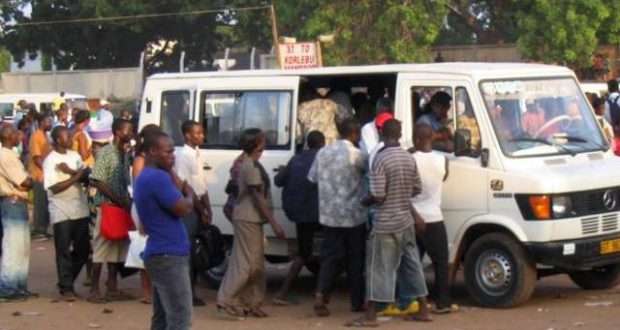

The rising cost of living is already placing considerable pressure on many Ghanaians.
From food and rent to education and healthcare, the cost of meeting basic needs continues to be a concern for ordinary citizens.
Yet, for many people who depend on public transport every day, getting to work, school, the market, or home is becoming another source of financial and emotional stress.
Following the recent increase in fuel prices, transport fares have reportedly been adjusted upwards by 8 per cent.
While passengers may not welcome the increase, many understand that fuel prices affect the cost of operating commercial vehicles.
Drivers and their mates also have expenses to meet, and their concerns deserve to be acknowledged.
However, an important question must be asked: Are some commercial drivers and their mates charging passengers according to the agreed fare adjustment, or are they taking advantage of the situation to charge more?
Reports and experiences from some passengers suggest that certain drivers and their mates are adding GH₵2, GH₵3, or even more to existing fares, beyond the announced adjustment.
Passengers who question these charges may be met with harsh responses, insults, or unnecessary arguments.
This raises serious concerns about fairness, accountability, and the treatment of commuters who have little choice but to depend on these services.
When an 8% increase becomes something more
An 8 per cent increase should not become an excuse for arbitrary fare increases.
If an adjustment has been agreed upon by the relevant stakeholders, passengers should not be left at the mercy of individual drivers and mates who decide to charge whatever they consider appropriate.
The situation becomes even more frustrating when passengers are forced to pay multiple fares for a journey that should ordinarily be completed in one trip or with fewer changes.
A passenger travelling from Ashongman Estate to Accra may have to pay three separate fares before arriving at his or her destination.
Depending on the route and the availability of direct services, what should have been a straightforward journey can become a series of separate trips, each requiring another fare.
For a passenger making this journey daily, the additional cost can accumulate significantly over time.
Workers, students, traders, and other commuters may find themselves spending much more on transportation than they had budgeted for.
The concern is not that every driver must operate a direct service regardless of demand or operating costs.
Rather, it is that passengers should not be subjected to unnecessary financial burdens through practices that prioritize repeated loading over the completion of journeys, particularly when those practices leave commuters with little choice but to pay more.
Passengers should not be punished for needing transport
One of the most troubling aspects of this situation is the vulnerability of passengers at busy bus stops.
When people are stranded and vehicles are scarce, passengers may have little bargaining power.
They need to get to work on time, attend lectures, transport goods, attend appointments, or return home to their families.
Under such circumstances, many may accept additional charges simply because they cannot afford to wait indefinitely.
But should the desperation of commuters become an opportunity for some drivers and mates to make passengers pay more than they should?
Every extra cedi matters, especially to people who travel long distances daily.
The GH₵2 or GH₵3 that may appear insignificant to one person could make a meaningful difference to another who must also pay for food, rent, school fees, and other household expenses.
For low-income earners and people whose daily budgets are already stretched, even a small additional transport charge can have a considerable impact when repeated over several days or weeks.
Passengers are not asking for free transportation. They are asking for fairness, transparency, and respect.
The need for personal accountability
There is also a broader question of accountability that deserves attention.
It is common to hear these same drivers and their mates condemn corruption, dishonesty, and unfair practices in public life. Such concerns are legitimate.
However, the commitment to fairness must extend beyond public officials and institutions. It must also be reflected in our everyday dealings with one another.
Charging beyond agreed fares, where this occurs, or using circumstances to impose avoidable costs on passengers raises questions about personal responsibility.
If we expect those in positions of authority to act fairly, we must also be prepared to uphold fairness in our own professions and businesses.
This is not an accusation against every commercial driver or mate. Many work hard under difficult conditions, contend with traffic congestion, vehicle maintenance costs, and other operational challenges, and provide essential services to the public.
Their efforts should not be overlooked.
Nevertheless, genuine economic challenges should not be used to justify unfair treatment of passengers.
When fuel prices fall, what happens to transport fares?
Another concern frequently raised by commuters is the apparent reluctance of some drivers to reduce fares when fuel prices fall.
When fuel prices rise, transport operators may call for fare adjustments to reflect increased operating costs. However, passengers sometimes question why fares do not appear to decrease correspondingly when fuel prices decline.
This perception deserves serious attention.
Transport fares are influenced by more than fuel prices alone, including vehicle maintenance, spare parts, insurance, and other operating expenses.
Therefore, a reduction in fuel prices does not necessarily mean fares must fall by the same proportion or immediately.
Even so, there should be transparency in how fare adjustments are determined and communicated.
Passengers deserve to understand the basis for changes, just as transport operators deserve to have their legitimate costs considered.
A fair transport system cannot function effectively when passengers are left confused about what they should pay or feel powerless to question charges.
GPRTU must strengthen its oversight
The Ghana Private Road Transport Union (GPRTU) has an important role to play in addressing concerns about commercial transport operations and the relationship between drivers and passengers.
The union and other relevant transport authorities should take these complaints seriously and work towards practical solutions.
First, there should be stronger efforts to ensure that approved transport fares are communicated clearly and respected. Passengers should be able to establish what they are expected to pay without having to engage in arguments at bus stops.
Second, concerns about arbitrary fare increases should be investigated, and appropriate measures should be taken where violations are established.
Third, the union should engage transport operators on the practice of loading passengers in short stages, particularly where such practices create avoidable inconvenience and additional costs for commuters.
Routes, operating arrangements, and passenger demand may differ, but the needs of commuters must remain part of the discussion.
Finally, there should be an accessible and reliable complaints mechanism through which passengers can report overcharging, intimidation, verbal abuse, and other unfair practices.
Such a system should allow complaints to be investigated fairly, without automatically assuming that every allegation against a driver or mate is true.
Public education is equally important. Drivers, mates, and passengers should be made aware of approved fares, their respective responsibilities, and the appropriate channels for resolving disputes.
The objective should not be to create hostility between transport operators and commuters. It should be to build a system in which both parties understand their rights and obligations.
Drivers matter, but passengers matter too
It is important to recognize that commercial drivers and their mates also face economic difficulties.
They must maintain their vehicles, purchase fuel, meet other operating expenses and earn enough to support themselves and their families.
Their concerns should not be dismissed.
However, the challenges faced by transport operators do not erase the challenges faced by passengers.
Both groups are affected by the rising cost of living, and neither should be expected to carry an unreasonable share of the burden.
Drivers depend on passengers for their livelihoods, while passengers depend on drivers to reach their destinations. This relationship should be built on mutual respect, honesty, and fairness.
Passengers should not be insulted for asking questions about fares, and drivers should not be subjected to unfair accusations without evidence.
Where disagreements arise, there must be a reasonable way to resolve them.
Fairness must work both ways.
A Call for Action
GPRTU and the relevant transport authorities must not wait until these concerns escalate before taking action. Clearer communication, effective monitoring, fair enforcement, and accessible complaint channels can help address the problem and restore public confidence.
The ordinary Ghanaian is already navigating difficult economic circumstances. Transportation, which is essential to daily life, should not become an additional source of avoidable financial hardship.
This is a call for accountability, not condemnation. It is a call for a transport system that recognizes the needs of both those who provide the service and those who depend on it.
To the driver struggling to meet daily operational costs, your concerns matter. To the mate working hard to earn a living, your efforts matter.
But to the student trying to get to lectures, the worker rushing to the office, the trader heading to the market, and the parent returning home to care for the family, your concerns matter too.
Passengers are not walking ATMs. They are human beings with responsibilities, financial limitations and struggles of their own.
The fight against unfairness must begin not only with those in positions of authority but also with the choices we make in our everyday lives.
GPRTU, the concerns of commuters deserve your attention. Let us work towards a transport system where fares are respected, complaints are addressed, and both drivers and passengers are treated with dignity.
Because, ultimately, a fair transport system is not one that protects only the interests of operators or passengers. It is one that recognizes and respects the legitimate interests of both.