
Ghana is set to host the second high-level conference on Scaling Education Initiatives in Emergencies in West Africa, bringing together researchers, innovators, financiers and academics to explore ways of strengthening education systems during crises.
The two-day conference, scheduled for September 29 and 30, 2026, in Accra, will focus on practical strategies to protect education during emergencies, scale successful interventions beyond pilot projects and mobilise sustainable financing for education responses.
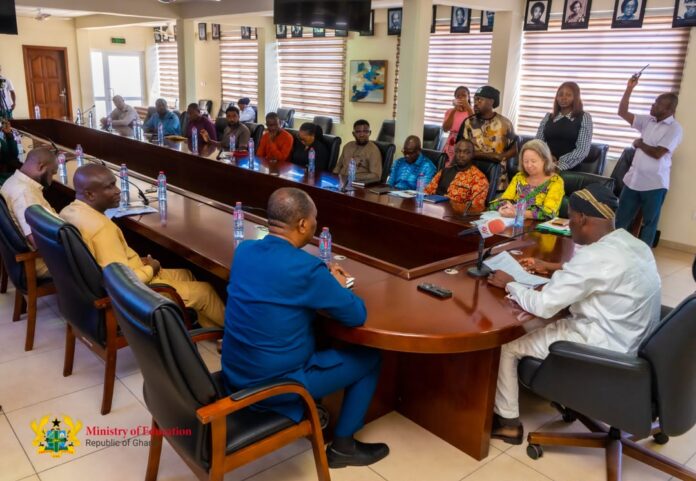
Speaking at a press conference, Education Minister Haruna Iddrisu said the conference would seek answers to four critical questions concerning the continuity of education during emergencies.
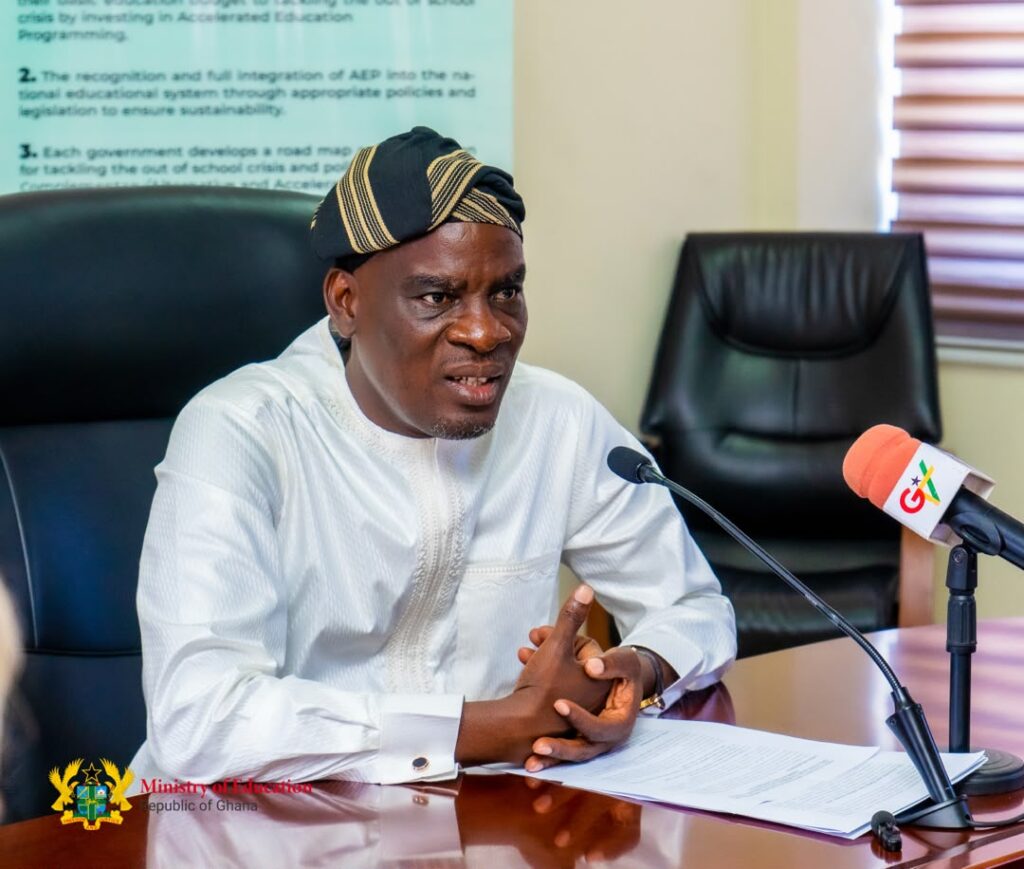
He said these include identifying what works when crises force schools to close, determining how successful interventions can be scaled up, establishing who finances emergency education responses when ministries lack contingency funds, and exploring how West African countries can work together to protect education during crises.
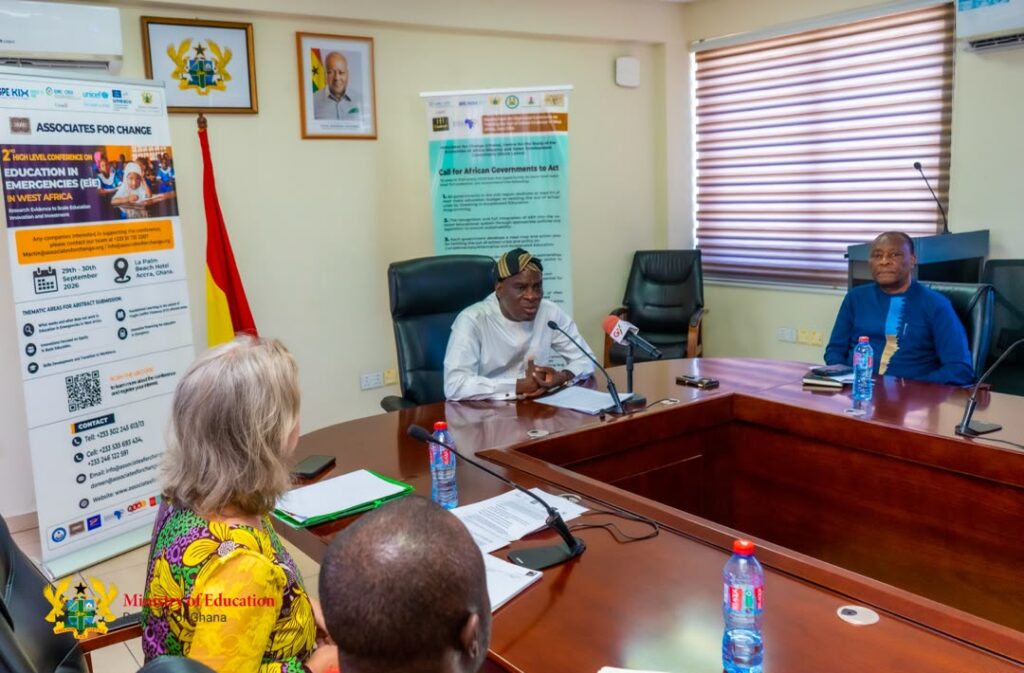
“What works when a crisis forces schools to close; what it takes to scale successful interventions beyond pilot projects; who finances education interventions when ministries and their agencies lack emergency contingency funds; and what countries in the West African region can do collectively to protect education during emergencies.”
COVID-19 lessons
Mr Iddrisu cited the COVID-19 pandemic as a major example of how emergencies can disrupt education systems.
Following the closure of schools in March 2020, millions of learners from kindergarten through to tertiary level were sent home, with many losing significant instructional time.
He said Ghana responded with innovative and largely digital mechanisms to sustain teaching and learning during the pandemic.
According to the Minister, the government is now seeking to introduce additional digital education mechanisms, tools and equipment from kindergarten through the basic education level, building on interventions already implemented at the secondary level.
Conflicts and disasters
Mr Iddrisu warned that conflicts and other emergencies could have serious consequences for education, including increased school dropout rates, teenage pregnancies, learning losses and declining literacy and numeracy outcomes.
He cited the conflict in Bawku and developments in Burkina Faso and Mali as examples of situations that can disrupt education.
Teachers may be forced to leave affected communities, while learners and their families may relocate to safer areas, he explained.
The Minister also stressed the need to design education interventions for communities without access to electricity, radio, smartphones and other digital learning facilities.
He said this was particularly important for vulnerable and underserved communities.
Akosombo spillage impact
Mr Iddrisu also highlighted the October 2023 Akosombo Dam spillage, which submerged communities in parts of North Tongu, Central Tongu and South Tongu in the Volta Region.
Tens of thousands of people were displaced, while some schools were submerged or converted into shelters for displaced persons.
The disaster, he said, resulted in the loss of school furniture, textbooks, records and examination preparations, disrupting teaching and learning at a time when affected students were expected to participate in national examinations.
Other emergencies cited included tidal waves and coastal erosion around Keta and other coastal communities, flooding in northern Ghana, the effects of the Bagre Dam spillage, seasonal floods in the Upper East, Northern, Savannah and Oti Regions, as well as communal and ethnic conflicts.
These emergencies, he noted, place considerable pressure on teachers and educational infrastructure.
Strengthening foundational learning
Despite these challenges, Mr Iddrisu said Ghana had continued to implement measures to protect access to education.
He pointed to the expansion of Complementary and Accelerated Education programmes for out-of-school children, particularly in northern Ghana, as well as investments in foundational learning.
He said strengthening basic and foundational education would remain a major priority, warning that weaknesses at that level could leave the broader education system vulnerable.
The Minister also acknowledged the contribution of development partners and organisations supporting foundational learning and accelerated education initiatives.
Teacher development
On teacher development, Mr Iddrisu said government was taking steps to strengthen teacher professionalism through continuous professional education.
He said this would help improve teachers’ capacity to respond effectively to changing educational needs and challenges.
The Minister also urged innovators and implementers attending the conference to share both successful and unsuccessful interventions.
He argued that lessons from failed initiatives were just as important as successes in improving education responses during emergencies.
Mr Iddrisu commended Dr Leslie Casely-Hayford, Director of Associates for Change, for her continued evidence-based analysis of education policies and government budgets.
He said her professional scrutiny had contributed to public understanding of challenges within the education sector and encouraged her to continue drawing attention to areas requiring greater government attention, including special and inclusive education.
He expressed optimism that the conference would provide an opportunity for Ghana and its international partners to move beyond discussions and develop practical approaches to ensuring that children continue to access quality education even when emergencies disrupt normal schooling.