
The Ghana Association of Medical Laboratory Scientists (GAMLS) has called on the government and stakeholders to build a self-sufficient diagnostic industry as the country prepares to roll out the Free Primary Healthcare policy.
National President of the Association, Dr. Eric Kofi Aidoo, decried what he described as the systemic neglect of laboratory infrastructure in Ghana’s health sector development.
He said successive governments have failed to give adequate attention to laboratory systems, a situation evident in the way health facilities are designed and built without proper laboratory spaces.
“Governments have come and gone, but I think that not much has been done to improve our laboratory system. If you look at most of the facilities that have been built and the ongoing projects, especially the Agenda 111 structures, they have been built without laboratory offices in mind, so the lab becomes an afterthought.
“You will see that after the establishment of the hospital, they will now go and convert some stores and toilets to labs,” Dr. Aidoo lamented.
He explained that such makeshift conversions compromise quality, biosafety, and workflow and affect the accuracy of test results.
He therefore called on government, as a matter of urgency, to ensure that standard, well-designed laboratory infrastructure is incorporated from the architectural planning stage of all health projects, particularly as the country prepares for Free Primary Healthcare where laboratories will be the first point of diagnostic call.
The call was made at the Association’s Ashanti Regional Congress and Scientific Conference held under the theme “Diagnostics at the Heart of Healthcare: Strengthening Laboratory Systems for Ghana’s Free Primary Healthcare Agenda.”
The congress brought together medical laboratory scientists, academics, health policy experts and students from across the region. It served as a scientific platform for knowledge sharing and a democratic forum for electing new regional leadership to steer the affairs of the Association for the next term.
Dr. Aidoo underscored the importance of the annual Congress and Scientific Conference, describing it as a critical platform for continuous professional development, advocacy and shaping national health policy.
Delivering a keynote address, Prof. Samuel Asamoah Sakyi of the Department of Molecular Medicine at the Kwame Nkrumah University of Science and Technology (KNUST), said Ghana’s quest for Universal Health Coverage through the proposed Free Primary Healthcare policy will remain incomplete without a robust, locally-driven diagnostic system.
He introduced what he termed “diagnostic sovereignty” -which he described as the ability of a nation to produce, maintain, and innovate its own diagnostic solutions without total dependence on external supply chains.
“COVID-19 taught the world a powerful lesson. Countries that depend entirely on external supply chains become vulnerable during crises. Borders were closed, supply chains were disrupted, and even the most advanced nations struggled to access basic diagnostic tools,” Prof. Sakyi noted.
He said Ghana must make a conscious and strategic shift towards strengthening local capacity in critical areas, including diagnostic reagent production, laboratory consumables, equipment servicing and calibration, software development for laboratory information systems, molecular diagnostics, quality-control materials production, biomedical engineering, and diagnostic research and innovation.
“We must begin to ask: Why should every diagnostic solution used in Ghana necessarily be developed somewhere else? Our scientists are capable. Our engineers are capable. Our entrepreneurs are capable.
“Our universities are capable. Our medical laboratory scientists are capable. What is required is a stronger ecosystem connecting research, innovation, industry, financing and healthcare delivery,” he added.
According to him, diagnostics accounts for over 70% of clinical decision-making, and therefore any primary healthcare agenda that does not put diagnostics at its centre is bound to fail.
Prof. Sakyi further challenged members of GAMLS to move beyond the bench and redefine their professional identity in the health system.
“We should not see ourselves merely as people who receive specimens and produce results. We are diagnostic scientists, clinical partners, public health professionals, researchers, educators, innovators, data scientists, and increasingly, health-system leaders,” he stated.
He insisted that medical laboratory scientists must demand a seat at the decision-making table:
“”Laboratory scientists must have a voice in health policy. They must be at the table when primary healthcare policies are developed, when diagnostic equipment is procured, when national screening programmes are designed, when antimicrobial resistance policies are formulated and when health information systems are created. If diagnostics is at the heart of healthcare, then diagnostic professionals must be at the heart of health policy.”
The climax of the congress was the conduct of the 2026 Regional Branch Executive elections, which saw a mix of unopposed endorsements and keenly contested positions.
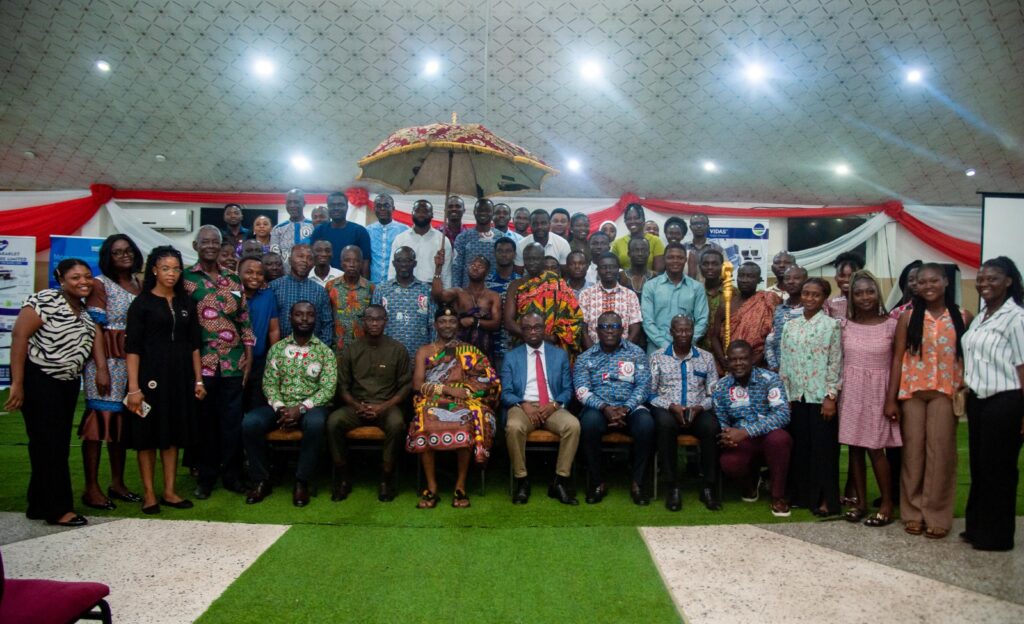
At the end of polls, five executives were elected to lead the regional branch for the next administrative term.
Dr. Seth Anane was elected as Regional Chairman, with Dr. Michael Agyapong Adu-Gyamfi as his Vice.
Akwasi Opoku Boadi, who contested unopposed for Regional Secretary, received overwhelming endorsement from delegates, while Dickson Kuadey was elected as Regional Financial Secretary.
Joseph Egbulle Kyebal will also serve as Regional Organiser.
The new executives are expected to advance the Association’s advocacy agenda, strengthen professional standards and champion improved working conditions for laboratory scientists in the region.
In his concession and solidarity message, the immediate past Regional Chairman, Dr. George Ayerakwah, who did not secure another term after a contested race, commended delegates for a peaceful process and pledged his continuous support.
According to him, despite the outcome, he and the entire outgoing executive team remain committed to supporting the new leadership to ensure the progress, unity and visibility of the Association in the region and nationally.
In his acceptance speech, the newly elected Regional Chairman, Dr. Seth Anane, thanked members for the confidence reposed in him and pledged to run an open, inclusive and results-oriented administration.
He promised to prioritize advocacy for better laboratory infrastructure, member welfare, capacity building and stronger collaboration with the Ghana Health Service and other stakeholders to position medical laboratory science at the centre of the Free Primary Healthcare agenda.
Also read: