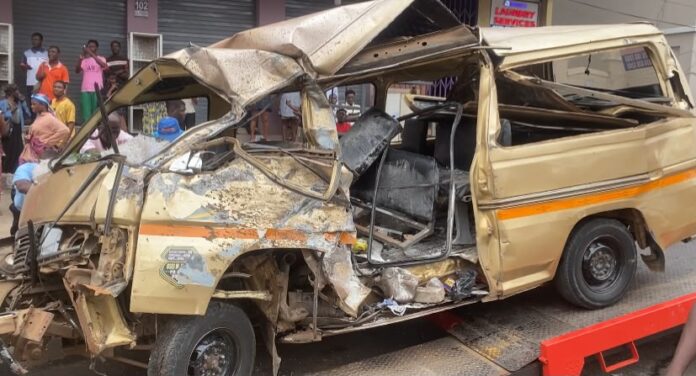

A member of the Public Accountability Committee of the Ghana Institution of Engineering (GhIE), Ing Dr Charles Kwarteng Asafo-Adjei, has warned that Ghana’s roads are edging closer to being declared unsafe for human use.
He as therefore urged government to treat the country’s deteriorating road safety record as a national emergency,
Speaking on Joy FM’s Super Morning Show on Thursday, August 27, Dr Asafo-Adjei said the GhIE’s latest infrastructure scorecard placed Ghana close to the lowest performance category by rating the country’s road safety E2.
“Road safety was graded E2. It means we are at the next stage where, virtually, our roads may be declared unsafe for human use,” he said.
He stressed that the issue was about protecting lives, not just about expanding infrastructure, and urged policymakers to act with urgency.
Dr Asafo-Adjei further revealed that Ghana is currently losing an average of eight people to road crashes daily, up from about six a day between 2001 and 2003.
He said the figure translates into roughly 2,000 to 3,000 deaths annually, a number that does not account for the many others who suffer injuries or permanent disabilities.
“Every day, about eight people are dying. If you multiply that by the number of days in a year, we are already talking about 2,000 to 3,000 people dying annually,” he said.
He attributed the worsening trend to rising demand for road transport, deteriorating infrastructure and inadequate maintenance.
“Our mode of transport in Ghana is basically road, and anything that affects roads and bridges affects road users,” he said.
He warned that expanding the road network alone would not solve the problem, since vehicle numbers and transport demand are growing faster than infrastructure supply.
“We may be expanding the infrastructure, but the rate at which vehicles are growing means that demand is growing faster than supply,” he said.
Dr Asafo-Adjei said the impact was also being felt in hospitals, which are under increasing pressure from crash victims requiring emergency and long-term care.
“The hospitals are under pressure. If you go to any of the wards and really want to understand, the evidence is in the hospitals,” he said.
He called for improved road maintenance, stronger enforcement of traffic regulations, sustained public education and closer regulation of motorcycles and vehicles along high-risk corridors.