
The government is planning to procure 1,200 megawatts (MW) of combined-cycle thermal power capacity by 2029 as part of measures to lower electricity costs and improve the reliability of Ghana’s power supply.
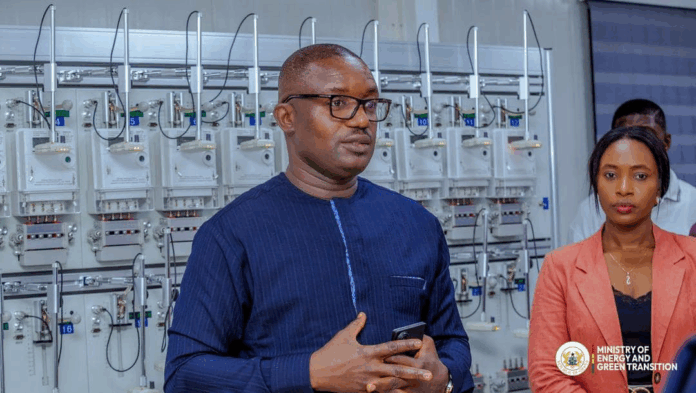
Minister for Energy and Green Transition, Dr John Abdulai Jinapor, said the initiative is expected to provide the country with additional generation capacity while reducing the cost of power for households and businesses.
Speaking at the 2026 Future of Energy Conference, Dr Jinapor said the government had adopted an ambitious plan to develop the thermal capacity using a combined-cycle system.
He described the project as a potential game-changer for Ghana’s energy sector and said government’s projections indicate that the new capacity could be completed by 2029.
According to the Minister, increasing domestic generation capacity is crucial to achieving a financially sustainable power sector and improving the competitiveness of Ghanaian industries.
He, however, acknowledged a challenge in meeting the country’s power requirements between now and 2029 without creating excess capacity and additional financial obligations once the new plants become operational.
Dr Jinapor said his ministry was therefore working with stakeholders, including energy sector experts, to develop an interim power arrangement that would meet immediate electricity needs without leaving the sector with costly long-term commitments.
He explained that Ghana needed additional power in the short term, but the arrangement must be carefully structured to ensure that it does not become a financial burden when the government’s own generation capacity comes online in 2029.
The Minister said the 1,200MW project formed part of broader reforms to restore financial stability to the power sector and reduce the cost of electricity.
He also disclosed that the government had paid $1.7 billion of inherited debts owed to Independent Power Producers (IPPs), while restoring the World Bank guarantee.
Beyond debt payments, Dr Jinapor said negotiations with IPPs had helped the country save about $250 million.
He added that the transition from liquid fuel to natural gas for thermal power generation had generated further savings of approximately $500 million in the previous year through reduced fuel imports.
Dr Jinapor said the government would continue to pursue measures that improve efficiency, strengthen energy security and create a more affordable and sustainable electricity supply for Ghana.
READ ALSO:
SONABEL considers opening Bagré Dam spillway on Friday amid rising water levels