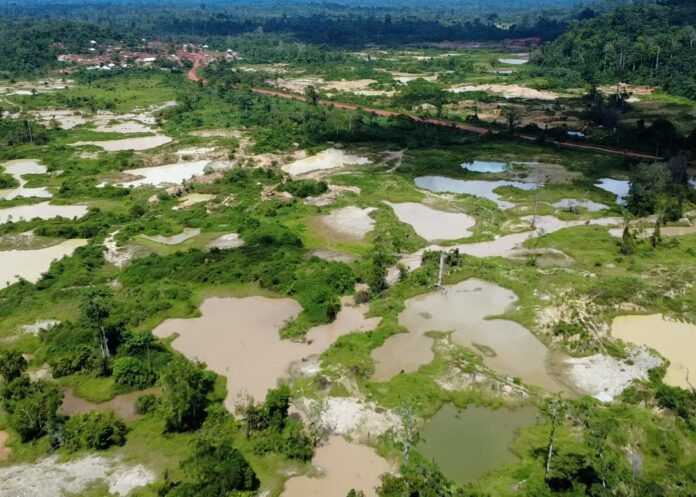

Medical and public health experts are warning that Ghana could face a major public health crisis within the next five years if urgent action is not taken to end the environmental and health consequences of illegal mining.
The warning came during the 10th edition of the Loud and Green X Space, a discussion themed “Galamsey: The Health and Livelihood Crisis,” where health professionals painted a grim picture of what continued inaction could mean for Ghanaians living near mining sites.
Public health researcher Dr Floret Maame Owusu told the forum that the danger with galamsey lies in what cannot immediately be seen. Toxic byproducts released during illegal mining, she explained, can alter cells at a genetic level leading to dire consequences in future.
“From my perspective as a medical doctor, the thing about galamsey is that these chemicals that are released from galamsey result in a lot of mutations which eventually lead to cancers.”
Dr Owusu added that unborn children are among the most vulnerable.
“For pregnant women who are exposed to these chemicals, they end up having children who have some developmental issues.
“In the next five years, if we do not deal with this, we’ll have a generation of children who will be born with a lot of developmental issues in areas where these galamseys are being operated,” he said.
Mercury, cyanide, lead and arsenic were flagged as the chief culprits, substances that experts say don’t need to build up in large quantities to do serious harm. Even minor exposure, Dr Owusu noted, can carry outsized health risks.
Beyond individual illness, the ripple effects could hit Ghana’s health system directly, straining resources in communities where many residents already struggle to afford specialised care.
Researcher Dr Forgive Awo Norvivor pushed back on the five-year timeline altogether, suggesting the crisis may already be closer than experts think.
“Because as we speak, about 60 percent of rural populations still do not have access to clean water.”
Both experts urged government and stakeholders to stop treating galamsey purely as an environmental or economic issue and start responding to it as an active health threat, one requiring prevention, monitoring and treatment systems built specifically for exposed communities, not just enforcement against miners.