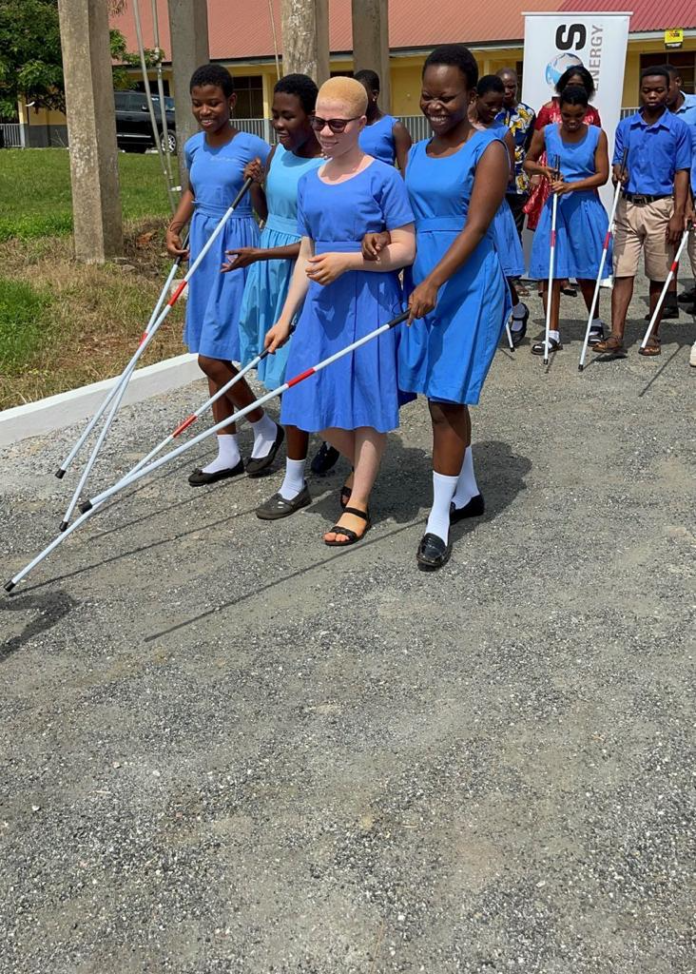

For many children with special educational needs, the classroom is more than a place to learn.
It is a place where they are supposed to discover their abilities, build confidence and prepare for a life of dignity and independence.
But across Ghana, that promise is being threatened by a shortage of specially trained teachers in special schools.
At a time when children who require specialised attention need teachers with the right skills, knowledge and patience to help them learn, many special schools are instead relying heavily on regular teachers who have little or no specialised training.
The situation has left heads of special schools deeply worried about the future of the children entrusted to their care.
Speaking at the Annual Conference of Heads of Special Schools in Ghana, the Chairperson of the Conference of Heads of Special Schools (COHESS), Roseline Frepomaa Adjepong, said the country had trained special education teachers within the education system, yet many of them were not being posted to special schools where their expertise was most needed.
Her concern is simple but painful: the teachers exist, but the children who need them most cannot access them.
According to Madam Adjepong, the shortage has forced headteachers of special schools to take regular teachers who are posted to their institutions and train them on the job before they can begin to make a meaningful impact.
That arrangement, she said, is placing an enormous burden on already stretched schools.
70 PER CENT ARE REGULAR TEACHERS
The scale of the problem is even more troubling.
Only about 30 per cent of teachers in special schools are specially trained, while the remaining 70 per cent are regular teachers.
Behind those percentages are real children.
Children who may need a teacher who understands how to communicate with them.
Children who may require specialised teaching methods, patience and individual attention.
Children whose progress can depend heavily on whether the person standing in front of them understands their particular educational needs.
For such learners, having an untrained teacher is not simply a staffing problem.
It can mean another barrier between them and the education they deserve.
And for teachers who enter special schools without specialised training, the challenge can be equally overwhelming.
They must learn while teaching, often depending on headteachers and experienced colleagues to show them how to handle situations they were never specifically trained for.
‘THE TEACHERS ARE THERE’
What makes the situation particularly difficult for school heads is the belief that Ghana already has trained personnel who could help close the gap.
Madam Adjepong said there are many trained special teachers within the system who are yet to be posted to special schools.
The question, therefore, becomes: Why are the teachers trained for special education not being deployed to the schools where they are desperately needed?
Every year, parents send their children to school hoping that education will give them a better chance in life.
They hope their children will learn.
They hope they will become independent.
They hope they will not be defined by their disabilities.
But when schools do not have enough specially trained teachers, those hopes can become painfully fragile.
A CALL FOR URGENT ACTION
The heads of special schools are therefore calling for greater attention to the staffing needs of their institutions.
They want trained special education teachers posted to special schools so that learners can receive the specialised instruction they need instead of relying predominantly on regular teachers who must first be trained after arrival.
The issue is not about whether regular teachers are willing to help.
It is about whether the education system is giving children with special needs the same seriousness, investment and opportunity they deserve.
Meanwhile, Professor Smile Gavua Dzisi, Deputy Director-General of the Ghana Education Service (GES) in charge of Management Services, said the government was working to address the challenges confronting special schools.
That assurance offers hope.
But for the heads, teachers, parents and, most importantly, the children in these schools, hope must eventually become action.
Because every child deserves a teacher who understands how to unlock their potential.
Every child deserves a classroom where they are not treated as an afterthought.
And every child with a disability deserves an education system that sees their ability before their limitation.
Ghana’s special schools are not asking for special treatment. They are asking for the specialised support their learners need to have a fair chance at life.
The children are already in the classrooms.
Now, Ghana must ensure the right teachers are there to teach them.
Srem-Sai writes: Legal vacations and trials; why the GBA President is…