
When people think about Ghana’s chieftaincy institution, they often picture chiefs in colourful regalia, traditional ceremonies, or the important role traditional leaders play in resolving disputes and preserving culture.
What many do not see are the public officers working quietly behind the scenes to ensure that these institutions function effectively every day.
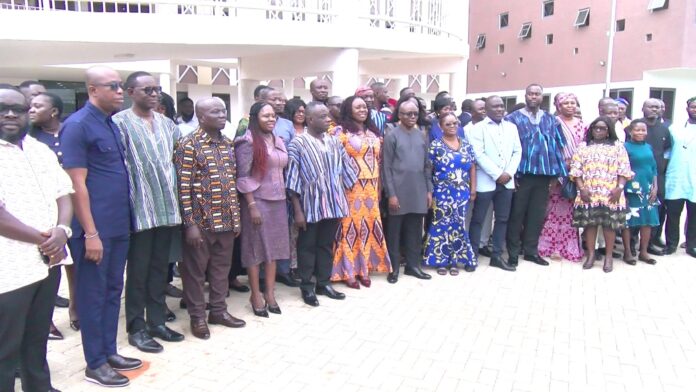
On Tuesday, July 22, dozens of these unsung professionals gathered at the Institute of Local Government Studies (ILGS) in Ogbojo for a two-day capacity-building workshop aimed at strengthening the administration of the National and Regional Houses of Chiefs.
The participants, registrars, and human resource managers play a pivotal role in the smooth running of Ghana’s chieftaincy institutions.
They keep official records, manage judicial processes, coordinate meetings, process staff matters, and serve as the bridge between traditional authorities and the Civil Service.
Opening the workshop, Deputy Minister for Local Government, Chieftaincy and Religious Affairs, Rita Naa Odoley Sowah, described the programme as an important investment in the future of Ghana’s traditional governance system.
“The institution of chieftaincy remains one of the most enduring and respected pillars of governance in our country,” she said, noting that while chiefs provide leadership within their communities, effective administration is essential for the institution to remain credible, efficient, and responsive to the needs of the people.
She explained that the demands placed on registrars have evolved over the years, requiring them to combine technical expertise with diplomacy, integrity, leadership, and a sound understanding of both public administration and customary governance.
“Registrars occupy a unique position,” she noted. “They must balance the requirements of the Civil Service with the customs and traditions that define our chieftaincy institutions.”
Over the course of the workshop, participants will receive practical training in judicial administration, records management, leadership, institutional governance, and human resource management.
Sessions will also focus on handling petitions, managing case files, scheduling hearings, processing promotions and leave, and understanding the legal framework governing chieftaincy in Ghana.
The Head of the Civil Service, Dr. Evans Aggrey-Darkoh used the occasion to announce progress on key issues affecting the Houses of Chiefs.
Among the major developments is the Government’s effort to harmonise the salaries and conditions of service of Counsel serving the Regional Houses of Chiefs with those of lawyers at the Attorney-General’s Department.
According to him, the initiative is intended to attract and retain qualified legal professionals who will strengthen the judicial work of the Houses of Chiefs.
He also addressed concerns over delays in processing promotions for officers who were successful in the 2025 promotion exercise, assuring participants that the Ministry and the Public Services Commission are working together to resolve Human Resource Management Information System (HRMIS) challenges responsible for the delays.
For many participants, these assurances reflected a growing recognition of the critical role they play in Ghana’s governance architecture.
Welcoming participants to the workshop, Chief Director of the Ministry, Alhaji Amin Abdul-Rahaman, described registrars as the administrative backbone of the chieftaincy institution.
He encouraged participants to use the workshop as an opportunity to exchange ideas, share experiences, and develop practical solutions to the challenges they encounter in their daily work.
“Our effectiveness as institutions depends largely on the professionalism and competence of the officers who support them,” he said.
The workshop comes at a time when Ghana continues to strengthen collaboration between traditional authorities and state institutions to promote peace, good governance, and local development.
While chiefs remain the visible face of traditional leadership, the success of the institution depends just as much on the dedicated public servants working behind the scenes to ensure that every case is properly documented, every record preserved, and every administrative process carried out with fairness and professionalism.
As the two-day programme unfolds, one message stands out: preserving Ghana’s rich chieftaincy heritage requires more than tradition alone.
It also demands capable institutions, skilled professionals, and a commitment to continuous learning.
Also read: