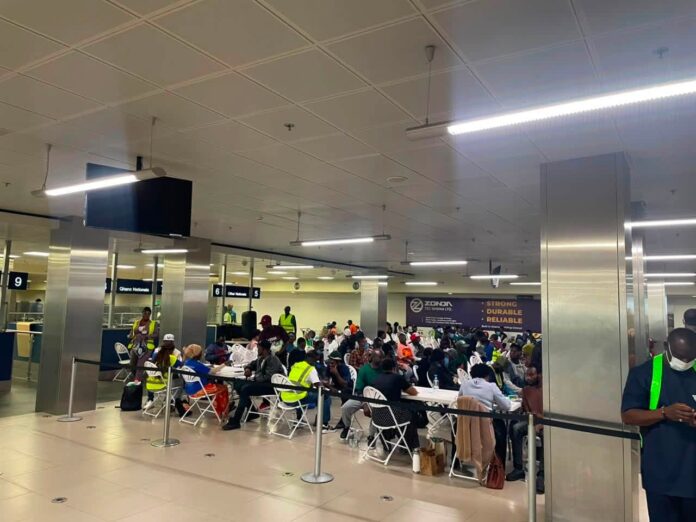

One hundred and forty-four Ghanaian migrants who had been stranded in Libya returned home on Tuesday, July 14, 2026, in a joint humanitarian evacuation exercise led by the International Organization for Migration (IOM) and the Government of Ghana.
The returnees touched down at the Accra International Airport in two separate batches, arriving about 20 minutes apart, where a multi-agency reception team was on hand to receive them.
Officials from the Ministry of Foreign Affairs, the Ghana Immigration Service, the National Disaster Management Organization (NADMO), the Ministry of Gender, Children and Social Protection, the Department of Social Welfare, and the Ghana Health Service were among those present to coordinate the migrants’ processing and care.
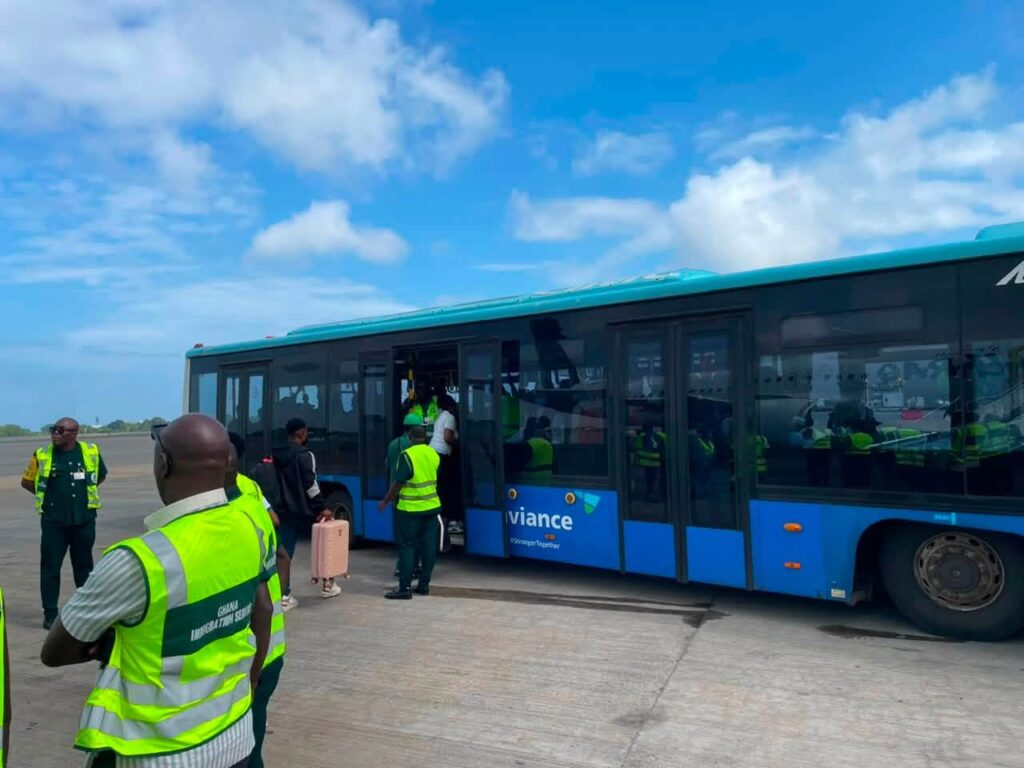
Announcing this on its Facebook page, the Foreign Affairs ministry revealed that the evacuation was carried out under IOM’s Voluntary Humanitarian Return (VHR) Programme, which the organisation runs in partnership with the Ghanaian government to bring home nationals stranded in conflict-affected or high-risk transit countries.
Libya has long served as a major transit point for African migrants attempting onward journeys to Europe, often via perilous Mediterranean crossings, and has repeatedly been flagged by rights groups over the conditions facing migrants held or stranded there.
On arrival, the returnees were taken through immigration and health screening before receiving humanitarian assistance that included food, psychosocial support, and help with transportation.
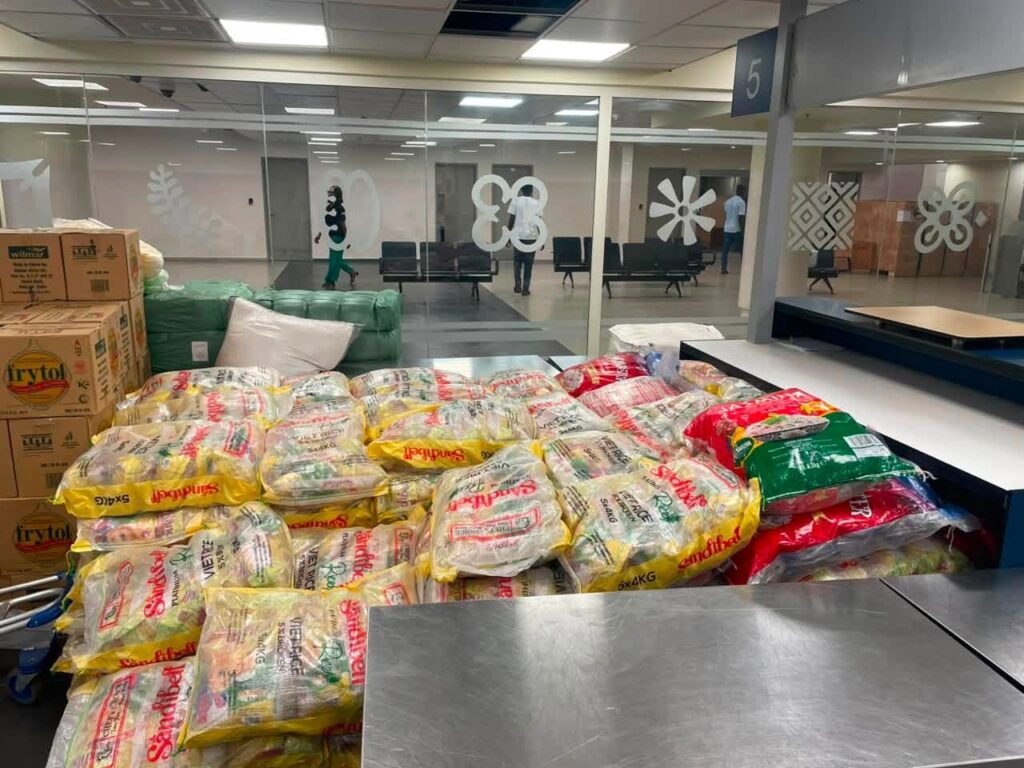
Authorities said the migrants would also be enrolled in reintegration programmes, offering livelihood support, vocational skills training, and other socio-economic empowerment initiatives, depending on individual assessments of each returnee’s needs.
Government officials used the occasion to reaffirm the state’s commitment to protecting Ghanaians abroad, thanking the IOM and other partners for their continued role in facilitating such evacuations and supporting returnees’ reintegration into their communities.
Officials also used the moment to renew calls for safer migration practices, urging prospective travellers to pursue legal migration pathways and steer clear of irregular routes and human smuggling networks, which have repeatedly proven deadly for migrants attempting to reach Europe through Libya and across the Mediterranean.
The Ministry of Foreign Affairs said it would continue working with the IOM, Ghana’s diplomatic missions, and relevant national institutions to extend consular support to Ghanaians in distress abroad, as part of a broader push to promote safe, orderly, and regular migration.