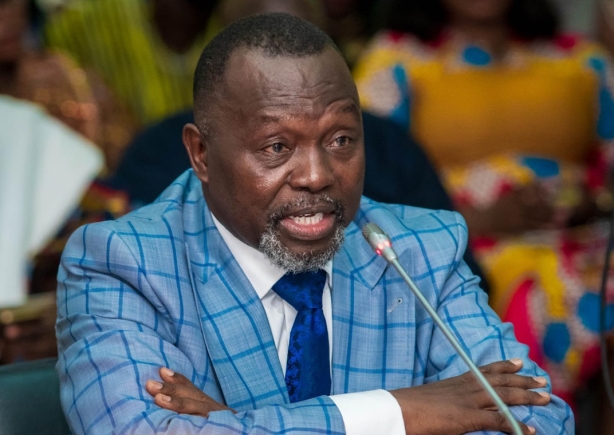

The Attorney-General and Minister for Justice, Dr Dominic Ayine, has laid the Tribunal Bill, 2026 before Parliament, seeking to reintroduce public tribunals as part of reforms aimed at strengthening Ghana’s justice delivery system and improving access to justice.
The Bill, which has undergone its first reading, seeks to operationalise Article 126 of the 1992 Constitution, which provides for tribunals within Ghana’s judicial system but has remained largely inactive over the years.
If passed, the legislation will establish a reformed tribunal system to operate alongside the conventional courts, backed by constitutional safeguards, oversight mechanisms, and protections for due process and fundamental human rights.
According to the Attorney-General, the proposed reforms are intended to address gaps in the existing legal framework, reduce the growing backlog of cases in the courts, and broaden access to justice while encouraging greater citizen participation in adjudication processes.
The Bill proposes a two-tier tribunal structure comprising Regional Tribunals and District Tribunals, both of which will operate under the judiciary, supervised by the Judicial Council and a proposed Tribunal Oversight Committee.
Under the proposed law, Regional Tribunals will exercise concurrent original jurisdiction with the High Court over specified criminal matters, including economic crimes, narcotics offences, tax-related offences, customs violations, and cases involving loss of state funds or property.
District Tribunals, on the other hand, will have concurrent jurisdiction with Circuit Courts over selected criminal matters. However, the Bill excludes offences such as treason, capital offences, and other cases triable on indictment.
The proposed legislation also excludes matters relating to constitutional interpretation under Article 130, human rights violations, and any other cases specifically excluded by law.
It further outlines guiding principles for the operation of the tribunals, including fairness, transparency, efficiency, independence, and respect for fundamental human rights. Decisions of the tribunals will also be subject to appellate review.
The Bill additionally provides for the appointment, discipline, retirement, and removal of tribunal members, as well as a code of conduct to regulate their operations.
Dr Ayine said the proposed reforms are designed to address historical concerns surrounding public tribunals by establishing a modern system firmly anchored in constitutional safeguards, due process, and judicial accountability.
Following its first reading, the Bill has been referred to Parliament’s Constitutional and Legal Affairs and Judiciary Committees for further consideration.
The referral comes after the Attorney-General last week met with the joint committee to deliberate on the proposed legislation ahead of its formal presentation to the House.