


Authorities in the Tano North Municipality in the Ahafo Region are raising alarm over the increasing rate of school dropouts linked to illegal mining and cocoa farming.
The Municipal Chief Executive, Pius Opoku, says more children are being drawn into illegal mining activities in Adagyamem and Afrisipa at the expense of their education and health.

His concern follows the recent arrest of 13 illegal miners, seven of whom were under 18, including five WASSCE candidates currently writing their exams.
Illegal mining continues to lure many children into hazardous work, while others are exploited on cocoa farms across the municipality.
Communities such as Afrisipa, Koforidua, Adagyamem, Dwenase, Apesika, Abukrom, and Kwabenakrom have been identified as hotspots for the worst forms of child labour.
A joint operation by the Regional Security Council and the Municipal Security Council led to a raid on illegal mining sites to remove children, but the problem persists.
Research by Nature Aid Ghana, a non-governmental organisation, revealed that 33 per cent of children in these communities are engaged in hazardous activities such as illegal mining and exploitative labour on cocoa farms, with the majority being boys.
The organisation also identified the long distance between schools and homes as a major cause of absenteeism, with many children trekking several kilometres daily.
This situation is pushing more children out of classrooms and into the search for economic gains despite the dangers associated with galamsey.
Mr. Opoku identified a lack of community support as one of the major setbacks in addressing the problem.
“About five weeks ago, we arrested some people engaged in illegal mining at Afrisipa. Out of them, about five were under the age of 17. In Tano North Municipality, the main illegal mining activities are happening at Adagyamem. The last time the Regional and Municipal Security Councils visited the site, we realised the area was becoming badly devastated. But the people are not speaking up about what is happening, and the statistics show children are being involved in these illegal acts,” he said.
Mr. Opoku stressed that the municipality has zero tolerance for child labour and pledged to enforce the Children’s Act.
“I want to put it on record that Tano North has zero tolerance for child labour. As Municipal Chief Executive, I will ensure the Children’s Act is strictly enforced,” he stated.
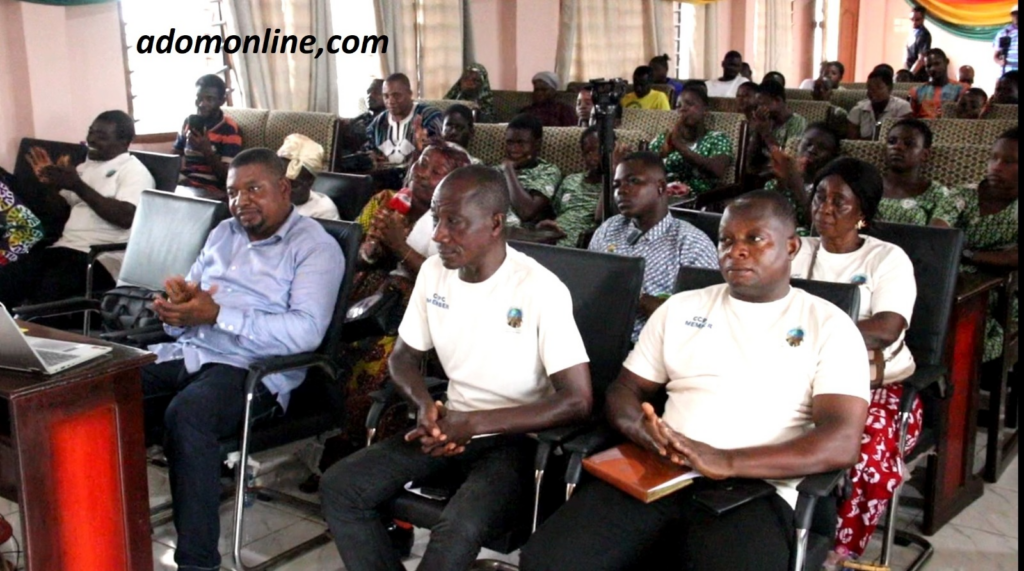
As part of activities marking the International Day Against Child Labour, Nature Aid Ghana organised a public sensitisation forum at Duayaw Nkwanta, the municipal capital, to share its findings.
Executive Director of Nature Aid Ghana, Joseph Baradoe, said child labour is affecting school retention.

He disclosed that the organisation has lined up interventions such as distributing bicycles and uniforms to pupils to ease their burden, while the assembly has promised to build schools in communities highlighted in the research.
“Some of these children, as young as 12, are at galamsey sites digging for gold to sell. Nearby, there are deep pits dug by adults, and these children can easily fall in and die. This has serious effects on their education. Our visits to schools show school dropout rates are increasing, and those still in school are not attending regularly. In forest communities where cocoa farming is common, children are also being used for farm work,” he said.
Meanwhile, the Ahafo Regional Development Planning Officer commended Nature Aid Ghana for the data, saying it would be useful in shaping the region’s development plans.
