
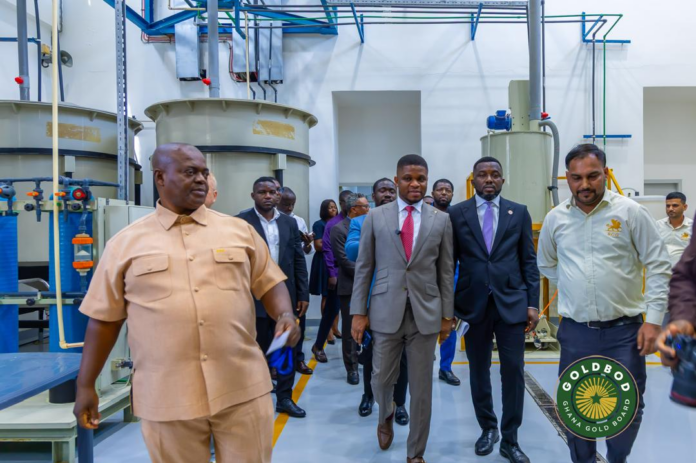

Royal Gold Refinery Limited has pledged to align its operations with the government’s 24-Hour Economy vision to boost gold processing and create more jobs.
The Chief Executive Officer of Royal Gold Refinery Limited, Eric Frimpong Santeng, said the 24-hour model would expand opportunities for young Ghanaians seeking full-time employment.
His remarks follow a visit by the Chief Executive Officer of the Ghana Gold Board, Sammy Gyamfi, who toured the private refinery to explore a possible operational agreement with the company.
“It’s our vision to support the President’s vision, and the 24-hour economy is what we want to do here, to make sure our youth gain full-time employment. As I mentioned, we’ve had the privilege of engaging experienced technical people to train our local team. Once they learn, they take over,” he said.
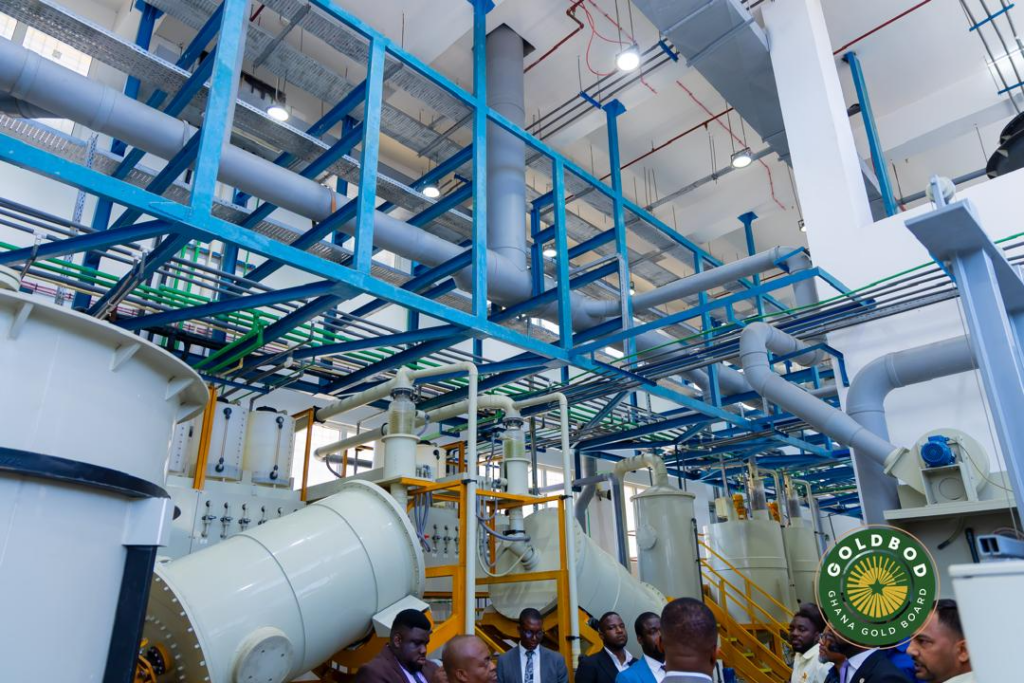
According to Mr Santeng, the facility, when operating at full capacity, will employ about 27 people per shift.
On his part, Mr Gyamfi noted that GoldBod has engaged a technical expert to assess the facility and advise on the viability of a refinery agreement.
“Our expert will be working with them on a daily basis, following up and assisting where necessary. He has a clear understanding of the system we will be working with,” he said.
He expressed optimism that both parties would soon finalise an agreement for the full operationalisation of the refinery.
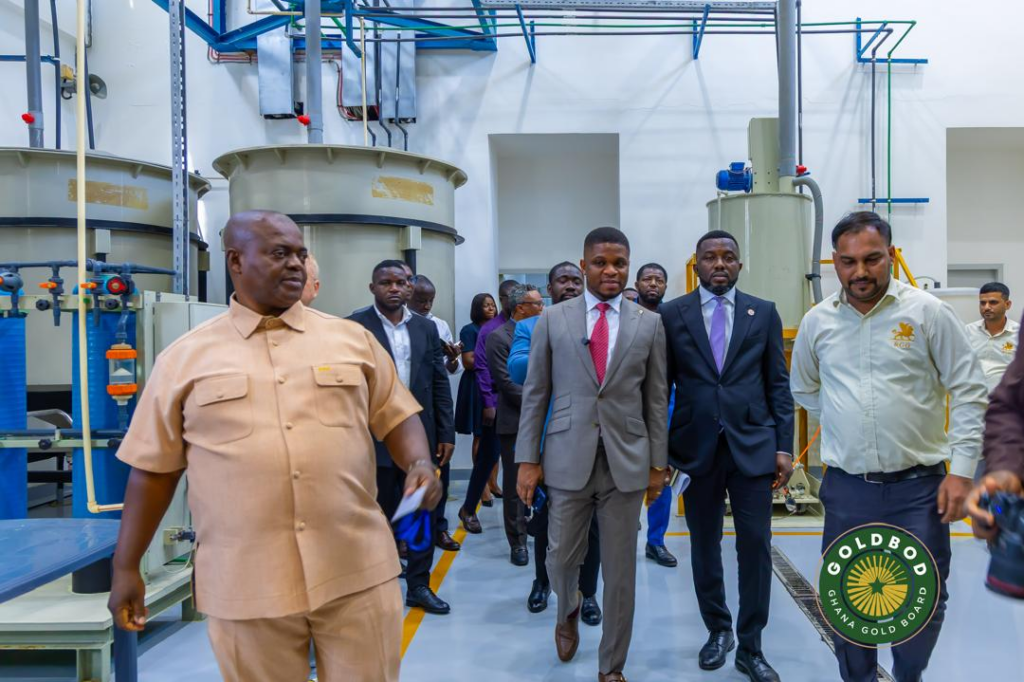
“We are very optimistic we can resolve these issues and have an agreement in a matter of weeks. Please work with us. Next time I come here, I may come with the Finance Minister, the Lands and Natural Resources Minister, and maybe the Governor. He is a shareholder, and that’s our plan,” he added.
The Royal Ghana Gold Refinery, commissioned on August 8, 2024, has the capacity to refine 400 kilograms of gold daily.
The Accra-based facility can refine gold up to 24 carats with a purity level of 99.99 per cent, marking a key milestone in efforts to move Ghana from raw mineral export to value addition.
In a related development, Ghana has also strengthened its gold value chain through a partnership between GoldBod and Gold Coast Refinery, with technical support from South Africa’s Rand Refinery.
Under that arrangement, GoldBod will supply at least one metric tonne of gold weekly to Gold Coast Refinery from February 1, 2026, with production expected to scale up over time. The refinery has an annual processing capacity of up to 180 tonnes.
The refined gold will meet a minimum purity of 99.5 per cent, with capacity for up to 99.999 per cent purity. Exported bars will carry hallmarks from Gold Coast Refinery, GoldBod, the Ghana Standards Authority, and the Bank of Ghana to ensure international credibility and traceability.
Post-IMF era could test Ghana’s economic gains – AGI Chief warns
Four arrested for smuggling over 100 bags of cocoa into Ghana
