
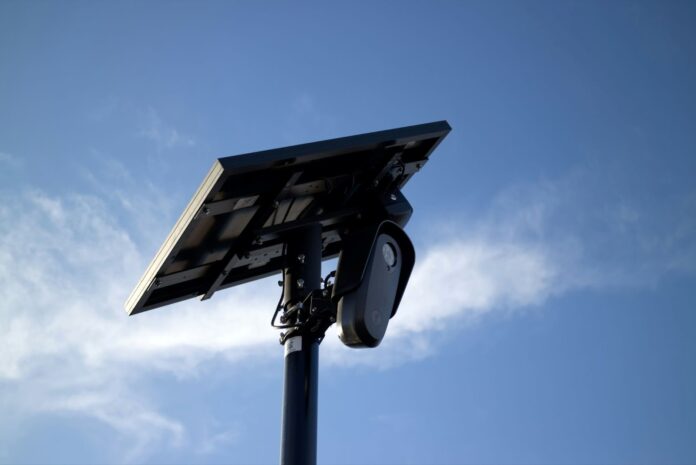

Automatic License Plate Recognition (ALPR) cameras are often referred to as ANPR for short. They serve as a critical, high-tech interface between automated tolling systems, transportation infrastructure, and law enforcement.
With the use of high-speed optical character recognition, as well as AI, these systems help convert images of license plates into actionable, digital data.
So how do ALPR cameras fit in across traffic management and toll collection in particular? How does it play its part in technology and law enforcement? Let’s take a look at where they are a necessity for these areas of day-to-day life.
ALPR in traffic management
ALPR helps with many aspects of traffic management, especially when it comes to congestion. The systems ALPRs use help to track traffic flow, identify any bottlenecks, and monitor travel times, all in real-time. They alert traffic control centers to deal with traffic jams and potential accidents.
As well as that, cameras help to manage access to specific zones, where only authorized vehicles are permitted to enter. The data collected through these cameras also helps urban planners to make informed decisions regarding road infrastructure improvements.
ALPR in toll collection
The use of ALPR helps to provide free-flow or barrier-free tolling, enabling vehicles to simply pass through at highway speeds without needing to stop. This can help greatly with congestion that builds at toll plazas and, in turn, helps to lower CO2 emissions.
Instead of transponders, the cameras themselves will capture the license plate, and that’s automatically matched up with a user account to ensure fast and accurate, contactless billing.
With high-resolution sensors, it can accurately count, classify, and identify the vehicles, reducing the influence of human error and preventing revenue loss.
ALPR in technology and law enforcement
ALPR acts as a 24/7 surveillance tool, helpful in identifying stolen vehicles, cross-checking plates against databases of interest, and tracking criminals.
Fixed and mobile ALPR units are helpful for average speed calculations over a distance and help enforce traffic laws, as well as enhancing road safety.
With a modern ALPR camera, they’re highly integrated, often using infrared for day/night visibility with edge computing, which processes data and reduces the need for extensive backend infrastructure.
Much of ALPR technology has evolved to provide efficient, secure, and automated solutions for modern transportation. Some systems are already in use globally for both police surveillance and electronic tolling.
Future of ALPR
There’s still a lot of potential to be had with ALPR and plenty of advancements to be made in order for them to be even better for performance. These include:
AI and deep learning integration
Next-generation ALPR will use AI to improve accuracy and allow for easy recognition even in low-light and poor weather conditions.
Beyond the plate
Future ALPR systems are heading towards the Make, Model, and Color recognition. This enables the identification of vehicles, even when the plate is removed, dirty, or obscured.
Smart city and IoT integration
ALPR is becoming central to many smart city efforts when it comes to managing traffic flow, optimizing parking, and integrating with 5G networks for comprehensive, urban mobility data.
Private sector adoption
While it’s traditionally used by law enforcement, adoption of its use is rising in fleet management, logistics, and many areas of the private sector.
The use of ALPR cameras has its benefits, so it’s great to explore the potential of where they can fit in many aspects.
