

Cement prices in Ghana could soon rise if persistent congestion at the country’s ports continues to delay the offloading of clinker, the primary raw material used in cement production.
Industry stakeholders say vessels carrying clinker are forced to wait between 13 and 20 days before berthing, leading to mounting demurrage charges that may ultimately be passed on to consumers.
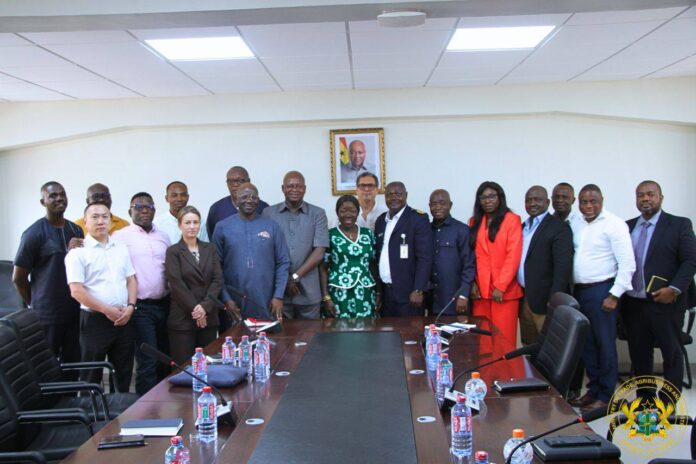
The concerns were raised at an emergency meeting held on Monday, February 23, 2026, convened by the Minister for Trade, Agribusiness and Industry, Elizabeth Ofosu-Adjare, together with the Minister for Transport, Joseph Bukari Nikpe.
The meeting brought together cement manufacturers and other key players to address operational challenges that have left shipments stranded at the ports for up to three weeks.
Chief Executive Officer of the Chamber of Cement Manufacturers Ghana (COCMAG), Bishop Dr. George Dawson-Ahmoah, painted a grim picture of the situation, stating that the cement industry is “leaking” financially due to escalating demurrage costs.
Manufacturers cautioned that the longer vessels remain offshore awaiting available berth space, the higher the financial burden, a cost that could reflect in cement prices on the domestic market.
Although stakeholders acknowledged ongoing dredging works at the port, they called for immediate interim solutions.
Proposals included granting temporary access to additional berths and allowing non-dust generating materials such as gypsum and slag to be handled at alternative berthing points to ease congestion.
In response, Mr. Nikpe assured industry players that government is accelerating dredging works to expand berth capacity and accommodate larger vessels.
He explained that the existing berths are unable to handle bigger ships efficiently, contributing to long turnaround times and congestion.
According to him, once the dredging project is completed expected by the end of June, the port will be capable of receiving vessels exceeding 20,000 tonnes, up from the current 8,000-tonne limit. He said this would significantly reduce waiting times and vessel traffic.
He further noted that parts of the dredging works, particularly around Berth 14, should be completed within one to two weeks, providing some relief ahead of the full project completion.
For her part, Mrs. Ofosu-Adjare underscored the direct link between port inefficiencies and rising production costs.
“If we want good prices, we must also perform our part of the bargain to ensure that production costs remain efficient,” she stated.
She stressed that government’s objective is not only to prevent price increases but also to address systemic bottlenecks affecting industrial operations. She observed that even a single day’s delay in business activity can result in millions of dollars in losses.
President of the Association of Ghana Industries (AGI), Pharm. Kofi Nsiah-Poku, welcomed the swift response by the two Ministers and expressed confidence that the interim steps and completion of dredging works would restore efficiency and ease cost pressures.
However, industry stakeholders maintain that unless congestion at the ports is resolved promptly, rising demurrage charges could drive cement prices upward, with consumers likely to bear the impact.
ALSO READ:
