
When power changes hands in Ghana, something else changes too: the appetite for advice.
In Ghanaian politics, wisdom often speaks best from the Minority or opposition bench. It is sharp. Measured. Data-driven. It demands accountability and promises consultation. It sounds patriotic, restrained, and even visionary.
And suddenly, the tone shifts. The same voices that once insisted on broad stakeholder engagement now urge patience. The same politicians who demanded transparency begin to defend process. Advice becomes “noise.” Criticism becomes “agenda.” Listening becomes selective.
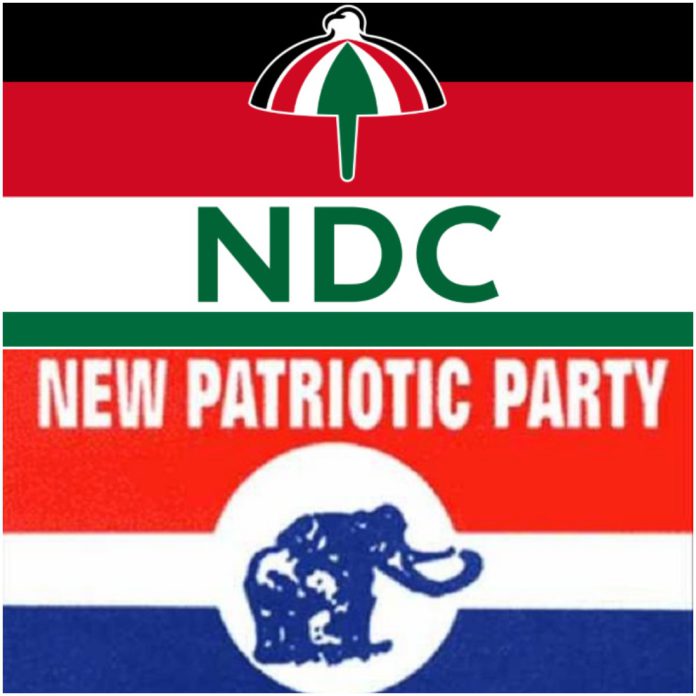
This is not a partisan swipe. It is a recurring democratic pattern. Whether it is the National Democratic Congress or the New Patriotic Party occupying the seat of power, the transformation feels familiar. In opposition, both sound like policy reformers. In government, both sometimes sound insulated.
The issue is not hypocrisy alone. It is structure. It is psychology. It is incentive.
Opposition is fertile intellectual ground. Without executive authority, a political party has only one real instrument: persuasion. It must win public trust through argument. It must scrutinize budgets line by line. It must expose weaknesses in government policy. It must appear responsible enough to govern and critical enough to matter.
In that space, politicians consult widely. They engage civil society. They speak the language of reform. They hold press conferences armed with statistics and moral clarity. It is easier to sound rational when you are not responsible for implementation.
Consider economic debates tied to Ghana’s engagements with institutions like the International Monetary Fund. When in opposition, parties often demand transparency, inclusive dialogue, and safeguards for vulnerable citizens. They promise a better-negotiated path. And the arguments resonate. Because from the outside, governance looks straightforward. Solutions seem clear. Trade-offs appear manageable.
Then comes government. The view from inside is different. Fiscal constraints are real. Bureaucratic systems resist speed. Global shocks disrupt the best-laid plans. Political allies expect rewards. Party loyalists expect protection.
But beyond these structural pressures lies something deeper: the psychology of power. Winning an election feels like validation. It signals that the electorate has endorsed your ideas. And once leaders feel validated, dissent can begin to feel unnecessary, even threatening.
The advisory circle narrows. Criticism from opponents is interpreted as strategy, not sincerity. Internal party discipline tightens. Public disagreement is discouraged in the name of stability. Listening becomes risk management rather than democratic practice. And slowly, the vibrant rationality of opposition gives way to the guarded defensiveness of incumbency.
In Ghana, politics is not merely ideological—it is emotional. Party loyalty often shapes identity. Elections are intense. Victories are celebrated as existential triumphs. That intensity magnifies the shift. When in opposition, a party presents itself as the guardian of national interest. When in power, it can begin to conflate party interest with national interest. Critique then feels like sabotage.
Parliamentary debates harden. Policy conversations become binary. Social media amplifies outrage instead of nuance. The space for bipartisan collaboration shrinks. Yet the irony remains striking: many of the reforms passionately demanded in opposition are the same reforms needed in government—fiscal discipline, procurement transparency, institutional independence, decentralization. Once in office, however, implementation often slows or becomes selective.
It would be easy to dismiss this pattern as political inconsistency. But governance is genuinely harder than opposition rhetoric. Campaign promises collide with fiscal realities. Global economic trends disrupt national planning. Security pressures demand swift decisions. Complex trade-offs emerge. What sounds simple outside government often becomes complicated inside it.
Acknowledging this complexity is important. But it does not excuse the abandonment of openness. Democratic maturity is not measured by how eloquently leaders criticize. It is measured by how willingly they listen when they hold authority.
The Cost of Selective Hearing
When governments dismiss ideas based on their source rather than their merit, the nation loses. Good policy may be delayed. Public trust may erode. Citizens may grow cynical. And cynicism is dangerous. When voters believe that rationality is seasonal—loud before elections and quiet after victory—they disengage. Participation drops. Debate becomes theatre. Politics becomes performance rather than progress.
Ghana’s democracy has achieved remarkable stability since 1992. Peaceful transfers of power have strengthened the Fourth Republic. That is a legacy worth protecting. But stability alone is not enough. The next stage of democratic growth requires cultural evolution from competitive politics to collaborative governance.
The real test of leadership is not how well one argues from the Minority or opposition side. It is whether one governs with the same humility once entrusted with power. Can governments institutionalize consultation rather than treat it as campaign language? Can parliamentary committees function beyond rigid party lines? Can major national reforms be shaped by cross-party consensus instead of electoral calculation?
The farmer in Tamale does not care whether a good agricultural policy originated from Majority or Minority benches. The trader in Makola measures inflation, not party colours. The graduate in Kumasi wants opportunity, not ideological choreography. Wisdom should not relocate when power changes hands.
If rationality only thrives in opposition, then our democracy risks becoming performative. If listening stops at inauguration, then governance becomes defensive.
Ghana does not lack intelligent politicians. We hear them every election cycle—thoughtful, measured, and persuasive. The challenge is consistency. The challenge is to govern with the same openness once demanded from others. Perhaps the real democratic breakthrough will not be another peaceful transfer of power but a transfer of mindset—a moment when leaders understand that electoral victory is not a monopoly on wisdom.
Until then, Ghanaians will continue to notice the shift in tone—the eloquence before power and the caution after it. And they will keep asking a simple question: Has Ghana outgrown competitive politics, or are we ready for collaborative governance?
The writer, Shadrach Assan, is the lead producer for Adom FM’s morning show, Dwaso Nsem.