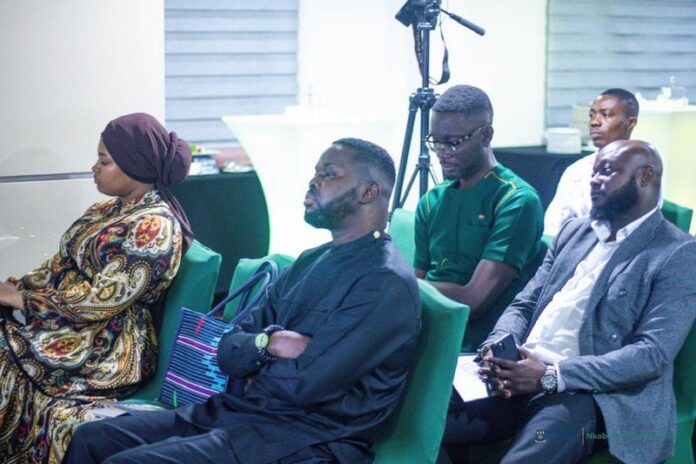

In a bid to foster a deeper understanding of its mission, raise awareness, and encourage engagement among stakeholders, the UG Nkabom Collaborative hosted its inaugural media engagement.
The event, held at the Alisa Hotel in Accra, brought together key media gatekeepers—including editors, presenters, producers, senior journalists, influential bloggers, and food/agriculture content creators—for an evening of strategic dialogue.
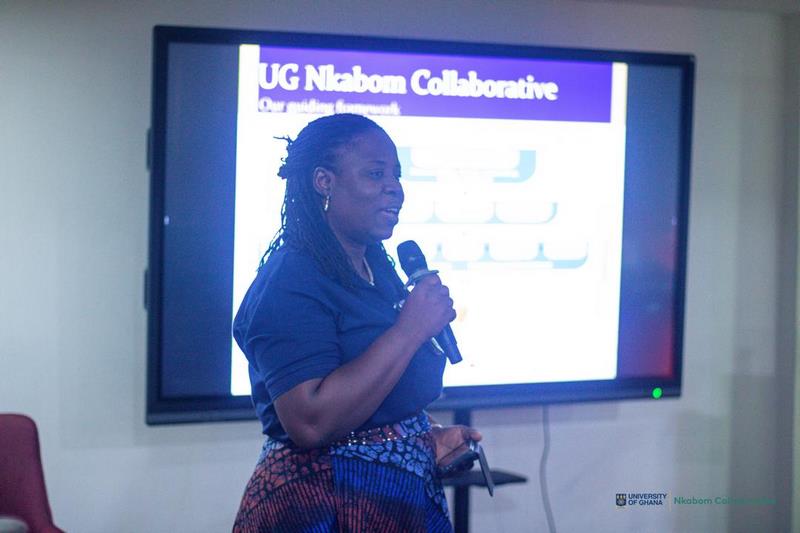
Setting the tone for the engagement, the Collaborative’s Communication Lead, Professor Abena Yeboah-Banin, highlighted the vital role of an informed media in shaping public discourse around Ghana’s agri-food systems.
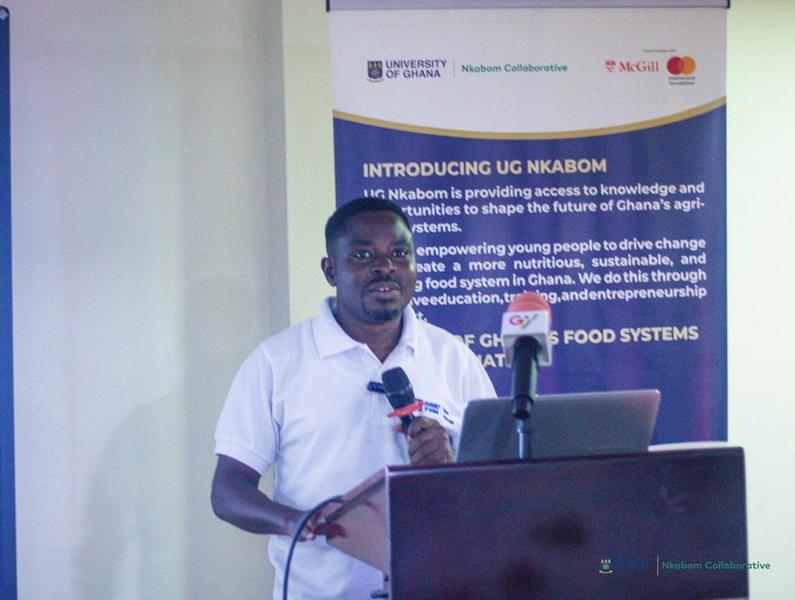
“For you to effectively carry out this role, you must understand Ghana’s food systems and what the Nkabom Collaborative seeks to achieve. You must also be familiar with our processes,” she stressed. She noted that the soirée was designed not only to explain the work of UG Nkabom but also to build enduring relationships with Ghana’s most influential storytellers.
During a presentation on Ghana’s agri-food landscape, the Education Pillar lead, Dr. Hayford Ayerakwa, emphasized the urgency of a multi-stakeholder approach.
Highlighting a stark national paradox, he noted that while over 2 million Ghanaians remain food insecure—including 1 million chronically malnourished children—nearly one-third of all food produced is lost or wasted, according to the World Food Programme’s 2025 country brief. Dr. Ayerakwa argued that these inefficiencies stem from deep structural gaps that fragmented approaches cannot address. “Youth disengagement, fractured support systems, and limited inclusion of vulnerable groups such as women, persons with disabilities, and internally displaced persons provide a compelling case for our holistic, collaborative intervention,” he said.
He stressed that the Collaborative’s approach is grounded in systemic problem-solving rather than traditional project-based thinking. “What we are building is not another project,” he explained, “but a coordinated path that brings young people, academia, private sector actors, and underserved groups into a shared mission to transform our food systems.”
Professor Richmond Aryeetey, Collaborative Lead, presented UG Nkabom’s vision of a Ghana where young people drive the agri-food ecosystem sustainably. “We are partnering with the Mastercard Foundation, other educational institutions, civil society, industry players, and communities to pursue this vision,” he said.
He further explained how the Collaborative’s three pillars—Education, Entrepreneurship, and Access & Success—are strategically designed to address systemic challenges. “By training and equipping human resources, deliberately including women, persons with disabilities, and displaced persons, and providing a complete suite of entrepreneurial support, we aim to drive meaningful, sustainable change,” he added.
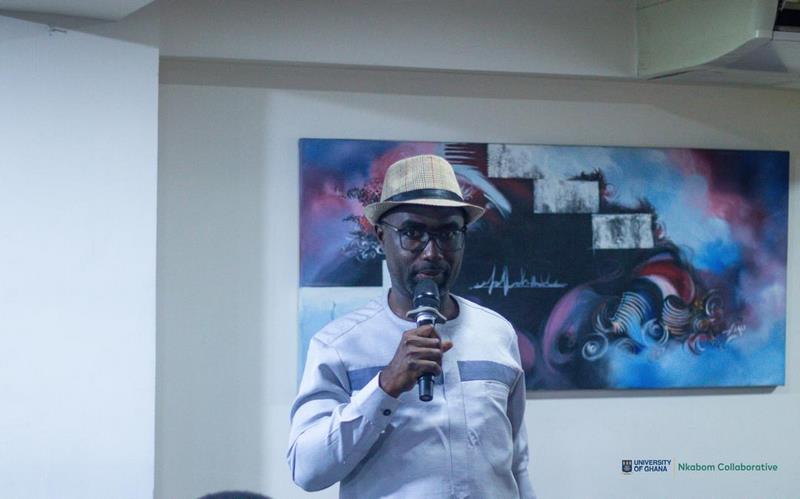
The evening’s panel discussion and interactive Q&A session highlighted the media’s enthusiasm for fostering a strong partnership with UG Nkabom. Journalists called for regular updates, simplified communication of technical issues, and more human-centred stories to bring the initiative’s work to life.
“Let us see the young people themselves—their challenges, successes, and growth,” urged one reporter. Another noted, “Feature not just the usual spokespeople, but the young innovators themselves. Their stories will make this resonate with a wider audience.”
Participants also encouraged immersive experiences for media coverage. “Imagine having this conversation in the middle of your training fields. Seeing the work firsthand would make the story so much more powerful,” one journalist suggested. They recommended predictable communication, such as monthly or quarterly updates, newsletters, or advance notice of events, to help media partners cover the initiative effectively.
A senior journalist emphasized the importance of sustained public engagement: “This conversation is what holds leadership accountable. If we let it fade, so does the pressure to act.”
The soirée marked a foundational step in a long-term strategy to equip media partners with context and clarity, transforming them from passive observers into active allies. By doing so, future coverage can move beyond announcements to drive dialogue, sustain public accountability, and catalyze action around Ghana’s food systems.
About UG Nkabom
UG Nkabom is part of the Nkabom Collaborative—a partnership between the University of Ghana, Mastercard Foundation, McGill University, and six other Ghanaian institutions—working to transform Ghana’s agri-food systems by empowering young people. Through three core pillars—Education, Access & Success, and Entrepreneurship—UG Nkabom connects youth with the training, resources, and expertise needed to thrive in agribusiness.
The initiative prioritizes typically excluded groups, including women, displaced persons, and persons with disabilities. UG Nkabom provides educational opportunities, facilitates access to funding, builds entrepreneurial capacity, and creates pathways to mentorship and industry connections. By placing youth at the centre of Ghana’s food systems, UG Nkabom demonstrates that agri-food is not just an economic sector but a platform for empowerment and national development.