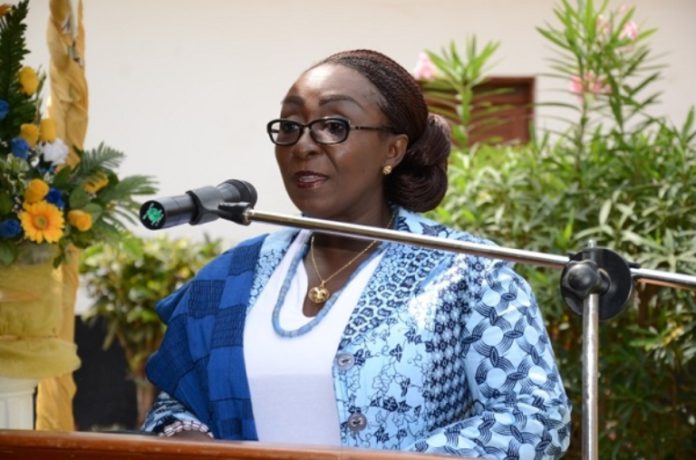

The Minister for Tourism, Culture and Creative Arts, Abla Dzifa Gomashie, has rejected calls for Ghana to adopt a single national language, cautioning that such a move could undermine the country’s rich cultural diversity.
Speaking on Channel One TV’s Face to Face, Madam Gomashie said elevating one language above others would compromise the identities and heritage of various ethnic groups across the country.
She noted that the African Union recognises cross-border, or “vehicular,” languages and has established commissions to promote widely spoken African languages such as Hausa, Ewe, and Swahili (Kiswahili).
Using Ewe as an example, she highlighted that the language is spoken not only in Ghana but also in Togo, Benin, and parts of Nigeria, and is even taught at a university in Germany. She warned that sidelining a language simply because it is not spoken by the majority could lead to the erosion of its associated culture and heritage.
“It’s not a policy that I will be championing anytime soon, and here’s my reason. The African Union, recognising vehicular cross-border languages, has created commissions for Hausa, Ewe, Kiswahili, and others. Take Ewe, for example. It’s spoken in Ghana, Togo, Benin, and some parts of Nigeria, and is taught at a German university. You cannot say that because it’s not spoken by the majority in Ghana, it should die. Its death would take with it everything within the cultural space. This is why UNESCO observes International Mother Language Day,” she said.
While acknowledging that some Ghanaian languages enjoy wider usage than others, Madam Gomashie urged tolerance and inclusivity in national language discussions.
“I think we’re trampling on the sensibilities of other people and their cultures and languages. As I said, it’s not something I’ll champion. While a language widely spoken by the majority should be recognised, we must also be tolerant and accommodating of other people’s languages and cultures,” she advised.
She further highlighted the social value of speaking local languages, noting that using someone’s mother tongue fosters an instant bond and sense of belonging.
“You go to even the ‘koko’ seller or the beans seller, and you speak Ewe to that person. They immediately know you’re not from there, and there’s an instant connection,” she added.