
I began travelling to Burkina Faso about five years ago, during the period when I was recognised as one of West Africa’s top recruiters for Ghanaian universities, moving across borders to connect thousands of brilliant young minds to STEM and innovation pathways. Over time, my work expanded beyond recruitment into nurturing YISTx, a Ghana-born STEM initiative now taking root in Burkina Faso, a vision grounded in youth empowerment, Pan African possibility, and the belief that Africa’s next great innovators are already among us.
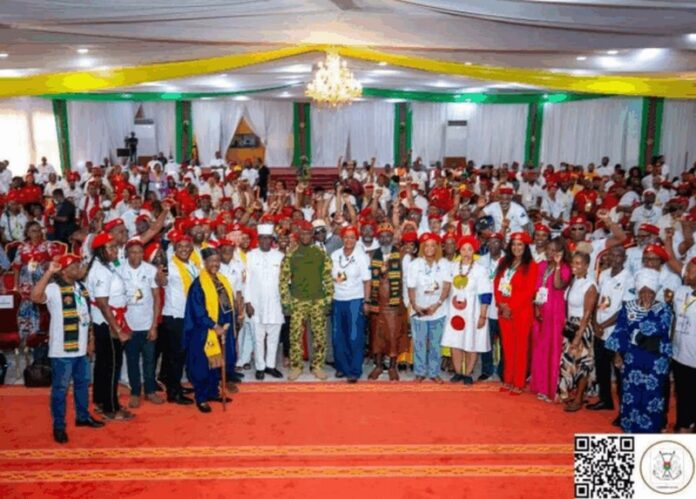
This most recent visit carried a deeper spiritual weight. I was travelling to Ouagadougou for the ADDI Pan African Conversations: All Roads Lead to Ouagadougou, a Diaspora gathering created to strengthen unity, reconnection, and collective purpose across the global African family. This remarkable convening was made possible through the efforts of Ambassador Coulibaly, Burkina Faso’s Ambassador to the United States, whose work opened the door for more than 700 African descendants, many visiting the continent for the first time, to set foot in Burkina Faso. The gathering was led under the visionary guidance of Dr Arikana Chihombori Quao, whose decades of advocacy for African dignity and Diaspora reconnection shaped the spirit of the event.
Those who arrived came not only for heritage tourism, but also for investment pathways, business opportunities, and a renewed connection to the continent. They journeyed from Toronto, Atlanta, Chicago, Detroit, Belzoni, Memphis, Oakland, Baltimore, Brooklyn, St. Kitts, St. Thomas, Jamaica, Trinidad, Barbados, Haiti, and the British Virgin Islands, a diverse sea of returnees answering a shared ancestral call.
Long before stepping into that hall, I had been following Captain Ibrahim Traoré. At first, through tense news reports and social media fragments, and later through speeches that carried rare clarity and conviction. When he expelled France, when reports emerged of French forces burning their abandoned vehicles rather than leave them behind, and when Burkina Faso announced their withdrawal from the West African regional bloc Economic Community of West African States (ECOWAS), he voiced aloud the questions many Africans had carried silently for decades: Who benefits from the ECOWAS silence? Why does the African Union remain silent in the face of internal African crises, terrorism, and foreign interference? His fearlessness awakened something across Africa and the Diaspora, especially among the youth.
So when I learned he would attend the ADDI gathering, a quiet anticipation rose within me. How had my steps, from Mississippi to Africa, through grassroots work, Pan African service, classroom teaching, traditional leadership, and Zetaland, led me here? A softer question followed: Why me, and why now?
Then came the unmistakable voice of Mukasa Willie Ricks, the legendary leader of the All-African People’s Revolutionary Party, who helped popularise the rallying cry Black Power. He moved through the room, stirring a powerful call and response:
“Black Power!”
“Black Power!”
Soldiers stood in their red berets with disciplined calm. Elders and revolutionaries lined the front rows. A low hum of anticipation rippled through the room as we waited for his arrival. When Captain Traoré finally entered, the hall erupted again. But this time, people cried, shouted, stood on chairs, and waved flags. The energy felt like being in the presence of Garvey, Nkrumah, Sankara, Lumumba, Malcolm X, Fannie Lou Hamer, Dr Martin Luther King, Jr., Mandela, and Jerry Rawlings all at once, except this time the leader stood among us, alive and unmistakably of our time.
After the applause settled, he delivered an announcement that changed everything. All fees for Permanent Residency, the first step toward Burkinabè citizenship, would be waived for every participant. All 700 of them. The room gasped. Tears flowed. People embraced.
Ghana has long been the trailblazer in Diaspora reconnection, from the Right of Abode, to the Right of Return, and the global impact of the Year of Return. Yet Burkina Faso’s gesture offered a different message. The first step home would cost nothing, because the Diaspora already belongs. This marked a clear shift from the rising citizenship by investment trend across the continent, a reminder that the spiritual return of Afro Descendants is neither a transaction nor a transactional relationship that can ever be priced or purchased.
As the program moved toward the official group photo, I lingered at the edge of the crowd, unsure whether to step forward. Something whispered: Wait.
Then it happened. He turned. Our eyes met.
I stepped forward and said softly, my voice trembling, “Thank you… thank you. We are proud of you.”
He nodded and replied, “Thank you. Thank you.”
Then he extended his hand first. A deliberate gesture. A firm grip. And in that instant, something moved between us. The handshake felt ancestral, like an echo from another time carried through memory and bloodlines. It was steady and grounding, a moment of recognition that made the room fade until it felt as if only two spirits stood there.
Then the soldiers guided him forward, and I stood there with tears in my eyes, not from sadness, but from belonging and clarity.
We came to Ouagadougou with a purpose. We left determined to build stronger initiatives across agriculture, animal husbandry, and Faso Mabo, a national initiative where every citizen offers free physical labour to build roads, schools, and community infrastructure. It is an extraordinary sight to witness, a living expression of patriotism where the entire nation works with its hands. It is the African way.
And for me, the path ahead became unmistakably clear: to work with educators in Burkina Faso to expand STEM summer camps and training programs, nurturing young innovators who will shape Africa’s future.
The Land of the Upright People gave me more than a handshake. It gave me clarity. It gave me alignment. It gave me purpose. It gave me a mission I did not know I was waiting for. And it returned to me a piece of my future I did not yet know belonged to me.