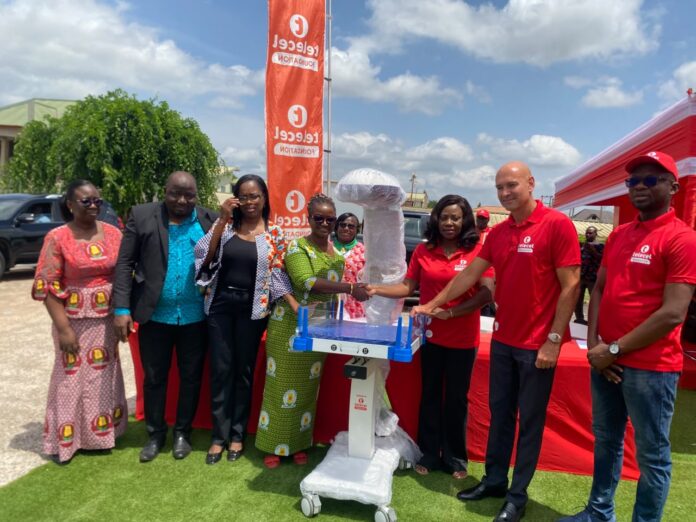

The Telecel Foundation has presented critical newborn care equipment to the Pediatric Unit of Kumasi South Hospital in the Asokwa Municipality.
The donation is part of the Foundation’s Ashanti Month activities, following a MyJoyOnline report in April which uncovered a crisis in the hospital’s maternity unit after its vital life-support machine for preterm babies became inoperative.
The report indicated that the only radiant warmer was out of service and cited overstretched equipment and chronic supply gaps that were putting jaundiced and premature newborns at risk.
As an immediate intervention, the Foundation donated two brand new Firefly phototherapy machines, one digital infant weighing scale, and a radiant warmer.

At a mini-durbar held on the hospital’s premises for the official presentation, Ing. Patricia Obo-Nai, Chief Executive Officer of the Telecel Ghana, said the initiative aligns with Telecel Ghana’s broader social responsibility agenda to invest in health, education, and community resilience.
“We were deeply moved by the report and could not sit unconcerned while newborns in Ashanti lacked access to basic, life-saving equipment,” she stated.
She said the equipment donated to the facility was “not just machines, but lifelines for mothers and their babies who depend on this facility daily”.
Phototherapy machines are essential for treating neonatal jaundice, a condition that can cause brain damage if untreated.
Also, the radiant warmers stabilize the body temperature of premature and low-birth-weight babies, while digital scales ensure accurate medication dosing.
“These are not just machines. They are lifelines for mothers and their babies who depend on this facility daily,” said Ing. Patricia Obo-Nai.
As part of the ceremony, hospital management and Telecel Foundation signed a Memorandum of Understanding for Telecel to formally adopt the Neonatal Department for two years.
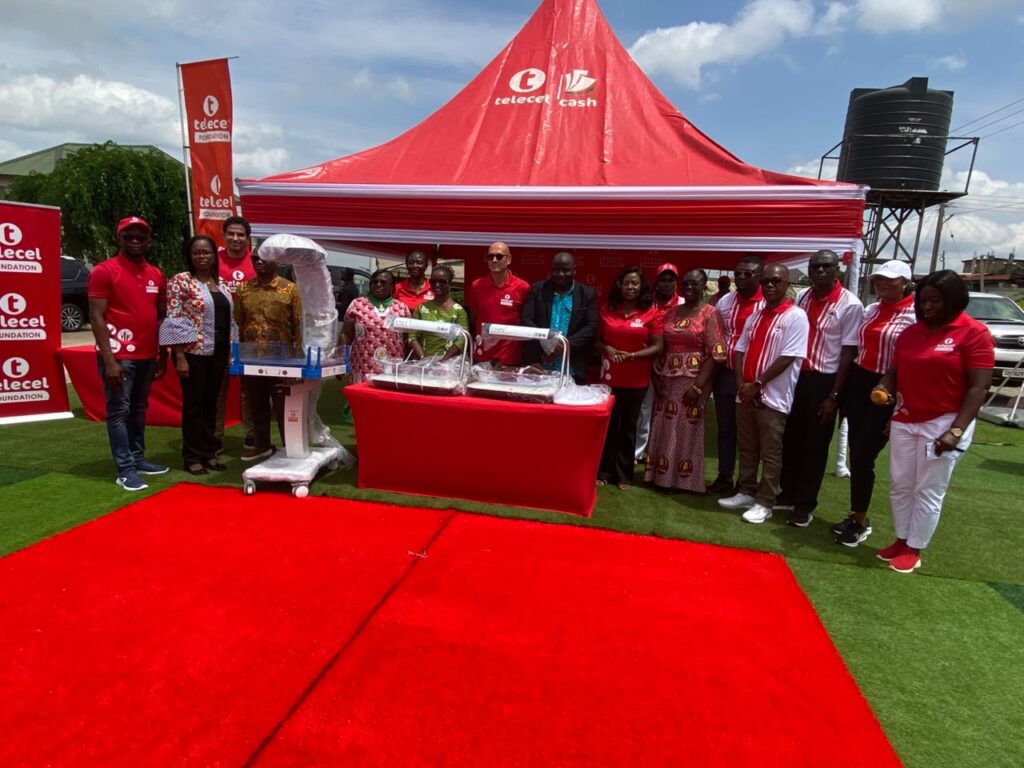
Under the MoU, the telecommunications company will fund and oversee a full renovation of the department and provide all additional medical equipment required by the unit.
Mrs. Obo-Nai said the adoption is designed to tackle both infrastructure and equipment deficits.
“The MoU we have signed today means Telecel foundation will adopt this maternity unit department for the next two years. This will enable us to renovate the facility and provide the medical equipment needed at the unit to improve the environment of care and ensure that babies receive treatment in a more dignified and functional space,” she stated.
Dr. Rita Fosu Yeboah, Clinical Care Coordinator of Kumasi South Hospital, described the donation and the accompanying MoU as “timely and transformative” for maternal and newborn care at the facility.
Speaking after the handover, Dr. Fosu Yeboah said staff had been forced to improvise and refer critical cases for months because the hospital’s only radiant warmer was out of service and it lacked a firefly phototherapy unit.
“With two new Firefly phototherapy units and a radiant warmer now in place, we can keep and treat more babies here instead of referring them to a tertiary hospital,” she said.
“This will reduce delays and give jaundiced and premature newborns a better chance of survival.”
She added that the Foundation’s pledge to renovate and fully equip the maternity unit under the adoption arrangement would provide both staff and patients with a more dignified environment for care and recovery.
Dr. Fosu Yeboah pledged that the hospital would maintain the equipment properly to ensure long-term use.
“We will take ownership of these tools and make sure they serve generations of babies to come,” she said.
Kumasi South Hospital records over 1,200 deliveries monthly and is one of the busiest secondary facilities in Kumasi Metropolis.
Hospital authorities expect the new equipment, planned renovation, and ongoing equipment support to cut waiting times in the NICU, reduce referrals to Komfo Anokye Teaching Hospital, and improve survival rates for jaundiced and premature newborns.
The Telecel Foundation said it will monitor the impact of the intervention and engage the hospital on further support needs during the two-year adoption period.