
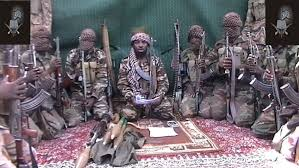

The persistent security vacuum in northeast Nigeria widened on Tuesday as suspected Boko Haram militants launched a coordinated assault on two rural communities. The attacks resulted in the deaths of at least 20 people and underscored the increasing fragility of remote areas near the Sambisa forest. Riding motorcycles, the insurgents targeted the villages of Pubagu in Borno State and Mayo-Ladde in neighbouring Adamawa State. The two locations, though in different states, are separated only by a river.
Local officials reported that the gunmen arrived at approximately 4:00 p.m. local time (15:00 GMT/Ghana time) and operated with near impunity for several hours. The assault marks a significant escalation in the 17-year insurgency that continues to destabilise Africa’s most populous nation. Despite numerous military campaigns, extremist groups like Boko Haram and the Islamic State West Africa Province (ISWAP) remain capable of overwhelming local defences.
Lethal Incursion in Pubagu
The village of Pubagu, situated in the Askira-Uba Local Government Area of Borno State, suffered the highest casualty count with 11 residents confirmed dead. For many, the violence was a shocking departure from the community’s history of relative peace. Mwada Saidu Uba, the local council chairman, noted the unexpected nature of the violence. “Pubagu is one of the locations in our council area that had never suffered such an attack until yesterday,” he stated following the funerals of those killed.
Eyewitnesses in Pubagu detailed a relentless onslaught that lasted over an hour. One survivor, speaking on the condition of anonymity, described the indiscriminate nature of the violence. “Yesterday evening, the terrorists stormed our community in Pubagu. They shot sporadically for hours, burning houses and shops. They killed both men and women after operating for over one hour,” the source said. Usman Rumirgo, a local ward official, confirmed that assailants set several houses ablaze before fleeing, leaving two survivors critically injured.
Assault on Mayo-Ladde
Simultaneously, the attackers crossed into Adamawa State to strike the community of Mayo-Ladde in the Hong Local Government Area. In this secondary location, nine people were killed as the gunmen exploited the porous border between the two states. Like the raid in Borno, the militants focused on the destruction of infrastructure and the seizure of vital resources.
The humanitarian impact of the raid was immediate and devastating. In addition to the loss of life, the militants engaged in systematic destruction of property and essential resources, including the looting of food supplies. Mada Saidu, the chairman of Askira-Uba district, provided a grim assessment of the total scale of the tragedy. “In total, we have 20 deaths, 11 from Askira Uba in Borno, nine from Hong Local Government Area, Adamawa,” Saidu confirmed.
Condemnation and Allegations of War Crimes
The international community has reacted with sharp condemnation to the scale of the atrocities. Amnesty International released a statement strongly condemning the “vicious and unlawful attack,” noting that in addition to the loss of life, Boko Haram militants targeted places of worship and private residences. The organisation emphasised that the deliberate killing of non-combatants represents a grave violation of international law.
“Such horrific killing of civilians by Boko Haram once again demonstrates its brazen disregard for life,” the human rights group stated. “These killings specifically targeting civilians amount to war crimes, and perpetrators must be swiftly brought to justice.” Amnesty further asserted that the consistent targeting of civilians is “unacceptable and must end,” calling for a shift in accountability for the insurgent group’s 17-year campaign of terror.
Military Counter-Offensive and Recent Gains
Following the raids on Pubagu and Mayo-Ladde, the Nigerian military launched a series of high-stakes counter-offensives. In the early hours of April 23, 2026, troops from Operation HADIN KAI (OPHK) successfully repelled a major terrorist assault at the Kukareta location. Lieutenant Colonel Sani Uba, the Media Information Officer for the Joint Task Force, reported that the engagement lasted three hours and resulted in a “disorderly withdrawal” of the insurgent forces.
The military reported that 24 terrorists were neutralised during the encounter. Troops also recovered a significant cache of weaponry, including 18 AK-47 rifles, multiple machine guns, anti-aircraft guns, and mortar tubes. While two personnel were wounded and an armoured tank sustained damage, the military characterised the operation as a decisive success. “This successful operation highlights the resilience, combat readiness and fire superiority of OPHK troops in denying terrorists freedom of action,” Uba stated, adding that exploitation operations are ongoing to recover additional equipment along withdrawal routes marked by blood trails.
Federal Government and Military Response
In response to the surge in violence, President Bola Ahmed Tinubu stated the State House commiserated with the people of Borno and Adamawa. The President characterised the raids as “final, desperate, and frantic attempts” by terrorist elements to spread fear in the face of sustained military pressure. “We will continue to intensify our efforts against all criminal elements, wherever they may be,” Tinubu stated, noting that he has directed security chiefs to move to the region to take direct charge of the situation.
The Nigerian Armed Forces have signalled a simultaneous escalation in counter-terrorism operations, deploying additional troops to the Askira-Uba axis. A spokesperson for the Defence Headquarters confirmed that the army is currently conducting intelligence-led missions to locate the motorcycle-mounted units responsible for the raids. To sustain this momentum, the federal government announced the approval of advanced equipment and operational support to enhance the capabilities of frontline troops stationed in these high-risk “theatres” of conflict.
Despite these strategic gains, the vulnerability of remote hubs remains a critical concern. Mada Saidu noted that when the initial attacks began, local security groups were quickly outmatched. “I later went there together with the army. Initially, it was local security that was there, that is, hunters and vigilantes. But they were overpowered by the terrorists,” Saidu said. This pattern highlights the ongoing difficulty the Nigerian government faces in securing vast rural landscapes against mobile, highly motivated insurgent cells that expertly exploit security gaps.
Regional Instability and Emerging Threats
This latest wave of violence is emblematic of a broader surge in extremist activity across the northeast. Just days prior, on April 16, Boko Haram militants killed four soldiers and a civilian woman in the Mussa community in Askira Uba, highlighting the persistent danger to both military personnel and civilians. Beyond the established presence of Boko Haram and ISWAP, the region now faces emerging threats from the IS-linked Lakurawa and various bandit ggroups specialisingin kidnapping and illegal mining. “Vulnerable rural communities regularly come under fire from Islamic extremists and bandits who take advantage of Nigeria’s vast rural areas and security gaps,” officials observed.
Humanitarian Crisis and Strategic Outlook
The long-standing conflict has claimed thousands of lives and displaced at least 2 million people, creating a humanitarian crisis that aid organisations struggle to contain. As the two critically injured victims from the recent raids receive treatment at a nearby hospital, the incident serves as a stark reminder of the limitations of local vigilante groups against well-armed insurgents. The recurring violence underscores a complex security dilemma where the state must balance the protection of remote agricultural hubs with the pursuit of highly mobile militant factions. To prevent further erosion of authority, a more robust and proactive presence is required to shield these isolated border communities from the shifting frontlines of the 17-year conflict.
