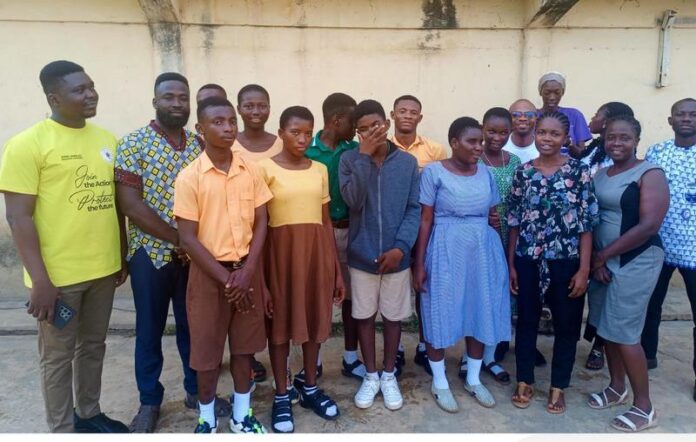

Ghana’s disability community, particularly persons with hearing impairment, is facing a major challenge due to a shortage of sign language interpreters in public and private institutions, the Planned Parenthood Association of Ghana (PPAG) has warned.
The concern was raised during a three-day workshop for students of the Ashanti School for the Deaf and Blind in Jamasi, Sekyere South District, as part of PPAG’s Empower Health Project, supported by Global Affairs Canada (GAC). The project focuses on training peer educators in inclusive schools.
Youth Programs Officer at PPAG, Maxwell Ayamba, said the lack of sign language interpreters significantly limits access to essential services for persons with hearing impairment.
“Many sign language users in the country lack formal education, which makes it difficult for them to understand and use formal sign language effectively,” he explained. “This communication gap can lead to misunderstandings and exclusion, especially in formal settings like healthcare and education.”
Mr. Ayamba stressed that addressing the issue requires urgent attention. He said the Empower Health Project aims to promote inclusivity by training peer educators and called for national policy reforms and educational measures to eliminate communication barriers.
He also urged Ghanaians to recognise people with disabilities for their unique strengths and contributions, rather than defining them by their impairments.
“Let’s ditch discrimination and segregation, and embrace inclusivity and understanding. By doing so, we can create a more compassionate society where everyone has opportunities to thrive,” he said.
Stephen Atta Gyamfi, Director of Social Welfare and Community Development for the Kwabre East Municipal Assembly, called on the government to introduce incentives for individuals willing to learn sign language interpretation, as well as for their trainers.
“Sign language interpreters are needed in hospitals, courts, banks, and other institutions, but they are in short supply,” he said. “It’s a challenge to find people willing to learn sign language, and the few trained interpreters we have are leaving the country due to lack of incentives.”
Esther Berko, head of primary school at the Ashanti School for the Deaf and Blind, noted that many parents of hearing-impaired children are learning sign language from their kids rather than the other way around. She said the school had launched an initiative to teach parents formal sign language, but it received limited interest.
She urged families to seize every opportunity to learn sign language, emphasizing that it is the best way to connect, bond, and communicate effectively with their children.
30 apprentices receive start-up kits in Nkwanta South through NAP