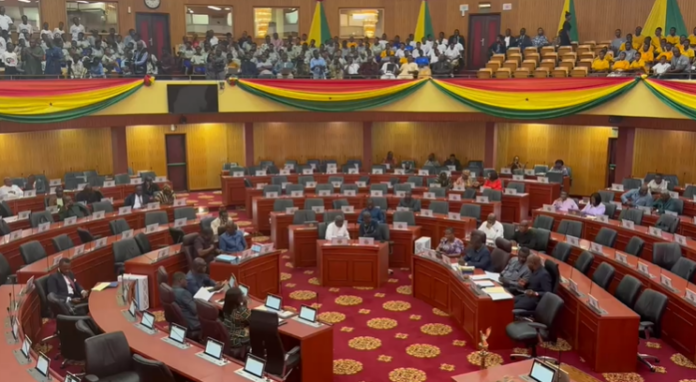

Parliament has passed the Maritime and Related Offences Bill, 2026, paving the way for a stronger legal framework to combat piracy, armed robbery at sea and other maritime crimes in Ghana’s territorial waters.
The legislation criminalises piracy, armed robbery at sea and related offences while domesticating key provisions of the 1982 United Nations Convention on the Law of the Sea and the 1988 Convention for the Suppression of Unlawful Acts Against the Safety of Maritime Navigation, together with its related protocols.
According to the report of the parliamentary committee that considered the Bill, the new law establishes a comprehensive legal framework for the prevention, investigation, prosecution and punishment of maritime offences.
The committee said the legislation also aligns Ghana’s laws on piracy with Articles 100 to 105 of the United Nations Convention on the Law of the Sea, bringing the country’s legal regime in line with international standards.
The report noted that maritime insecurity in the Gulf of Guinea has escalated over the past decade, with incidents of piracy, vessel hijackings, kidnappings for ransom, armed robbery at sea and the destruction of maritime property posing serious threats to regional trade and security.
It said the absence of a dedicated legal framework had made it difficult for law enforcement agencies to investigate and prosecute offenders effectively.
“The absence of a dedicated legal framework on maritime offences in Ghana creates enforcement and prosecutorial challenges in dealing with piracy and related crimes. The enactment of this Bill will, therefore, provide the necessary legal basis for the investigation, arrest, prosecution and punishment of offenders,” the committee stated.
The committee further noted that the legislation will strengthen Ghana’s ambition of becoming a maritime hub in the Gulf of Guinea by enhancing trade security and improving state port control.
According to the report, the law will also boost investor confidence, protect Ghana’s territorial waters and maritime economy, and empower security agencies to respond more effectively to maritime crime.
“Most importantly, the Bill empowers security agencies to act decisively, thereby ensuring that offenders face justice while safeguarding the livelihoods of our seafarers,” the committee added.
READ ALSO:
Minority demands parliamentary probe into Accra floods, flood response taskforce
Bawumia urges government to declare state of emergency if more rains are coming [Video]