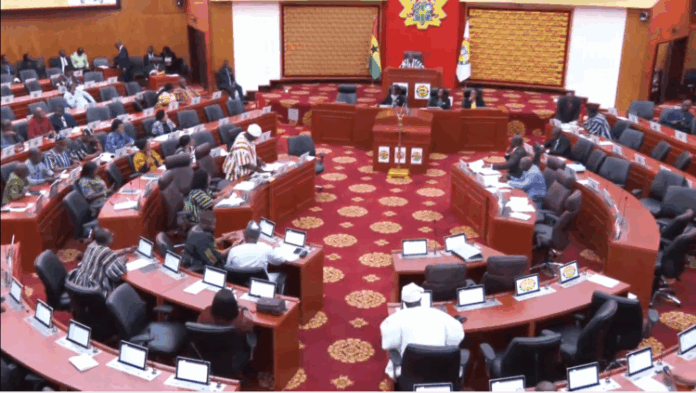

The Parliament of Ghana has passed the Education Regulatory Bodies (Amendment) Bill, 2026, making it optional for private universities to obtain a Presidential Charter and removing the previously mandatory six-year timeline.
Defending the amendment during the second reading, Haruna Iddrisu said the earlier requirement under the Education Regulatory Bodies Act 2020 (Act 1023) created significant challenges for many private institutions.
He explained that historically, a Presidential Charter had never been compulsory under the former National Accreditation Board, but was optional for institutions capable of operating independently.
Mr. Iddrisu noted that the previous requirement also placed heavy financial pressure on institutions due to high fees paid to the Ghana Tertiary Education Commission.
According to him, enforcing the rule could have forced several private universities to shut down, potentially affecting thousands of students across the country.
The amendment now allows private universities to apply for a charter only when they are ready to operate independently and award their own degrees and diplomas.
Mr. Iddrisu assured that regulatory oversight and quality assurance would still be maintained by the Ghana Tertiary Education Commission through institutional accreditation, programme approval, and academic audits.
The government says the reform is part of broader efforts to strengthen Ghana’s tertiary education sector while recognising the important role private institutions play in expanding access to higher education.