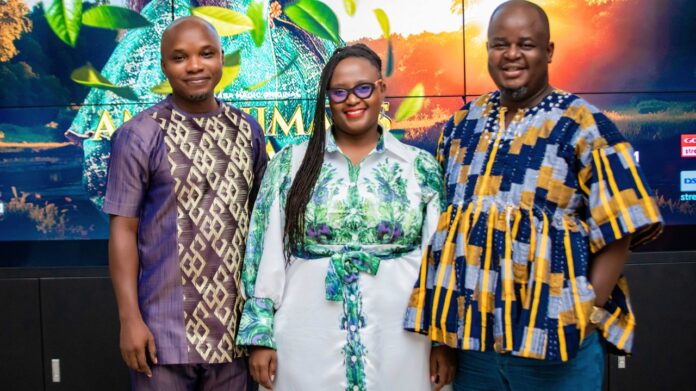

In March 2021 when Akwaaba Magic launched, few could have predicted the magnitude of its impact on Ghana’s creative economy.
In just five years, the channel has not only excited a struggling film ecosystem but has reshaped the cultural landscape, re‑energised local storytellers, and redefined what Ghanaian television can be. What we have witnessed is not merely growth it is a creative renaissance powered by intentional investment, trust in local talent, and an unwavering commitment to authentic Ghanaian narratives.
A Lifeline to an Industry on the Brink
Before 2021, Ghana’s once‑vibrant film sector was battling declining platforms, inconsistent financing, and limited opportunities for distribution. Filmmakers like Shirley Frimpong‑Manso and Leila Djansi continued to create, but the industry lacked the dedicated, well‑funded exhibition platform needed to sustain large‑scale production. Akwaaba Magic filled this void. By launching as a 100% Ghanaian content channel on DStv and GOtv, it provided a consistent, premium home where Ghanaian creators could display their work to national and continental audiences.
The channel did not simply air shows; it rebuilt an entire value chain. In the words of celebrated Ghanaian producer Ivan Quarsigah, “Akwaaba Magic has become the single most important television platform sustaining Ghanaian film and TV in the last five years,” commissioning over two hundred projects and injecting over millions of cedis into productions, cast, crew, vendors, and local talent.
It has also brought back the love for Ghanaian content through series such as Dede, To Have And To Hold, House of Klu, Queen of Akra, Accra Medic, Tanko Villa, RSM and unearthed talents like Efia Odo, Dela Seade (Nuna), Anthony Woode (Inspector Bediako), Adomaa (Dede) to mention a few.
In a rejoinder published widely in Ghana during MultiChoice Ghana’s regulatory challenges in 2025 an anonymous producer attested to the immense impact the channel had had on the landscape. “Over 750 Ghanaian cast and crew engaged at a time on a single Akwaaba Magic project; numbers unheard of in the free‑to‑air ecosystem, where per‑episode rates can be as low as 6% of Akwaaba Magic’s.”
Authentic Storytelling as Cultural Power
What sets Akwaaba Magic apart is not only how much it funds but what it chooses to fund. From Nana Akoto, Queen of Akra, Brenya, Dede, RSM, and Sankofa, the channel has intentionally centered stories rooted in Ghanaian history, culture, languages, and everyday lived experiences. This direction has revived and modernised the Ghanaian storytelling tradition, helping preserve cultural identity while making it accessible and relevant to contemporary audiences. Shows incorporating Twi, Ga, Ewe, Frafra, Dagbani have strengthened cultural pride and broadened accessibility. As Akwaaba Magic’s leadership has emphasised, the deliberate use of Ghanaian languages is not just a stylistic choice it is cultural preservation.
In an era where streaming algorithms often flatten cultural nuance, Akwaaba Magic has become a powerful counter‑force, using television as a cultural memory bank.
Raising the Bar: Professionalism, Quality & Employment
The channel’s commitment to high production values has raised the bar across industry. Filmmakers such as Shirley Frimpong‑Manso, Peter Sedufia, Julia Apea, and Ivan Quashigah, already established within Ghanaian circles, have been able to push their craft even further with budgets that allow for cinematic sets, sharp writing rooms, and world‑class production design.
Actors and crew have benefited immensely. Veteran performers like David Dontoh, Fred Amugi, and Augustine Abbey (Idikoko) have found a renewed stage, while new talent has emerged through dramas, comedies, reality shows, and historical epics.
This rising professionalism has positioned Ghana as a competitive hub in African storytelling funneling into the National Film Authority’s “Film In Ghana” agenda and further strengthening regional appeal while boosting the confidence of creators who once felt overshadowed by Nollywood and South African productions.
Economic Impact: Real Money, Real Jobs, Real Growth
Investment figures tell an undeniable story. In the last five years, Akwaaba Magic has channeled over GHS 200 million into Ghana’s film ecosystem, stimulating job creation, enhancing production capabilities, and helping expand the country’s creative economy.
This funding has set off a cascading effect that has improved production quality, increased demand for local crew, better pay for actors, and new skills across cinematography, editing, costume design, and set construction. Broadly, these investments have contributed to the wider industry renaissance noted by filmmakers like Kwabena Gyansah, who credits Akwaaba Magic and DStv’s support for sparking a “complete transformation” of Ghana’s creative landscape.
A Platform Worth Protecting
The channel’s importance has become so undeniable that industry figures now openly warn that losing Akwaaba Magic through regulatory battles or overly punitive policy actions would severely hurt the sector. Actress Gloria Sarfo stated plainly in 2025 that while the industry would survive, it “would be found wanting” without Akwaaba Magic’s stabilising presence.
These concerns reflect a hard truth: Ghana’s film ecosystem is still fragile. Removing its strongest pillar risks unraveling a decade’s worth of progress.
Conclusion: Akwaaba Magic as a Cultural Institution
In five short years, Akwaaba Magic has evolved from a new DStv channel into a cultural institution. It has helped revive an ailing film sector, empowered local storytellers, funded hundreds of productions, preserved linguistic heritage, raised professional standards, and restored national pride in Ghanaian television.
Its story is about what happens when a nation’s narratives are valued financially, culturally, and institutionally. The future of Ghanaian film and TV is bright, but only if we protect and expand the platforms that make this creative flourishing possible. Akwaaba Magic did not just enter the media landscape; it helped transform it.