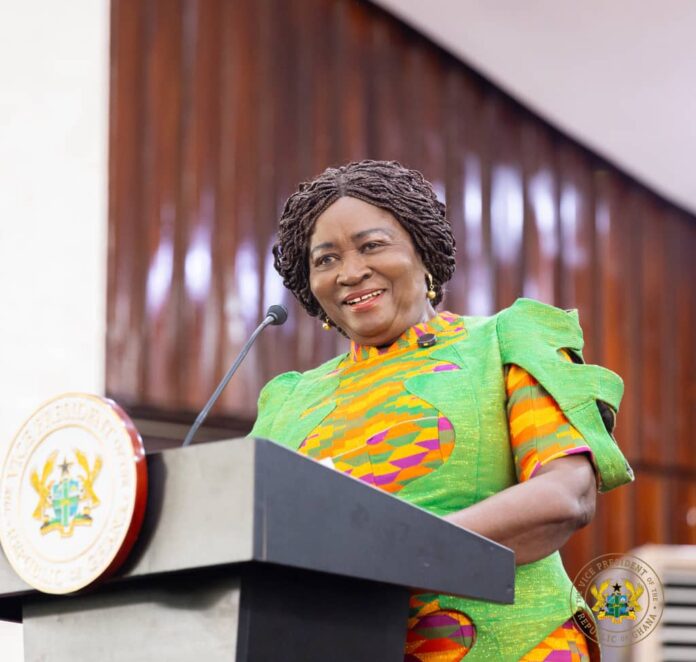

The Chancellor of the University of Cape Coast, Sam Jonah, has praised Jane Naana Opoku-Agyemang for what he described as her unwavering integrity throughout many years of public service.
According to the renowned Ghanaian businessman, such a record of honour and credibility has become increasingly uncommon in modern public life.
Speaking during a Distinguished Fellow Award ceremony at the university, Sir Jonah reflected on the Vice President’s long career in academia and national leadership, noting that it has remained free from controversy.
“Throughout her entire public life, from the lecture halls of this university to the highest offices of national governance, Professor Opoku-Agyemang has maintained an unblemished record,” he said. “Not a single scandal. Not a whisper of controversy.”
He placed his remarks within the wider context of growing concerns about leadership and public confidence in institutions.
“In a world where power so often corrodes, and where public trust so often frays, she has navigated the full complexity of leadership with her honour completely intact,” Sir Jonah stated. “That, ladies and gentlemen, is no small thing. That is, in fact, everything.”
The Chancellor also drew a distinction between achievement and character, emphasising that integrity is what ultimately earns the trust of the public.
“A person of achievement inspires admiration. A person of integrity inspires trust. Professor Opoku-Agyemang is both, and that rare combination is precisely why this honour is not only fitting, but necessary,” he explained.
Sir Jonah further highlighted the importance of such leadership examples in Ghana today, particularly at a time when confidence in public institutions is being tested.
“In these times, when trust in public institutions is tested, when cynicism threatens to become the default posture of citizens toward their leaders, her example shines as a beacon,” he observed.
“She reminds us, by the simple act of living as she has lived, that principled leadership is not a relic of a nobler age. It is possible. It is practised. It is present among us today. And it is vital, utterly vital, for Ghana’s progress, unity and future.”
ALSO READ: