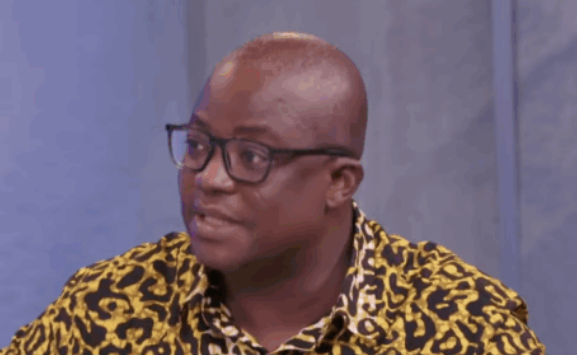

A political scientist at the University of Ghana, Dr Joshua Zaato, has called on President John Dramani Mahama to take what he describes as a bold and historic step by prioritising the passage of legislation on LGBTQ+ rights in Ghana.
Speaking on the JoyNews AM Show, Dr Zaato argued that successive governments, including those of former President Nana Akufo-Addo and President Mahama, have treated the issue with similar levels of urgency, or lack thereof.
According to him, neither administration has yet to take on what he described as “the biggest task” on the matter.
“When it comes to this LGBT right now, as we’re sitting here, Akufo-Addo and Mahama are the same. So far, none of them has actually done the biggest task,” he said.
Dr. Zaato further questioned governments’ reluctance to fast-track the legislation, noting that Parliament has previously treated bills as emergencies when deemed necessary, stressing that “we’ve seen laws go to Parliament as emergencies.”
He criticised former President Akufo-Addo’s decision not to assent to the controversial anti-LGBTQ+ bill when it was previously passed by Parliament, describing the move as inappropriate.
“Akufo-Addo refused to sign the bill. And I have said it was wrong for him to do that; he shouldn’t have done it,” he stated.
Turning his attention to the current administration, Dr. Zaato said he was concerned that President Mahama appeared to be signalling that the issue is not a priority for his government.
“So far, from what we are seeing, President Mahama is also saying that it’s not a priority,” he noted.
He, however, insisted that the matter should be treated as a national priority, arguing that it goes beyond politics and touches on national identity and values.
“I think it’s a national priority. I think our value is a national priority. I think defining, identifying who we are, is a national priority,” he said.
Dr Zaato stressed that Ghana must take a clear position on what he described as foundational questions of identity and morality.
“I think taking a stand and saying that we believe that this man, woman, is who we are, is a priority,” he added.
He also referenced international political developments, suggesting that global leaders have shown how such issues can be framed within broader ideological positions.
“When the U.S. president came inside, that was what he did. He was justifying it to him,” he said, adding that such political positioning could provide “ideological, philosophical cover” for leaders who take a stand.
Warning against delays, Dr. Zaato cautioned that continued postponement of the issue could make it more difficult to address in future.
“If we begin to downgrade this issue, and if this issue goes past another president, it may never come up,” he warned.
He pointed to other African countries, including Senegal and Nigeria, as examples of states that have taken legislative action on similar matters.
“Recently, Senegal did that. There are so many countries; Nigeria has done it, Senegal has done it… a lot of African countries have done this,” he said.
Dr. Zaato also claimed that religious bodies in Ghana are increasingly frustrated by the lack of action, citing reactions from the Ghana Catholic Bishops’ Conference and the Christian Council of Ghana.
“Today, this morning, the Ghana Catholic Bishop Conference is disappointed. The Christian Council is disappointed,” he noted.
He further referenced comments attributed to a spokesperson of the National Chief Imam’s office, suggesting that there is broad support for prioritising the issue.
Concluding his remarks, Dr. Zaato urged President Mahama to act swiftly and decisively, calling for the bill to be treated as an emergency.
“Mr President, it’s not too late. And I’m hoping that you reconsider and you submit the public option to Parliament. You have a supermajority. Send it as an emergency bill. Send it tonight; let them pass it tonight. Sign it tomorrow. “Mr. President, make history,” he said.
He added that the president should “follow the footsteps of your successor, Professor Mills,” in taking firm national positions on critical issues.
ALSO READ: