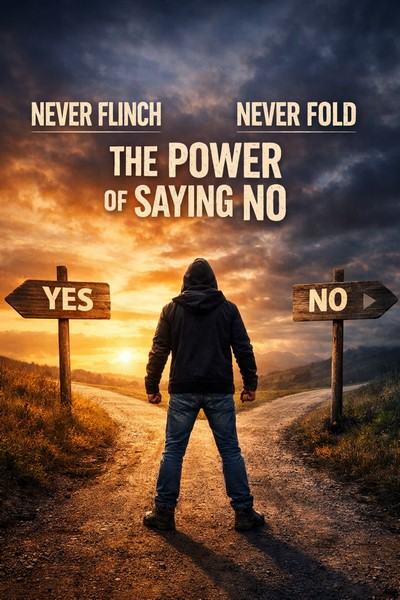

There’s a powerful phrase that captures a mindset many of us admire: never flinch, never fold. It’s a rallying cry found in music and motivational language that speaks to resilience, confidence, and unwavering resolve.
The phrase expresses the idea of facing life’s challenges without hesitation and standing firm in your decisions, no matter the pressure.
In the song Drama by Kwesi Arthur and Bigg Homie Flee, lines like “ten toes, ten toes, never flinch, never fold” reinforce being grounded in your goals and not backing down when obstacles or critics arise.
At its core, never flinch means not recoiling from discomfort, fear, or difficult truths, while never fold means not giving in or surrendering your convictions when pressure—be it emotional, financial, or social—tries to change your mind.
These ideas aren’t just catchy phrases in lyrics; they reflect a deeply human desire to be strong under pressure and stay true to your values when it matters most.
So what does this have to do with saying “no”? Everything. Saying no without guilt and holding that no firmly in the face of temptation, persuasion, or money is a real-world expression of never flinch, never fold.
It’s about not flinching when someone pushes emotionally or financially, and not folding under the weight of pressure that tries to rewrite your boundaries. Standing by your decisions with integrity is not stubbornness; it’s courage.
In a world that often rewards “yes,” learning to confidently say “no” can be one of the most powerful skills you develop. Whether it’s turning down extra work, declining social invitations, or resisting pressure for money, saying no isn’t selfish—it’s self-respect in action.
Learning to say “no” is one of the strongest expressions of personal freedom and self-respect we can develop. From a young age, many of us are taught that being cooperative and agreeable are virtues.
While kindness and willingness to help are valuable, automatic agreement to every request can slowly pull us away from what truly matters in our lives. Saying “yes” all the time can lead to exhaustion, stress, frustration, and a loss of control over our own time and energy. Saying “no,” on the other hand, protects what is essential, preserves our wellbeing, and affirms our inner values.
It is normal to feel uneasy at first when we say no. We worry that we might disappoint others, that people might think less of us, or that opportunities might slip away if we decline. Sometimes the discomfort comes because we fear conflict or rejection, or because we have been conditioned to believe that personal sacrifice is always noble.
Then there is the pull of financial incentives or social pressure. Offers of money, praise, approval, or the fear of disapproval can make it seem almost impossible to hold our ground. But this is where the real work begins: saying no not just once, but many times, and then remaining firm in that decision even when external pressure tries to sway us.
When you say no because something doesn’t align with your priorities, your wellbeing, or your values, and then you change your mind because of money or pressure, you short-change yourself. You teach yourself that your boundaries are negotiable, that your peace is expendable, that your worth is tied to external approval.
Standing firm, on the other hand, builds respect for yourself. Every time you honor your own limits, you reinforce your sense of identity and integrity. You send a message to yourself—and to others—that your life is governed by intention, not obligation.
Some people fear that saying no will suddenly isolate them or close doors. In reality, clear boundaries often lead to healthier relationships. They make it easier for others to understand you, to respect your true capacities and intentions, and to interact with you honestly.
When you consistently honor your own needs and limits, the people around you learn that you are reliable—not because you say yes to everything, but because you honor your commitments and know what you can genuinely deliver.
It is also important to recognize that saying no is not about shutting others out. It is about protecting your capacity to say yes in meaningful ways. When you fill your time with “yeses” that drain you, you lose space for the people, projects, and experiences that energize you and align with your purpose.
By choosing where to invest your energy thoughtfully, your “yes” becomes more powerful, richer, and more joyful.
When a request violates your values or asks more of you than you can reasonably give, it is okay to decline. When a financial offer comes with conditions that compromise who you are, it is okay to refuse it.
When pressure builds from others who want you to change your mind, it is okay to stand firm and hold your position with dignity. Your wellbeing and peace of mind are not secondary to someone else’s expectations or desires.
Learning to say no without feeling guilty is a journey. At first, it may feel uncomfortable, awkward, or even scary. But with practice, it becomes a tool of empowerment.
You begin to realize that you are not responsible for everyone’s happiness at the expense of your own, and that your life has limits that deserve protection. Every time you honor those limits, you deepen your connection with yourself.
In the end, saying no is not rude or selfish. It is courageous. It is self-honoring. It is the practice of living according to your own truth rather than according to someone else’s demands.
The more you master this skill, the more freedom you create to live a life that feels whole, balanced, and deeply yours.
The writer, Carolyn Tetteh, is a social media executive at Adom FM.