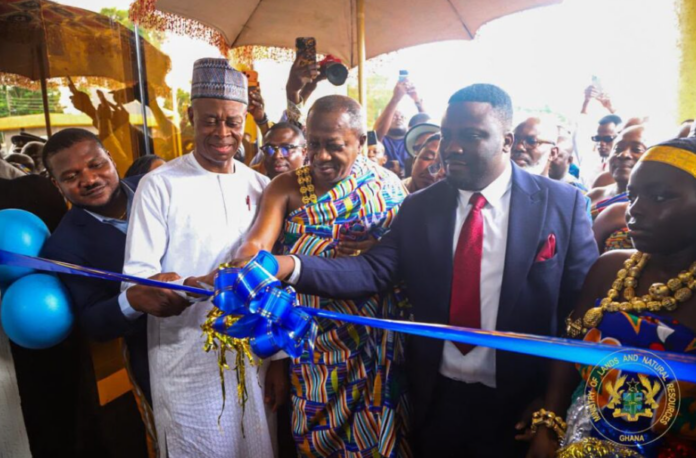

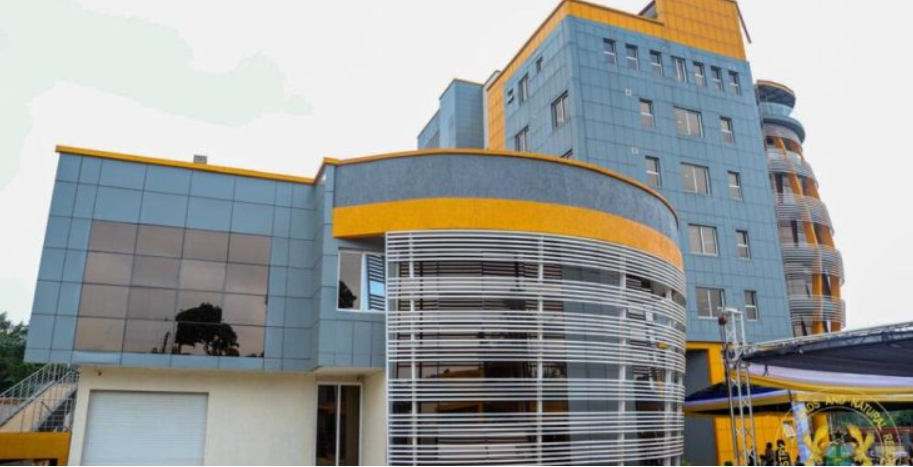
The government has commissioned a new ultra-modern office complex for the Minerals Commission in Kumasi, Ashanti Region, as part of efforts to improve the regulation of Ghana’s mining sector and decentralise the Commission’s operations.
A key feature of the facility is a two-storey laboratory equipped to support mineral testing, sample preparation, technical analysis, quality assurance, research and regulatory monitoring.
The laboratory is expected to serve mining stakeholders in the Ashanti Region and the Middle Belt, providing easier access to specialised technical services and reducing the need for stakeholders to travel to other parts of the country for mineral-related assessments.
Speaking at the commissioning ceremony in Kumasi on Monday, the Chief Executive Officer of the Minerals Commission, Isaac Andrews Tandoh, said the new facility would strengthen the Commission’s technical capabilities and improve the delivery of services to the mining industry.
He said access to reliable laboratory services would enable the Commission to make better regulatory decisions based on accurate technical information.
Mr Tandoh added that the facility would improve the speed and efficiency with which mineral samples and other materials are assessed, while strengthening quality assurance and creating opportunities for collaboration in research.
According to him, the investment in the Kumasi office was justified by the Ashanti Region’s importance to Ghana’s mining industry.
The region hosts major mining operations, including the Obuasi and Asanko mines, as well as thousands of licensed artisanal and small-scale mining operators.
The newly commissioned complex comprises a seven-storey office block, the two-storey laboratory and a Museum and Public Education Centre.
Deputy Minister for Lands and Natural Resources, Dr Yusif Sulemana, said the government was pursuing reforms to address inefficiencies in the regulation of mining operations through the decentralisation of the Minerals Commission.
He said the reforms were intended to promote responsible and safe mining practices across both the large-scale and small-scale sectors while strengthening the fight against illegal mining.
Dr Sulemana also announced that Cabinet, under the leadership of President John Dramani Mahama, had begun a comprehensive review of the Minerals and Mining Act, 2006 (Act 703).
He said the review formed part of broader efforts to modernise Ghana’s mining laws, strengthen regulatory processes and reposition the sector to contribute more effectively to national development.
Chief Executive Officer of the Ghana Chamber of Mines, Kenneth Ashigbey, welcomed the commissioning and expressed the hope that the improved infrastructure would lead to stronger regulation and contribute to efforts to combat illegal mining.
The ceremony brought together the Ashanti Regional Minister, Dr Frank Amoakohene; representatives of the Minerals Commission Board, Ghana Chamber of Mines, NAIMOS personnel, traditional leaders, mining companies, government institutions and other stakeholders in the mining sector.
READ ALSO:
National Security raises alarm over rebranding of political vigilante groups