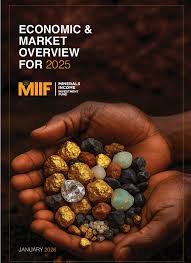

The global economy recorded modest expansion in the final quarter of 2025, driven largely by activity in the manufacturing and services sectors, according to the Minerals Income Investment Fund’s (MIIF) Economic and Market Overview for the fourth quarter of the year.
Data from the Global Composite Purchasing Managers Index (PMI) shows that output improved in October, with the PMI Output Index rising by 1.15 per cent to 53 from 52.4 in September.
The improvement signalled steady momentum in global business activity and aligned with the International Monetary Fund’s (IMF) projected global GDP growth of 3 per cent for 2025.
MIIF noted that inflationary pressures eased during the period despite challenging global trade conditions. The moderation was linked to a slowdown in export orders, which reduced cost pressures across major economies.
In November, export demand showed signs of recovery and stabilisation. However, the Global PMI dipped slightly to 52.7, down 0.57 per cent from the seventeen-month high of 53 recorded earlier.
Even with the marginal decline, global growth remained supported by the manufacturing and services sectors. The Services PMI Business Activity Index stood at 53.3, indicating strong performance.
Major economies including India, the United States and the Euro Area posted output growth above the global average, reinforcing their role as key drivers of worldwide expansion.
Momentum weakened further in December, as concerns over unemployment and softer demand weighed on business activity. Global PMI fell to 52, the lowest level in six months. MIIF said the decline reflected growing caution among firms as new orders edged down, pointing to slower demand conditions heading into 2026.
The report concludes that while the global economy closed 2025 in positive territory, the easing pace of expansion and weakening order books suggest that growth in early 2026 could face increasing headwinds unless demand and employment conditions improve.
Read the full report below: