

Across Africa, a dangerous illusion is being sold, and our youths must be careful not to fall into the web.
Behind carefully crafted rhetoric about partnership and solidarity, Russian-linked operatives and recruitment networks are working quietly and aggressively to draw young African men into a brutal European battlefield.
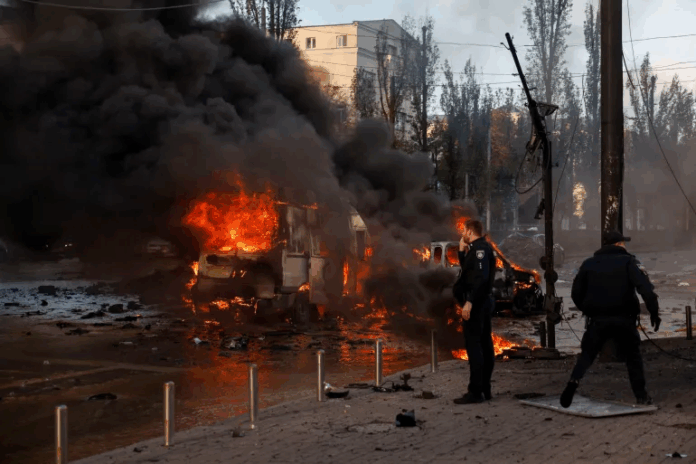
What is presented as an opportunity is, in reality, a conveyor belt to the trenches of war against Ukraine.
Let us be clear: this is not Africa’s war. It is not Ghana’s war. And our sons must not become expendable foot soldiers in a conflict that serves no African interest.
Russia’s war in Ukraine has dragged on since 2022, costing hundreds of thousands of lives. With its military ranks heavily depleted, Moscow has increasingly looked outward, including toward Africa, to replenish its forces.
Reports and investigations across multiple countries suggest that African nationals have been recruited under misleading promises of employment, residency, or financial reward, only to find themselves on the front lines of a grinding war where survival is measured in days, not months.
Which friend takes your child from you, flies him across continents, and places him in a bombed trench where life expectancy is terrifyingly short?
The recruitment strategy is deceptively simple. Advertisements circulate on social media platforms, messaging apps, and through informal agents promising construction jobs, security contracts, driving positions, or education opportunities in Russia.
What begins as a civilian job offer can quickly morph into a military deployment. Some recruits reportedly receive minimal training before being sent into combat zones.
Economic hardship makes this deception easier. Youth unemployment, underemployment, and currency instability across parts of Africa create fertile ground for manipulation.
A young man earning little at home is told he can make thousands of euros abroad. Signing bonuses are dangled. Fast-tracked residency is promised. For many struggling families, the offer appears life- changing. But too often, the promise ends in silence.
In Kenya, families have publicly protested after losing contact with relatives who travelled to Russia, believing they had secured civilian jobs. Distress messages have reportedly surfaced
from recruits stranded in combat zones. Russian officials have denied illegal recruitment, dismissing allegations as propaganda. Yet the pattern of testimonies from affected families tells a deeply troubling story.
Consequently, Ghana must not wait for such tragedies to multiply before acting decisively. Our country already grapples with its own security pressures, economic reforms, and social demands.
We face regional instability in West Africa, terrorism threats in the Sahel, youth unemployment, and internal development challenges. Any attempt by a foreign power to draw Ghanaian citizens into a war that is not theirs must be viewed as hostile to our sovereignty and a direct threat to our national interest.
Ghana’s position must be unambiguous: we welcome trade, investment, technology transfer, and development partnerships from any country, including Russia. But we reject, absolutely, any arrangement that exports our youth to die in foreign conflicts.
Sovereignty cannot be bargained away for geopolitical convenience. Other African states have publicly clarified their positions when confronted with recruitment allegations. Ghanaian authorities must be equally firm.
Diplomatic channels should communicate clearly that any recruitment of Ghanaian nationals for foreign military operations is unacceptable. Silence can be misinterpreted. Ambiguity invites exploitation.
At the same time, the government must address the root vulnerability: economic desperation. Policies such as Ghana’s 24-hour economic transformation agenda aim to expand production, strengthen supply chains, develop human capital, and create employment opportunities.
If implemented effectively, beyond mere political slogans and into real action, such reforms can reduce the push factors that drive young people to risk their lives abroad.
Against this backdrop, policy alone is not enough. There is a collective responsibility here.
Journalists must investigate and expose fraudulent recruitment networks. Influencers must amplify warnings rather than romanticise foreign wars. Traditional leaders must educate their
communities. Religious institutions must counsel families. Parents must question “too good to be true” offers that require young men to travel to opaque destinations under vague contracts.
In addition, public awareness campaigns should clearly explain how these recruitment pipelines operate, from online advertisements to intermediary agents to altered contracts. The Ministry of Foreign Affairs and Regional Integration, together with civic education institutions, should proactively communicate verified guidance on safe migration and known risks.
It is worth noting that Africa has endured centuries of exploitation, from the transatlantic slave trade to colonial conscription in foreign wars. We must therefore not allow a new chapter where economic vulnerability is weaponised to fill foreign trenches.
There is no doubt that Russia may present itself as a friend of Africa. But friendship is not tested in speeches or summit photographs. Friendship is tested in whether your children are safe. A true partner brings contracts, factories, technology, and scholarships. A false partner brings camouflage uniforms and transport to the battlefield.
To this end, Ghanaian youth must understand this clearly: no amount of promised money is worth a coffin draped in someone else’s flag. This is not about choosing sides in global politics. It is about protecting Ghanaian lives. It is about safeguarding sovereignty. It is about refusing to let merchants of death turn economic hardship into military supply chains.
Africa has enough of its own challenges. We do not need imported wars. And Ghana’s sons must not become expendable in battles that are not theirs.
Joecarthy is an analyst and researcher focusing on governance, security, and political transitions in the Sahel. He writes on geopolitics, development, and African diplomacy.
Contact: 0264354064
