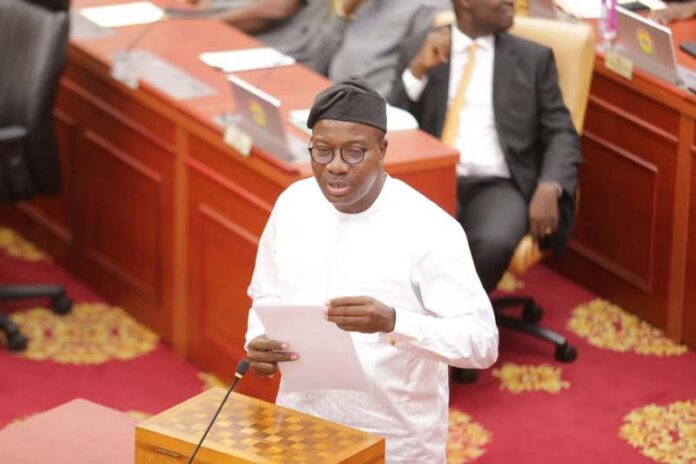

The Majority Leader in Parliament, Mahama Ayariga, has launched a fierce counter-offensive against the wave of cocoa-related demonstrations sweeping the Western North Region, dismissing them as calculated political theatre rather than a genuine grassroots uprising.
Addressing a heated parliamentary session on Friday, 20th February 2026, Mr Ayariga insisted that the protests in Sefwi Wiawso, Juaboso and Bia West do not reflect the position of the broader cocoa-growing community.
Instead, he argued that the placards attacking President John Dramani Mahama are being wielded by partisans posing as aggrieved farmers.
The backlash follows the government’s recent decision to slash cocoa producer prices from GH¢3,625 to GH¢2,587 per bag — a move the administration describes as an “economic necessity” but which many farmers have branded a “death sentence.”
In Bia West and Juaboso, demonstrators blocked principal streets, warning that the 28% price reduction, coupled with rising labour and fertiliser costs, could force many producers to abandon their farms.
Mr Ayariga, however, remained unmoved by the optics of the marches, telling the Minority in Parliament that the true drivers of the unrest are rooted in what he described as “cocoa politics.”
“Just because you think that cocoa politics is what can help your party, I can assure you that the demonstrators… we know their real motivation,” he told the House.
Central to the Majority Leader’s argument is the claim that the Ghana Cocoa Board (COCOBOD) is struggling under the weight of liabilities inherited from the previous New Patriotic Party (NPP) administration. He maintained that the current government is working to repair what he described as “financial wreckage” amid a downturn in global cocoa markets.
Mr Ayariga further contended that farmers — the actual tillers of the soil — have a clear understanding of the global cocoa crisis and the financial constraints confronting the country.
“You cannot give what you don’t have, even if you promised it. The practical problem is there. The farmer appreciates it, and I can assure you that the farmer appreciates the solution proposed by government,” he asserted.
The government maintains that the revised pricing is the only viable path to prevent COCOBOD from total collapse. With international prices falling from historic highs and a 50,000-tonne backlog at the ports, officials argue that maintaining the previous rate was financially unsustainable.
Despite Mr Ayariga’s confidence, tensions remain high in the Western North Region. While the Majority Leader insists that “the farmer appreciates the solution,” scenes in Sefwi Wiawso suggest a widening disconnect between parliamentary rhetoric and the lived realities of cocoa-dependent communities.