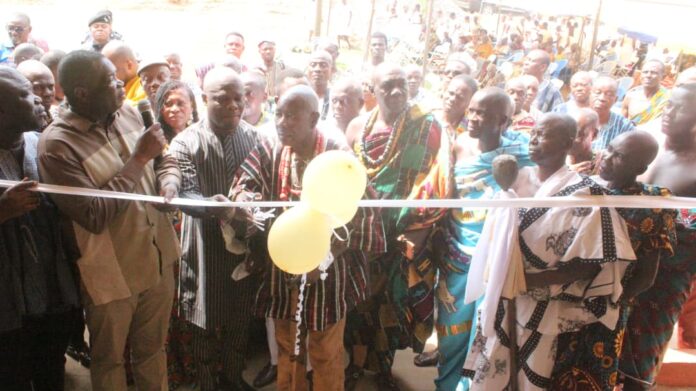

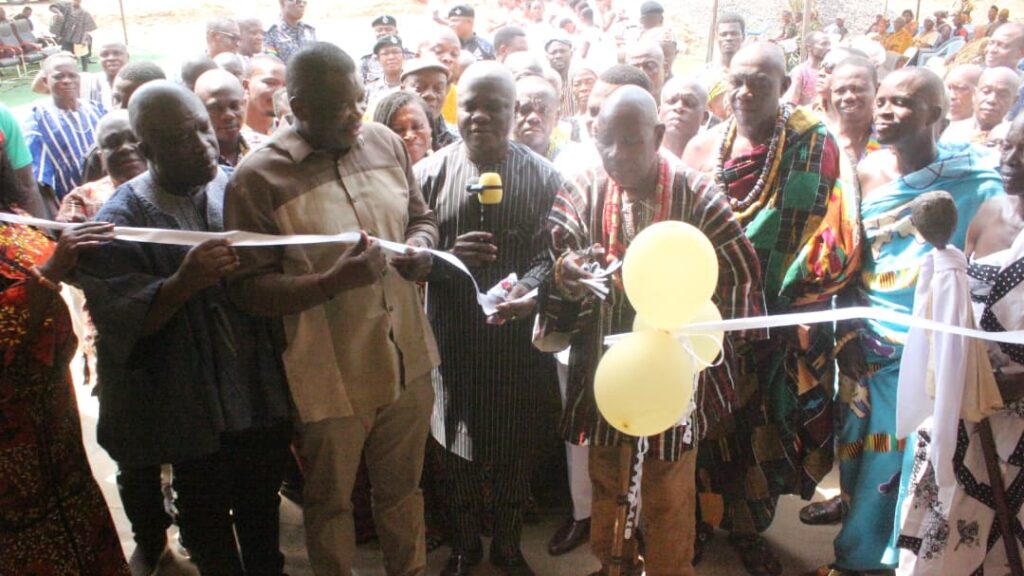
The Minister for Local Government, Chieftaincy and Religious Affairs, Ahmed Ibrahim, has commissioned a newly constructed Traditional Council office for the Adaklu Traditional Council in the Adaklu District of the Volta Region, describing the project as a major boost to traditional administration and local governance.
The facility, located at Adaklu Abuadi, is expected to strengthen coordination between traditional authorities and state institutions while improving administrative efficiency within the enclave.
The office complex was funded through the Adaklu Constituency Common Fund allocation of the Member of Parliament, who also serves as Minister for Roads and Highways, Kwame Governs Agbodza, with an amount of GH¢10,000, complemented by additional personal contributions from the MP to complete the project.
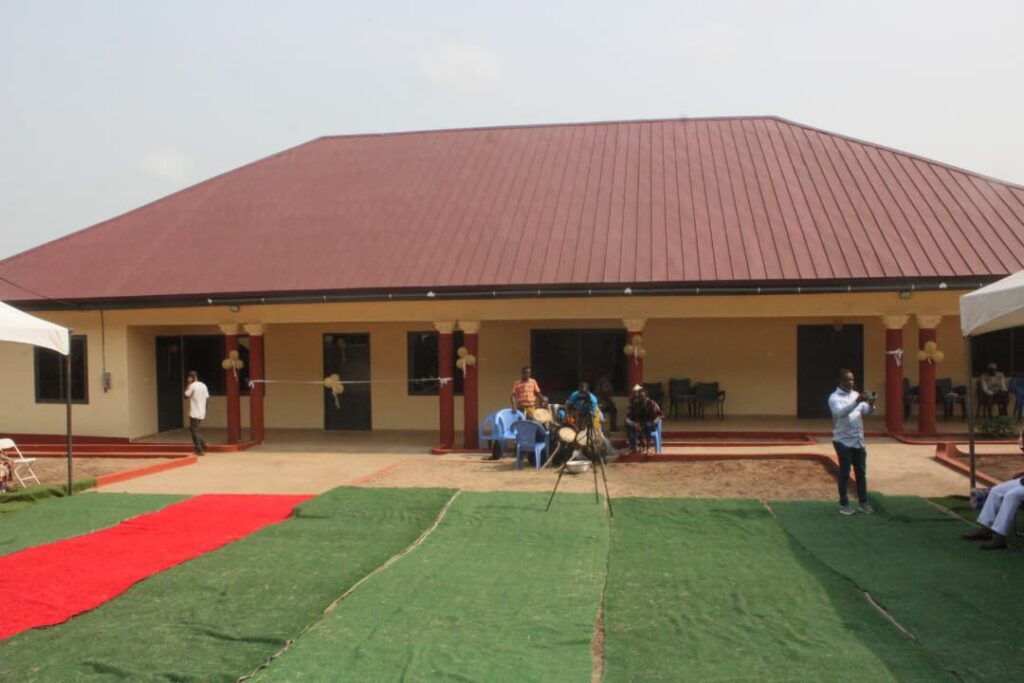
Speaking on behalf of the Paramount Chief of the Adaklu Traditional Council, Togbega Gbogbi Atsa V, the Dufia of Adaklu Anfoe, Togbe Agbowada, described the building as a symbol of progress, unity and respect for traditional authority.
He expressed appreciation to President John Dramani Mahama for what he termed visionary leadership under the RESET Agenda, which he said is aimed at transforming the economy and improving living standards.
“First and foremost, we wish to express our sincere gratitude to His Excellency John Dramani Mahama, President of the Republic of Ghana, for his visionary leadership and the Reset Agenda, which seeks to transform Ghana’s economy and improve the lives of our people,” he said.
The chiefs also commended Mr. Ibrahim, for strengthening the role of traditional institutions in governance.
“We are grateful for the renewed respect, recognition and developmental support being extended to traditional authorities, acknowledging our role as partners in grassroots development and peace-building,” the chiefs noted.
They further thanked President Mahama for appointing their son, Kwame Governs Agbodza, as Minister for Roads and Highways, describing the move as recognition of his competence and dedication to national service.
The chiefs highlighted key infrastructure projects under the government’s Big Push programme, including the Adaklu Abuadi–Waya Road, Waya–Keyime Road, Waya–Mafi Kumase Road, Helekpe–Kodzobi Road, and several feeder roads linking farming communities.
According to them, the roads are improving access, supporting agriculture and boosting economic activity across Adaklu.
They also acknowledged government investments in education and health, citing the construction and upgrading of classroom blocks, ICT centres, CHPS compounds and health facilities, which they said have improved access to services, particularly for women and children.
The chiefs welcomed the implementation of the 24-hour economy market and called it a step that will raise the socio-economic standards of residents.
They also appealed for the extension of the Five Districts Water Project to cover more communities within the Tonu area to ensure access to safe drinking water.
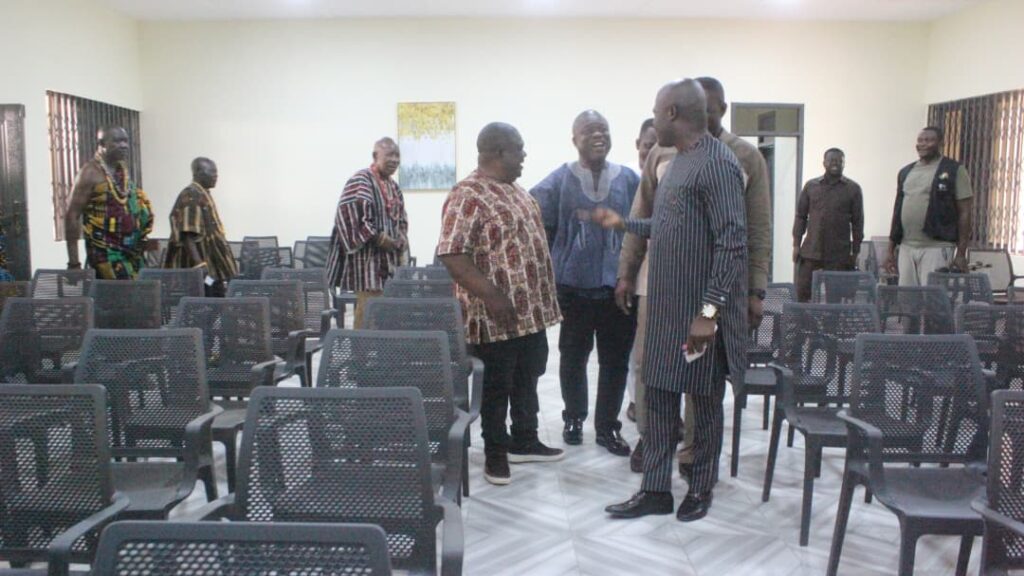
Expressing gratitude to the MP, the chiefs said the new council office would enhance their administrative work and promote unity.
“This facility will greatly enhance our work and promote development. It is a bold step in the right direction,” they stated.
In his remarks, Mr. Agbodza urged traditional leaders to continue fostering unity and cooperation to accelerate development in the constituency, pledging closer collaboration with the chiefs to attract more projects.
The Local Government Minister praised the MP’s initiative and encouraged the people of Adaklu to support him to sustain development efforts.
Volta Regional Minister James Gunu also commended the chiefs for maintaining peace and unity, noting that their leadership has contributed significantly to development in the area, while reaffirming government’s commitment to the growth of Adaklu and the Volta Region.
The commissioning ceremony attracted chiefs, queen mothers, government officials and residents, underscoring the important role of traditional institutions in local governance and national development.