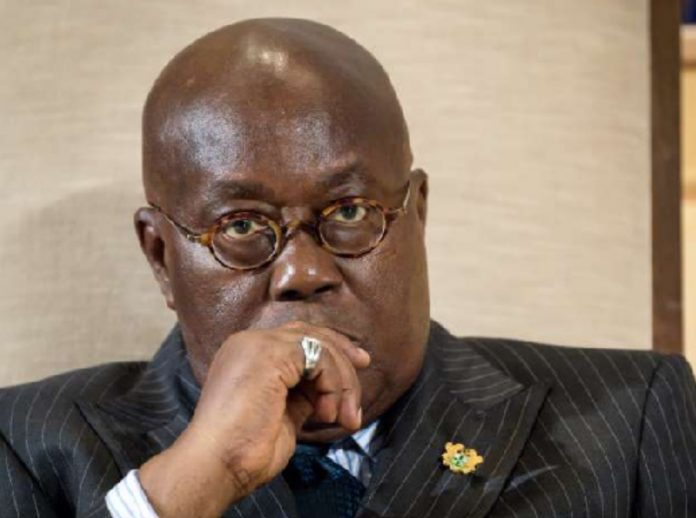

Former President John Agyekum Kufuor has taken a swipe at the Akufo-Addo administration, arguing that several major policy decisions significantly contributed to the New Patriotic Party’s defeat in the 2024 elections.
Speaking on The Delay Show, Kufuor said he could not comprehend the reasoning behind key government decisions such as the Domestic Debt Exchange Programme (DDEP), the National Cathedral project, and the Power Distribution Services (PDS) deal. He added that he was never consulted on any of these major policies.
According to him, the NPP’s victory in 2016 was largely built on the legacy of his own administration.
“Before the 2016 election in which Akufo-Addo was elected, the campaign was built on my achievements,” he said. “Those achievements played a key role in his victory. The government started well, but things changed after he assumed power.”
Kufuor explained that the government’s direction, especially after the COVID-19 pandemic, left him troubled.
“After the COVID-19 pandemic, I could not understand some of the decisions taken, including the bond market issues, PDS and the National Cathedral project, which has still not been completed,” he added.
He expressed deep concern about the handling of the National Cathedral, lamenting the demolition of state properties—including residential apartments for judges and other government officials—to pave the way for a project that remains unfinished.
“I was not consulted, as I did not attend cabinet meetings. I only saw the construction. Apartments that housed judges and others were demolished for the National Cathedral, yet it remains unfinished,” he said.
Looking back at the NPP’s electoral performance, Kufuor highlighted the party’s sharp decline over the last three election cycles.
“We won the 2016 elections by a landslide. The 2020 elections were tense and produced a hung Parliament, and the 2024 elections were something else entirely,” he said.
“This shows that the Ghanaian electorate should never be taken for granted. It is a lesson for politicians to be mindful of their actions.”