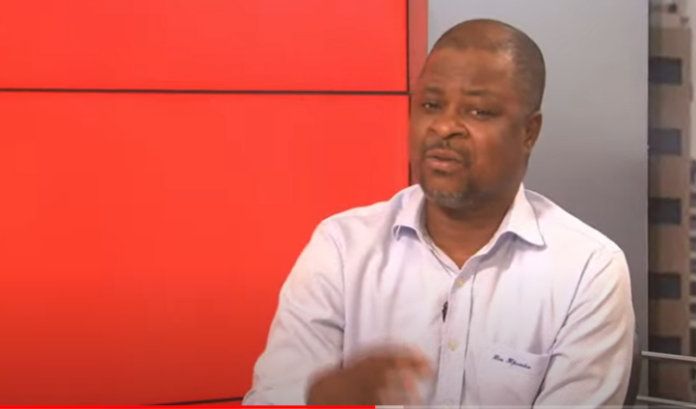

Former Deputy Attorney-General Joseph Kpemka has defended the High Court ruling that stripped the Office of the Special Prosecutor (OSP) of its prosecutorial powers.
His comments follow a ruling by the High Court in Accra, which declared all ongoing prosecutions initiated by the Office of the Special Prosecutor (OSP) null and void, and directed that they be handed over to the Attorney-General pending formal authorisation. The court also imposed costs of GH₵15,000 against the OSP.
The case involves four individuals, including officials from the National Insurance Commission and the Office of the Vice President, who are accused of conspiracy to fraudulently seize containers using forged documents.
Reacting on Citi FM’s Citi Eyewitness News, Kpemka argued that the court’s decision was not an interpretation of law, but rather a determination based on non-compliance with statutory requirements.
“Let me state clearly that the High Court, from what I read, did not interpret the Act…that is not what the High Court embarked upon and remember that if that is what the High Court embarked upon, it is a nullity from the beginning because the high court is not cloaked with the legal authority to do interpretation of law,” he said.
Kpemka explained that the court’s decision was based on the absence of required authorisation from the Attorney-General before the OSP initiated prosecutions.
“All that has been said today if you want to summarise it for the understanding of anybody is that because the law said the OSP should operate within the ambits of the law by gaining authorisation form the AG and which authorisation wasn’t given after the passage of Act 959, the judge said because you didn’t have authorisation you haven’t complied with Act 959 and therefore you have no power to prosecute.
Simple, it was not an interpretation that was given to the law. The interpretation to the law can only be done by the Supreme Court,” he stated.
Kpemka further argued that the issue reflects earlier failures to secure proper authorisation after the passage of the law establishing the OSP.
“At the time if you look at the euphoria that greeted the arrival of Act 959 it was as though anybody who triggered any process at that time as if you were seeking to control or act in manners that will show that you were interfering with the work of Special prosecutor you were likely to be an enemy of the state.
“So it looks like my boss and all of us actually looked on and did not actually give this authorisation,” he said.
He added that the responsibility lay with the OSP to formally request or legally compel the Attorney-General to grant the necessary approval.
“That is why I am saying that it was now incumbent on the implementors of that law namely the special prosecutor when the office came into existence to write to the AG to demand the authorisation which ought to be given in compliance with law otherwise you go for a court order to compel the AG to give the authorisation to operationalise the law.
“So yes if you ask me it was not given- bare oversight but the OSP needed to press to be able to get the authorization so that they could operationalise their office without any hindrance,” he added.