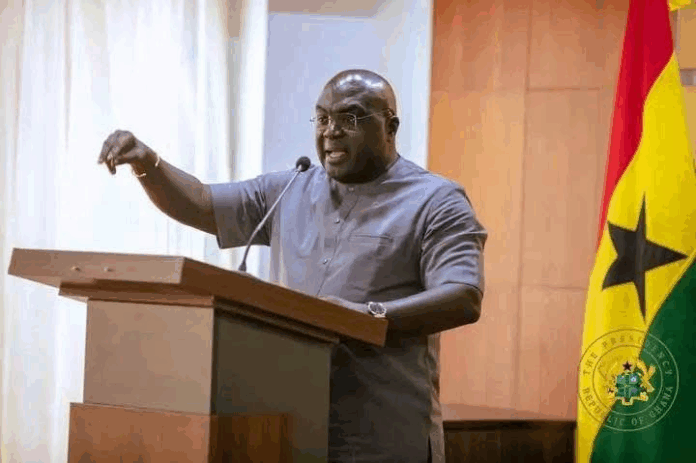

The Loyal Patriot Behind the Presidency
In the often-chaotic theatre of Ghanaian politics—where noise is mistaken for leadership and flamboyance passes for impact—one man has stood out not for the volume of his words but for the depth of his vision.
Mr Julius Debrah, Chief of Staff under President John Dramani Mahama’s NDC-led administration, has quietly but firmly redefined what it means to serve, lead, and transform.
Measured, loyal, and deeply patriotic, his leadership has left a subtle yet undeniable imprint, from the corridors of Jubilee House to some of Ghana’s most remote rural communities. His influence runs through governance reforms, digital modernisation, social empowerment, and the pursuit of sustainable national development.
Through political storms and transitions, he has remained President John Dramani Mahama’s trusted ally—a stabilising force whose calm authority ensures continuity and coherence in governance.
Far removed from the noise and theatrics of politics, Mr Debrah embodies pragmatic leadership: blending business acumen with governance intellect, discipline with empathy, and loyalty with results.
Yet, despite his achievements and humility, one lingering question persists: has Ghana truly recognised Julius Debrah’s worth, or are we quietly overlooking one of the nation’s most competent and patriotic public servants?
The Story – From Grassroots Grit to Governance Greatness
Born in the serene township of Suhum in Ghana’s Eastern Region, Mr Julius Debrah’s journey began not with privilege but perseverance. Educated at the University of Ghana, he rose through the ranks of public service with unrelenting drive, earning a reputation as one of the most disciplined and results-oriented administrators of his generation.
Before fully entering public life, Mr Debrah thrived as an entrepreneur, with interests in tourism, insurance, and real estate. These ventures sharpened his understanding of Ghana’s private sector—insights that have clearly shaped his governance philosophy. This blend of business-minded pragmatism and political intuition has defined his leadership style: results before rhetoric.
“He listens, he acts, and he delivers—without the theatre of politics.”
As Eastern Regional Minister, Minister for Local Government, and later Chief of Staff under President John Dramani Mahama, Mr Debrah built a reputation for accessibility, discipline, and follow-through. He championed initiatives such as National Sanitation Day and the National Street Naming Exercise, both aimed at bringing order, dignity, and functionality to communities. His mantra was simple: development must be seen, not said.
His reappointment as Chief of Staff in both Mahama administrations—2015 and 2025—was not mere political convenience, but recognition of loyalty, efficiency, and continuity. Few in Ghana’s modern political history have served with such quiet endurance and unwavering devotion to national duty.
The Impact – Governance, Growth, and the Human Touch
Governance With Grit And Patriotism
As Chief of Staff, Mr Julius Debrah has been a stabilising pillar within Ghana’s governance architecture. His role in strengthening the State Interests and Governance Authority (SIGA) reflects his commitment to accountability and institutional performance.
His directive to annul politically influenced public sector appointments made after the 2024 elections sent a clear signal that public service must serve Ghana’s interests, not partisan convenience. In a time when loyalty to nation is often sacrificed for political expediency, his insistence on meritocracy reaffirmed his patriotic commitment to state integrity.
He also spearheaded the drafting of Ghana’s new National Anti-Corruption Strategy, a framework designed to strengthen ethical governance and transparency, aligning with Sustainable Development Goal 16 on peace, justice, and strong institutions.
Economic Vision With Substance
Mr Debrah’s influence extends beyond policy documents into the real economy. He has consistently maintained that infrastructure is not a luxury but the foundation of job creation. His advocacy for rural roads, decentralised governance capacity, and e-government services illustrates a holistic approach to economic empowerment.
Under his supervision, Ghana’s 10-year Artificial Intelligence Strategy (2025–2035) is nearing completion. He has championed digital literacy, ministerial AI bootcamps, and the practical application of emerging technologies to position Ghana as a digital transformation hub in Africa.
His working visits to the Ghana Gold Board (GoldBod) further demonstrate hands-on oversight of resource governance, ensuring transparency in mining revenue management and gold exports. These engagements underline a leader who understands that sustainability is not anti-business—it is smart business.
“Infrastructure is not an expense; it is an investment in the nation’s future.”
Social Responsibility And Human Connection
Despite his executive stature, Mr Julius Debrah remains deeply connected to ordinary Ghanaians. This was evident in the “Walk With Julius” initiative—an inclusive national health and fitness campaign that brought together citizens from all walks of life in the spirit of unity, wellness, and national pride.
The symbolism was powerful: a leader walking among his people, not above them. His belief is simple but profound—“a healthy population is a productive nation.”
Championing Sustainable Development
Mr Debrah’s initiatives align closely with the United Nations Sustainable Development Goals, particularly sanitation (SDG 6), innovation (SDG 9), and institutional transparency (SDG 16). His brand of patriotism is not rhetorical but measurable—service that outlives political cycles.
The Challenge – Politics, Pressure, and the Price of Principle
Navigating Political Crosswinds
In Ghana’s charged political climate, principled leadership often attracts resistance. Mr Debrah’s unwavering loyalty to President Mahama—even after the 2016 electoral defeat—has drawn both admiration and criticism. To him, loyalty is not blind allegiance, but belief in continuity, teamwork, and the national interest.
“He stayed loyal when it was easier to walk away—a rare trait in modern politics.”
The Burden Of Expectations
A Ghanaian proverb reminds us that experience brings wisdom and precision. In the demanding role of Chief of Staff, Mr Debrah embodies this truth. With composure, he absorbs political pressure, manages internal dynamics, and ensures coherence within government, even amid intense scrutiny.
While initiatives like street naming and sanitation faced bureaucratic delays, his persistence reflects resilience—a refusal to abandon reform because of political inertia.
The Price Of Principle
In systems resistant to change, his insistence on discipline and accountability has earned him opposition. Yet, his conviction remains firm: Ghana must progress through systems, not slogans.
Reflective Thoughts – The Man Ghana Has Yet To Celebrate
In a political landscape dominated by spectacle, Julius Debrah represents the power of quiet competence. He has been the steady hand behind the machinery of governance—the bridge between presidential vision and public reality.
“He is proof that power can be humble, and humility can be powerful.”
Yet, a troubling question remains: why does Ghana so often fail to celebrate those who serve faithfully behind the scenes? We applaud those who speak loudly but forget those who sustain institutions.
If competence, loyalty, and patriotism were the true benchmarks of leadership, should Julius Debrah not be counted among Ghana’s most qualified future leaders? Or are we too distracted by political noise to recognise the quiet power of service?