
For three days in Koforidua, we debated language.
Inside a quiet conference room in the Eastern Regional capital, journalists from across the country gathered for a workshop organised by Plan International Ghana. The theme was clear and deliberate: “Reporting Responsibly on Children, Gender Equality and Vulnerable Communities.”
We were taught that words matter.
That a “victim” is a survivor.
That a “beneficiary” is a participant.
That ethical reporting can either protect a child — or expose them to further harm.
We practised child-centred reporting. We learned to ask better questions. To see people before headlines. To search for the human being behind the statistic.
Then on the third day, we left the comfort of theory behind.
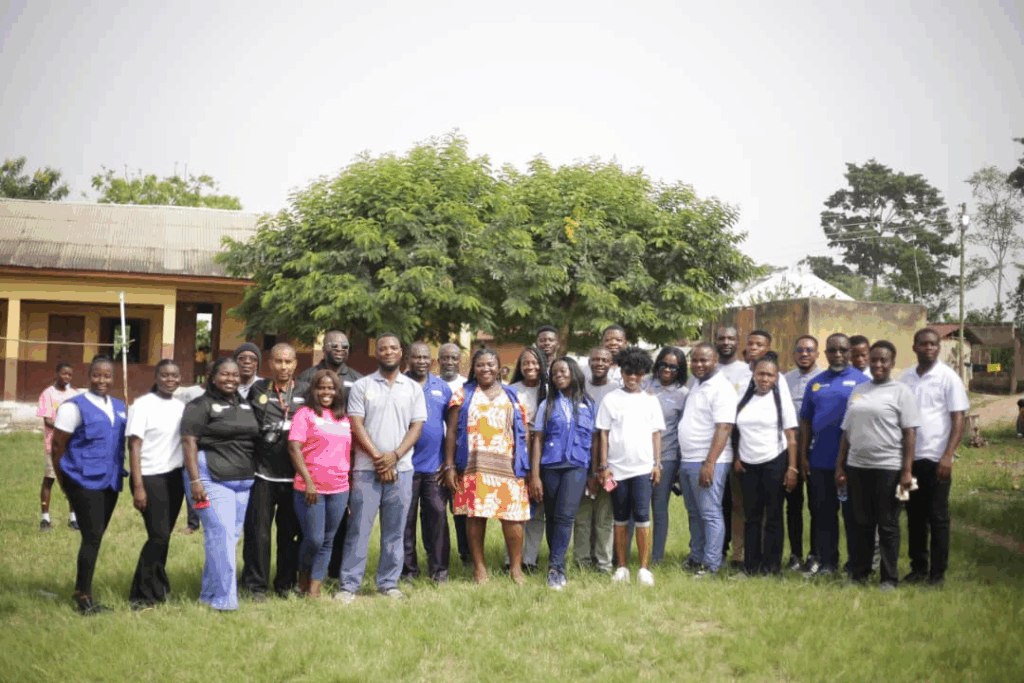
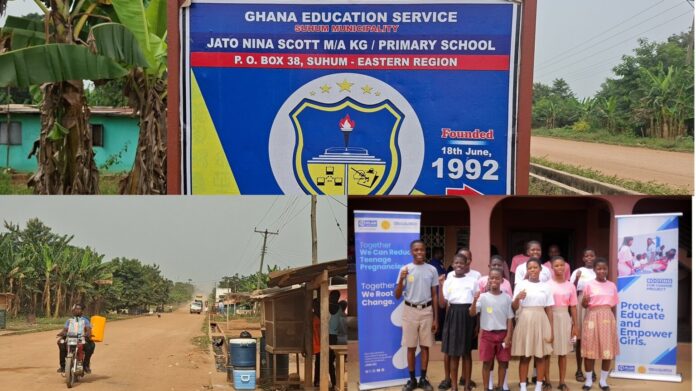
We drove to Jato and Aponoapono in the Suhum Municipality of the Eastern Region of Ghana, West Africa.
That was when the words we had rehearsed met realities we could not rehearse for.
In Jato, I kept hearing villagers talk about a “laptop.”
They said it casually, almost playfully.
In most places, a laptop is a symbol of opportunity — education, connection, a future. But in Jato, a “laptop” is something else entirely.
In this small community, where many families survive on distilling akpeteshie and okada motorcycles serve as the main transport system, a laptop means something entirely different.
Here, a “laptop” is a pack of Indomie noodles.
The small rectangular pack — folded like a tiny computer — has earned that nickname. The first time I heard it, I almost smiled.
Then I learned what it really meant.
In Jato, the “Indomie laptop” has become currency.
Some okada riders — men entrusted to carry children safely across long, dusty roads — began offering young schoolgirls packs of noodles in exchange for sex. Sometimes it was noodles and sanitary pads. Sometimes noodles and exercise books.
Something small.
For something that should never be for sale.
To an outsider, it sounds impossible. How can a two- or three-cedi meal buy a child’s body?
But hunger rewrites value.
Many girls here go to school on empty stomachs. Some cannot afford sanitary pads during their menstrual cycles. Others lack basic learning materials. A warm bowl of noodles is not just food — it is relief. It is dignity for a day. It is survival.
And survival is persuasive.
The consequences are written in the community’s classrooms.
“Almost every year, we record pregnant candidates taking the BECE, and it is all because of the okada riders,” the Chief of Jato, Baffour Teitey Adjewi Narh III, said, his voice heavy with frustration and sorrow.
Teenage pregnancies have climbed steadily. School desks empty quietly. Childhoods bend under adult burdens.
Behind every number is a girl who once imagined something different for herself.
Mary — not her real name — was one of them.
“Before this project, I was dating plenty boys at a time,” she told me softly. “I didn’t understand the risks I was taking.”
She was not reckless.
She was uninformed.
She was trying to survive.
Then intervention came.
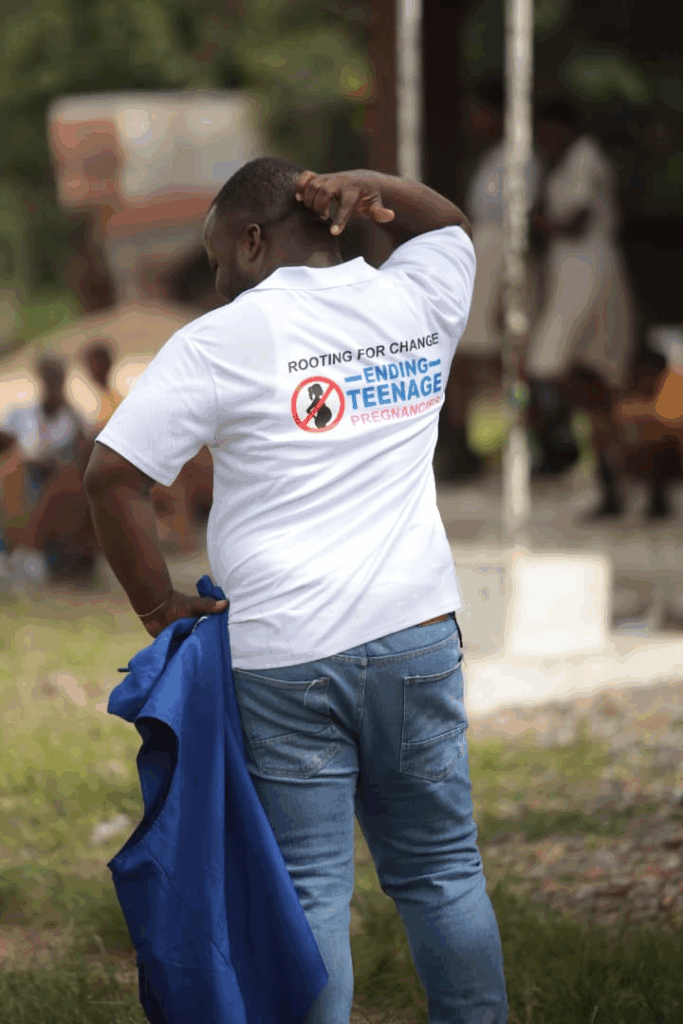
Through its Rooting for Change initiative, Plan International Ghana — with support from Tony’s Chocolonely — introduced a structured response to the cycle of abuse in cocoa-growing communities like Jato.
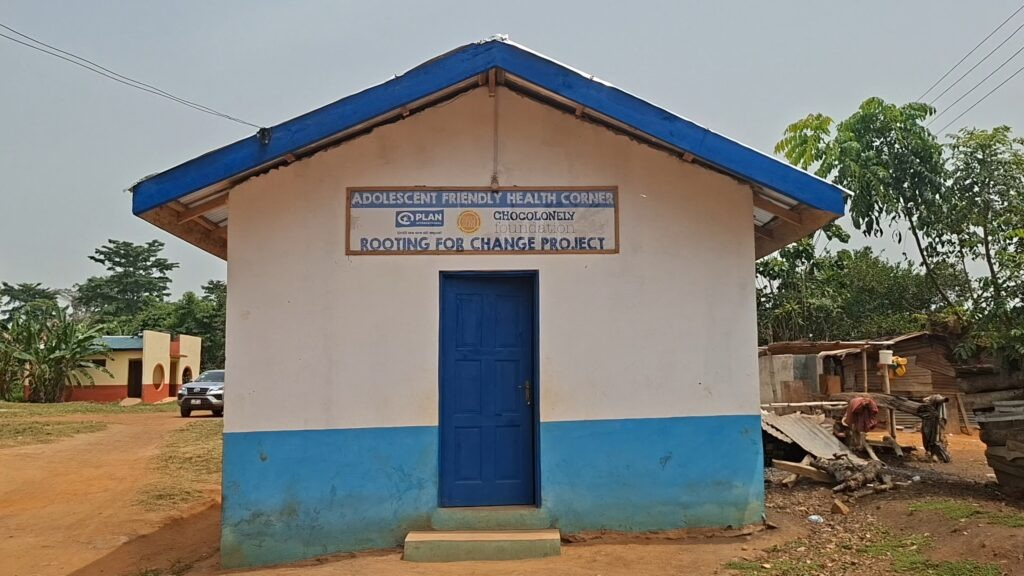
The goal is bold: empower at least 800 adolescents between the ages of 10 and 19 by September 2026, ensuring that at least 60 percent are girls. The project provides comprehensive sexual and reproductive health education in safe, discrimination-free spaces.
But beyond targets and timelines, what changed Jato was something simpler.
Information.
Access.
Awareness.
Sanitary pads were supplied to schools. Safe reporting centres were established for abused children. Books and learning materials were stocked to educate girls about consent, reproductive health and the risks of exploitation. Parents were engaged. Silence was challenged.
And slowly, the balance of power began to tilt.
“Since Plan International Ghana started this project, we have seen a real change,” the Chief confirmed. “Parents are more aware. Children know where to turn. Some of the risky behaviors have reduced significantly.”
Even the okada riders have noticed.
According to Ivan Ayivor of the Asentenapa Cocoa Cooperative Union, some riders recently complained that their “laptops” no longer attract girls the way they used to.
“Formerly, when we bring them laptops, the girls would follow them everywhere. Now, they don’t.”
Their frustration tells its own story.
When a pack of noodles stops being a bargaining chip, a girl begins to reclaim her choices.
Yet Jato’s story does not end with relief.
It raises harder questions.
How many other communities are quietly trading childhood for survival? How many girls are negotiating their innocence for a meal, for sanitary pads, for school supplies? How many “laptops” are changing hands in villages we have not yet visited?
In Jato, the script is beginning to change.
But hunger still whispers.
And wherever hunger speaks louder than opportunity, exploitation waits patiently.
The tragedy is not the noodles.
The tragedy is that for some girls, they once cost less than their future.
ABOUT THE WRITER
The writer, Amos Kodwo Mensah Aboroampa Kwofie, is a development communication advocate, education enthusiast and human rights believer who shares the view, as the philosopher Jean-Jacques Rousseau once said, that children should be allowed to be children before they are pushed into adult debates.