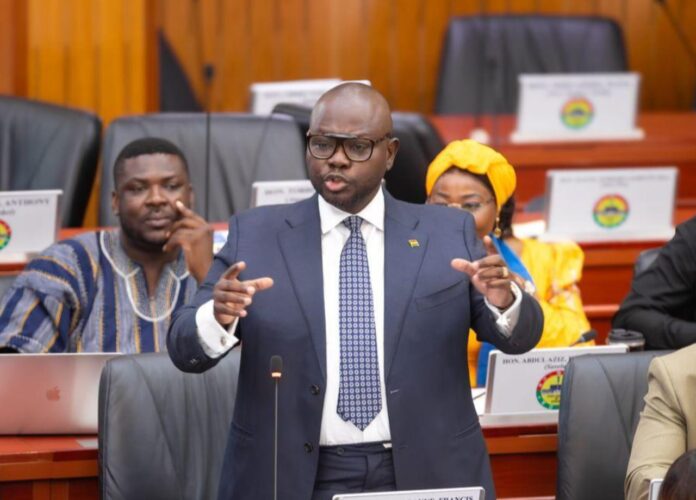

The Member of Parliament for the Bantama Constituency in the Ashanti Region, Francis Asenso-Boakye, has questioned the recent decline in Ghana’s inflation rate.
He says while the Ghana Statistical Service’s report of the lowest inflation rate since 2021 looks good on paper, market prices remain unchanged.
Speaking on Nhyria FM’s Kro Yi Mu Nsem show, the former Roads Minister expressed concern that the 3.8 percent inflation rate recorded in January 2026 is not translating into relief for ordinary Ghanaians.
Mr. Asenso-Boakye argued that inflation figures should reflect real-life economic conditions, but Ghana’s situation appears different.
“I’m surprised inflation is declining but not reflecting in the markets. When you go to Bantama Market, Kejetia Market, Asafo Market, Makola Market, and other markets, you can see that prices of goods remain unchanged or have even gone higher,” he told the host, Barima Kofi Dawson.
The lawmaker cast doubt on the reliability of the statistics, suggesting the need for a closer look at the figures, which he said raise red flags and could point to flaws in the data collection process.
“If the reduction in inflation is genuine, why is it not reflecting in our pockets?” he quizzed. “This has a lot of Ghanaians, especially policy observers, raising concerns that the reports in Accra don’t match what’s happening in the markets. We’re beginning to doubt the accuracy of the figures; it seems they’re being manipulated.”
The MP also rejected claims that traders are solely responsible for failing to reduce prices, insisting it is the government’s duty to ensure inflation reductions translate into lower market prices.
He urged the government to involve the Ministry of Trade in engaging leaders of traders’ associations and unions to push for price reductions.
“It is the responsibility of the government to ensure that inflation reductions are felt on the ground by engaging the unions of traders,” he said.
Background
According to the Ghana Statistical Service, consumer inflation slowed for the 13th consecutive month to 3.8 percent year-on-year in January 2026, down from 5.4 percent in December 2025.
The 1.6 percentage point drop was driven largely by a decline in food inflation, which fell to 3.9 percent.
This represents the lowest inflation rate recorded since Ghana’s Consumer Price Index was rebased in 2021.