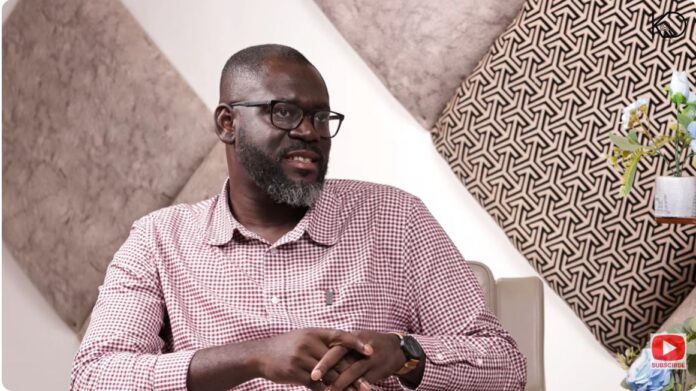

Today, he is a PhD holder and a lecturer at Oxford University, but back in 2003, Dr George Asiamah would not have thought this would ever be his story.
Though he was certain he would fail some of his papers after sitting for the then Senior Secondary School Certificate Examination (SSSCE) in 2003, Dr Asiamah didn’t foresee the actual results he got.
With a train of Fs in English, Maths, Economics and Geography, together with Es in Social Studies, Integrated Science and Government, Dr Asiamah can now look back, laugh at himself and say, “I failed beautifully.”
Back then, however, he felt like a failure. The catastrophic results sent him from village academic prodigy to hawking clothes and shining shoes on the streets of Kumasi and Accra.
In an interview with Kafui Dey, Dr Asiamah recounted that the results came as a shock in his hometown of Kyikyibon, a village in the Ashanti Region about 12km from Kumasi.
He had been the standout student in his Junior Secondary School (now Junior High School) group, scoring an aggregate of 22 in the BECE, far ahead of the next best candidate’s 29.
But everyone who knew about the results, including himself, lost the hope they had in him after the SSSCE results came out.
“Nobody encouraged me at all that I could actually make it. And I accepted it,” he said.
He recalled one of his lowest moments coming when some villagers who were not aware of his results pressured him to apply for the government’s youth employment programme.
“After completing secondary school as a village champion, there was a time when President Kufuor introduced the youth employment programme, and my village people were saying, ‘You completed secondary school, why don’t you go?’
“They didn’t know my result; most people didn’t know, and they were pressuring me to do that. So as the pressure compounded, they told me they just wanted to see that I’d completed secondary school. ‘Your results do not matter here.’ So I gathered courage and sent it to the district assembly, and the coordinator saw it and was like, ‘Why? Why are you bringing this here?’ So I didn’t even say a word, I just took my results and went back home,” he recounted.
Hawking and shoeshine
With hopes of formal employment dashed, Dr Asiamah tried hawking secondhand clothes in Kumasi, an effort that also failed, before turning to shining and repairing shoes in Accra.
He admitted he had no real training in shoe repair, relying on glue rather than proper stitching, meaning his fixes rarely lasted.
He said the shame of his fall from “village champion” to shoeshine boy weighed heavily on him, so much that when he moved to Accra to live with his uncle in Tantra Hills, he deliberately worked in the Dome area rather than Central Accra to avoid being recognised.
“I was embarrassed,” he said.
He kept the work hidden from most people, though rumours eventually spread back in the village.
Despite the stigma, the trade paid reasonably well, earning him around 10 Ghana cedis a day and roughly 250 cedis a month, enough to live on since he didn’t pay rent while staying with his uncle.
He later gave up shoe-shining work to become a shop attendant at Kantamanto, which paid only 70 cedis a month, purely to escape the embarrassment.
Looking back, he said the experience taught him “street-level economics” that outlasted anything he later learned in a classroom.