
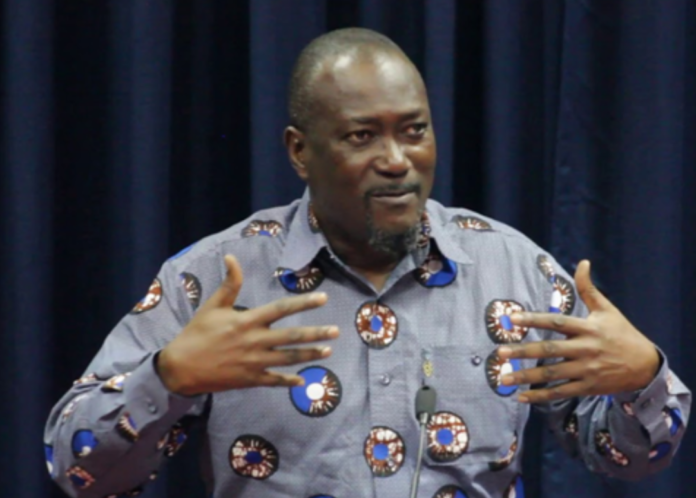

The Executive Director of the Centre for Democratic Development (CDD-Ghana), Prof. H. Kwasi Prempeh, has raised concerns over the handling of a high-profile constitutional case before the Supreme Court of Ghana, cautioning that recent procedural decisions could weaken the country’s adversarial justice system.
In a Facebook post reacting to proceedings in Adamtey v Attorney General, Prof. Prempeh criticised the court’s approach, arguing that it effectively prevents the Office of the Special Prosecutor (OSP) from defending the legality of its own establishment, while permitting the Attorney General (AG) to remain the nominal defendant despite not holding a clearly opposing position.
The case before the apex court is seeking a determination on whether the Office of the Special Prosecutor Act, 2017 aligns with Article 88 of the 1992 Constitution, which vests prosecutorial authority in the Attorney General.
Although the OSP is widely seen as having a direct and substantial interest in the outcome, Prof. Prempeh argued that sidelining it in the proceedings elevates procedural technicalities over substantive justice.
“So the Supreme Court of Ghana will not allow the ‘real party in interest,’ the OSP in this case, to defend against a lawsuit challenging the constitutionality of its statutory establishment and existence… but will allow the ‘nominal defendant,’ the AG, whose position and interest in the suit is not adverse to that of the plaintiff,” he wrote.
He warned that such an arrangement risks opening the door to what he described as “collusive suits” or “sham cases,” where both the state and the private plaintiff may effectively argue the same side of a case.
“The Court is essentially privileging ‘form over substance’ and encouraging collusive suits or ‘sham cases’… This is not how litigation or adjudication in the common law tradition is supposed to work,” he stated.
Prof. Prempeh further stressed that the strength of adversarial litigation lies in the presence of genuinely opposing sides, allowing courts to benefit from rigorous and balanced legal arguments.
“Refusing to allow the OSP to defend this suit… makes a mockery of our adversarial system of justice. Let the OSP defend this suit,” he said.
The commentary comes amid intensified legal and public debate over the independence and prosecutorial authority of the OSP, following a suit filed by private citizen Noah Ephraem Tetteh Adamtey.
In earlier filings, the Attorney General is reported to have argued that aspects of the OSP Act may be inconsistent with the Constitution, particularly Article 88, which assigns prosecutorial powers solely to the AG, subject to limited delegation.
The Supreme Court is yet to deliver its ruling on the matter.
