
As Ghana marks World AIDS Day 2025, the government is calling on corporate institutions to play a stronger, more deliberate role in the national response to HIV.
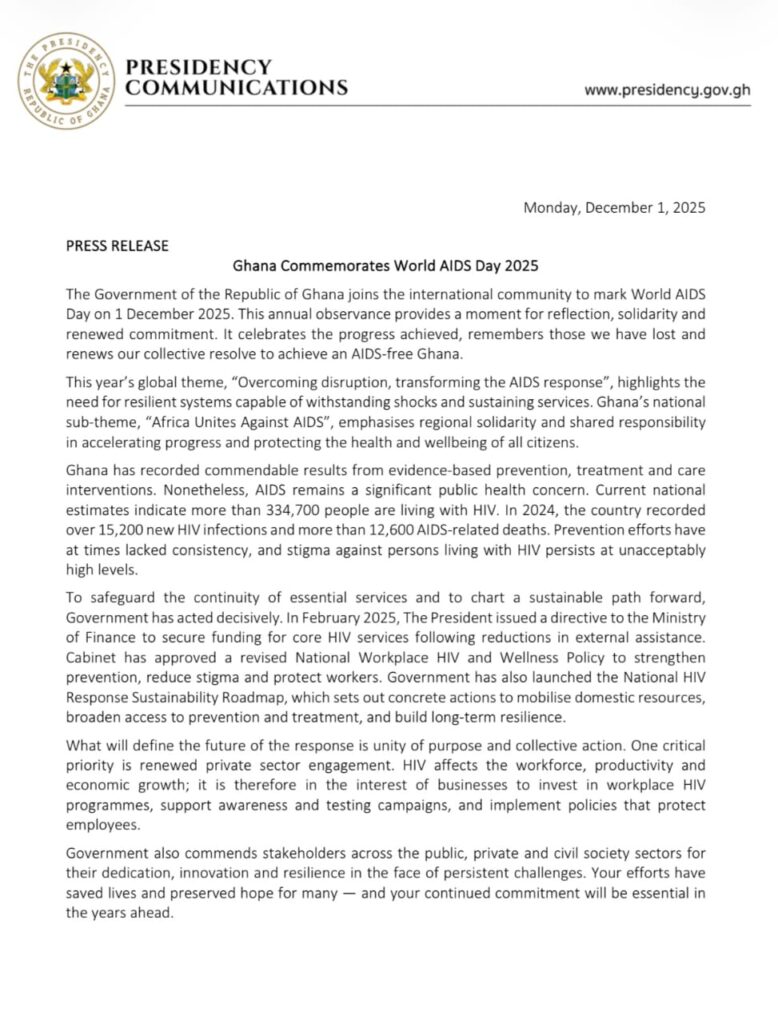
In a statement issued on Monday, December 1, the government highlighted that HIV continues to affect productivity, workforce wellbeing, and national economic prospects, making private sector involvement essential.
This year’s national sub-theme, “Africa Unites Against AIDS,” underscores the shared responsibility of governments, institutions, and communities across the continent.
Current national data shows that more than 334,700 Ghanaians are living with HIV. In 2024 alone, the country recorded 15,200 new infections and over 12,600 AIDS-related deaths. The government also cautioned that stigma remains “unacceptably high,” preventing many from accessing critical services and discouraging early testing.
To strengthen the national response, several policy measures have been implemented. These include Cabinet’s approval of a revised National Workplace HIV and Wellness Policy, which provides guidance on prevention, anti-stigma interventions, and worker protection. Additionally, the National HIV Response Sustainability Roadmap has been introduced to reduce reliance on external funding and promote domestic resource mobilisation.
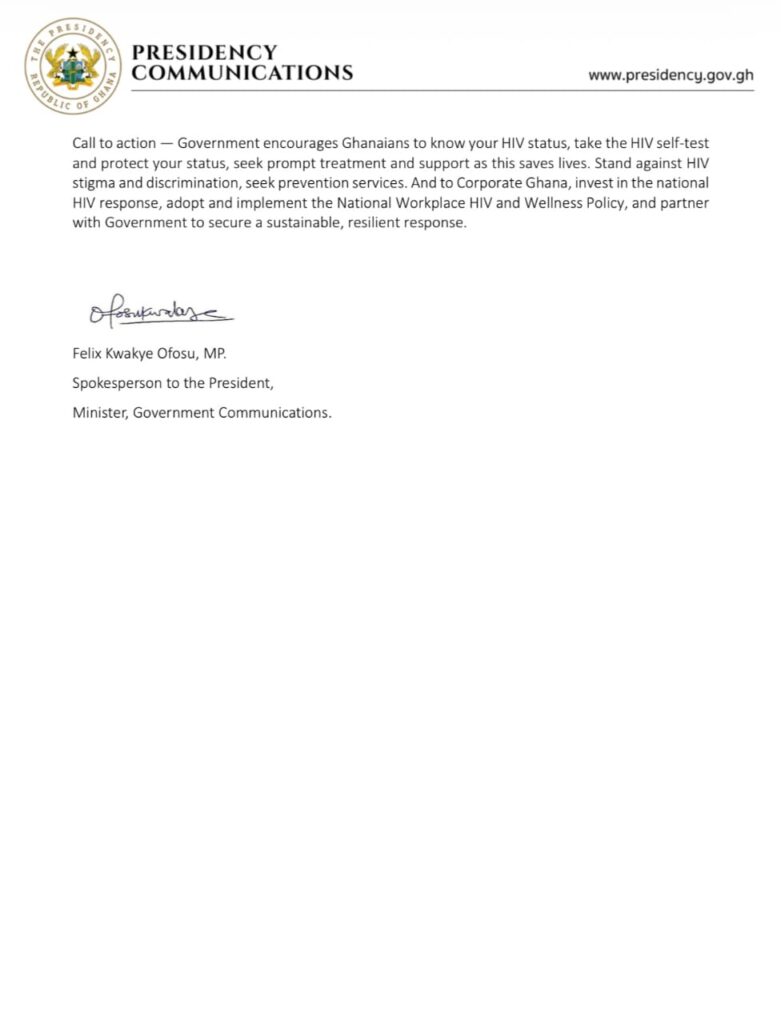
The government is urging private sector organisations to adopt workplace HIV policies, support community-based testing initiatives, and partner with national efforts to expand awareness and prevention. Citizens are also encouraged to test regularly—particularly using self-testing kits—know their status, and seek timely treatment.
The statement, signed by Minister for Government Communications Felix Kwakye Ofosu, emphasised that Ghana’s progress depends on collective action to build a future where HIV no longer impedes national development.