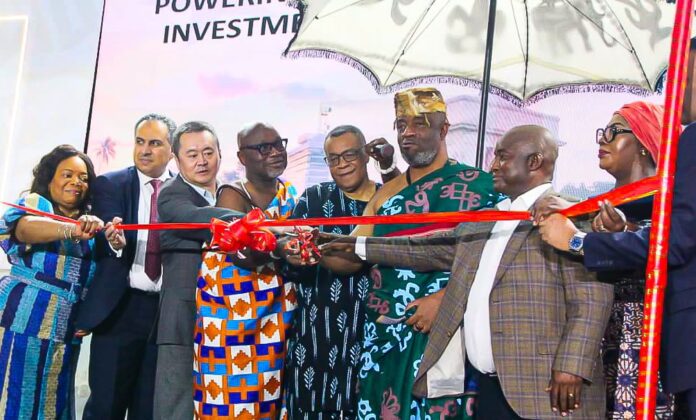

Ghana has renewed its drive to position itself as West Africa’s premier investment destination as the 7th Ghana Investment and Trade Week (GITW) has officially opened in Accra.
The expo opened on Tuesday, July 7, 2026, bringing together government officials, traditional authorities, investors and business leaders from more than 30 countries to explore opportunities across infrastructure, energy, manufacturing and trade.
The three-day event, organised by MIE Events in collaboration with strategic partners, is being held at the Palms Convention Centre alongside the 4th Africa Build Show and the 3rd MEGAWATT Africa under the theme, “Powering Ghana’s 24-Hour Economy: Integrating Infrastructure, Energy, Mobility and Sustainable Real Estate for Investment and Trade Competitiveness.”
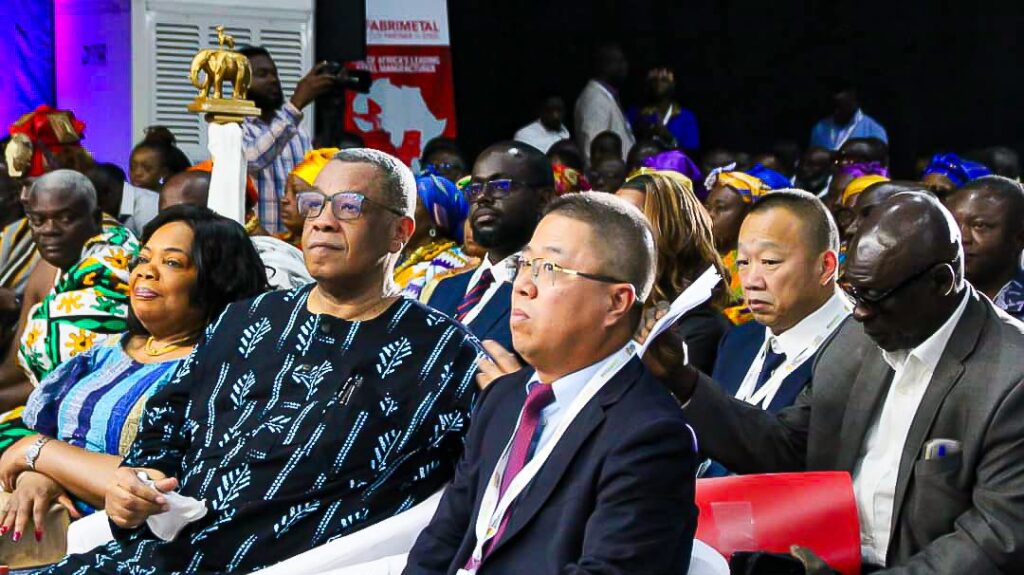
The summit is focused on promoting investment partnerships, business matchmaking and policy discussions aimed at accelerating Ghana’s industrial transformation and strengthening its position within the African Continental Free Trade Area (AfCFTA).
Chairing the opening ceremony, the Ga Mantse, King Tackie Teiko Tsuru II, called on local and international investors to take advantage of Ghana’s political stability, peaceful environment and growing investment opportunities. He stressed the importance of collaboration between traditional authorities, government and the private sector in creating the conditions needed for sustainable economic growth.
Delivering the keynote address on behalf of the Presidency, Senior Presidential Advisor and Coordinator of the 24-Hour Economy and Accelerated Export Development Secretariat, Dr. Augustus Goosie Tanoh, outlined government’s vision of transforming Ghana into a production-driven economy anchored on industrialisation, renewable energy and value addition.
Dr. Tanoh said the 24-Hour Economy programme seeks to address Ghana’s long-standing challenge of exporting raw materials while importing finished products by expanding domestic manufacturing capacity and increasing the production of goods for both local consumption and international markets.
He noted that while landmark projects established after independence, including major energy and industrial initiatives, laid the foundation for economic growth, Ghana’s full industrial potential remains largely untapped.
He stressed that increasing local processing and manufacturing is essential to creating jobs, improving exports and building a competitive economy.
The Senior Presidential Advisor identified affordable and reliable energy as a critical requirement for industrial growth, revealing that the Secretariat is co-developing up to 1.5 gigawatts of utility-scale solar power supported by Battery Energy Storage Systems (BESS). Construction of the first 100-megawatt facility is expected to commence next month, with the initiative expected to reduce electricity costs for industries and improve manufacturing competitiveness.
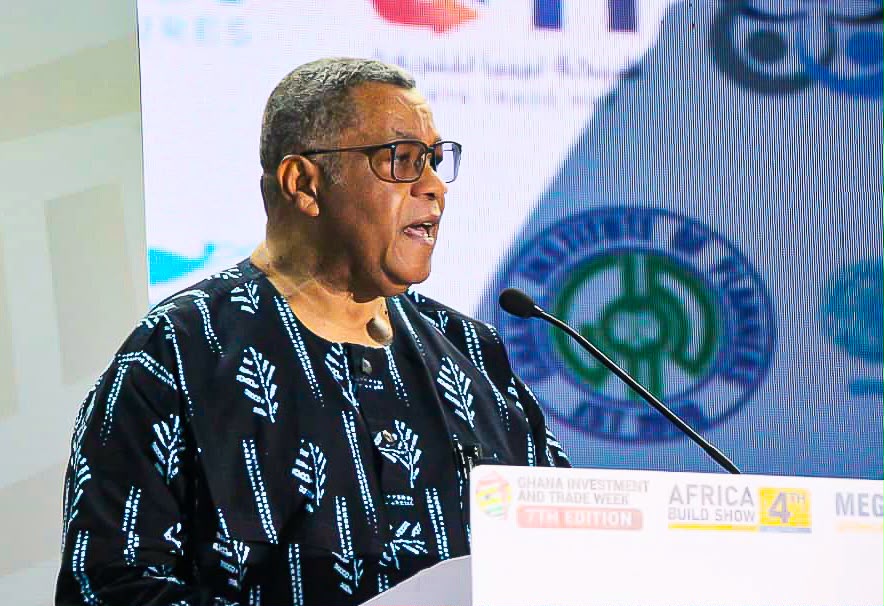
According to Dr. Tanoh, government’s broader industrial strategy also includes the development of the Volta-Oti Economic Corridor, featuring agro-industrial parks, carbon-neutral oil palm plantations, clean transportation systems powered by renewable energy, compressed biogas facilities and waste-to-energy projects.
These initiatives, he said, are expected to support job creation and contribute to government’s target of creating seven million employment opportunities by 2028.
Representing the Minister for Trade, Agribusiness and Industry, the Chief Executive Officer of the Ghana Free Zones Authority (GFZA), Dr. Mary Awusi, reaffirmed government’s commitment to creating a competitive environment for investors.
She highlighted incentives under the Free Zones Scheme, including a ten-year corporate tax exemption, customs duty waivers on production inputs, unrestricted repatriation of profits and access to major international markets.
Dr. Awusi further disclosed that the Authority has more than 7,000 acres of litigation-free industrial land available at strategic locations including Tema, Mpintsin, Shama and Sekondi to support investors seeking to establish manufacturing and export-oriented businesses in Ghana.
Speaking on the sidelines of the opening ceremony, Chairman of MIE Group, Mr. David Wang, said the organisation remains committed to using the Ghana Investment and Trade Week platform to attract foreign direct investment and strengthen business partnerships between Ghana and international markets.
Mr. Wang, whose organisation MIE Events is the organiser of GITW, said previous editions of the summit had successfully connected Ghanaian businesses with investors from countries including China, India, Türkiye and Italy, resulting in several manufacturing initiatives being established or currently being developed in the country.
He said MIE Group’s more than 10 years of engagement with Ghana had reinforced its confidence in the country’s potential as an investment destination, citing its political stability, security and strategic position as a gateway to West Africa.
Mr. Wang explained that this year’s edition has a stronger focus on renewable energy, construction and green technologies, particularly solar solutions, to support Ghana’s transition towards sustainable development.
He added that the summit has attracted more than 100 speakers, over 300 international delegates and exhibitors from more than 10 countries, creating opportunities for investment discussions and business partnerships.
Also speaking to journalists, Vice President of MIE Group and the Ghana Investment and Trade Week Summit, Uur Ahmed, said the summit was designed to encourage foreign direct investment into Ghana while supporting the country’s broader economic transformation agenda, particularly the 24-Hour Economy initiative.
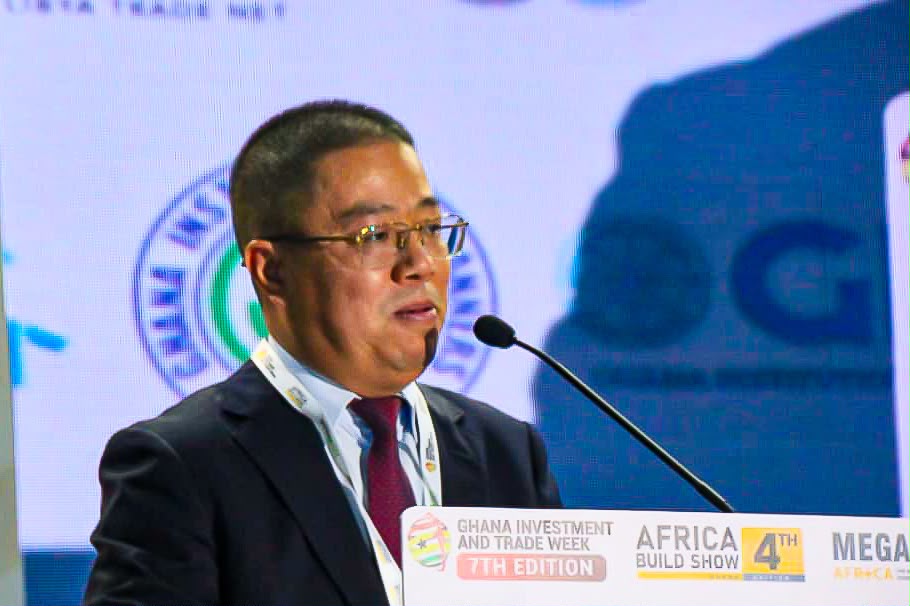
Mr. Ahmed said the platform focuses on key growth sectors including energy, construction, electric mobility, transportation, smart cities and sustainable infrastructure, with the objective of connecting international companies with Ghanaian businesses to explore partnerships, establish factories and expand industrial capacity.
He added that Ghana’s role as a trade hub and gateway to West Africa provides a major advantage for investors, noting that MIE Group’s experience operating in the country has provided a deeper understanding of the opportunities available across various sectors.
Beyond the conference sessions, the opening day featured investment roundtables, government-to-government engagements and business-to-business matchmaking meetings designed to facilitate partnerships and unlock new opportunities across priority sectors.
The participation of China’s Ministry of Commerce (MOFCOM) further highlighted the growing international interest in Ghana’s investment landscape.
The Ghana Investment and Trade Week continues until July 9 with exhibitions, CEO forums, startup competitions, technical tours and sector-focused investment discussions expected to result in strategic partnerships, financing agreements and investment commitments aimed at supporting Ghana’s industrialisation and long-term economic growth.