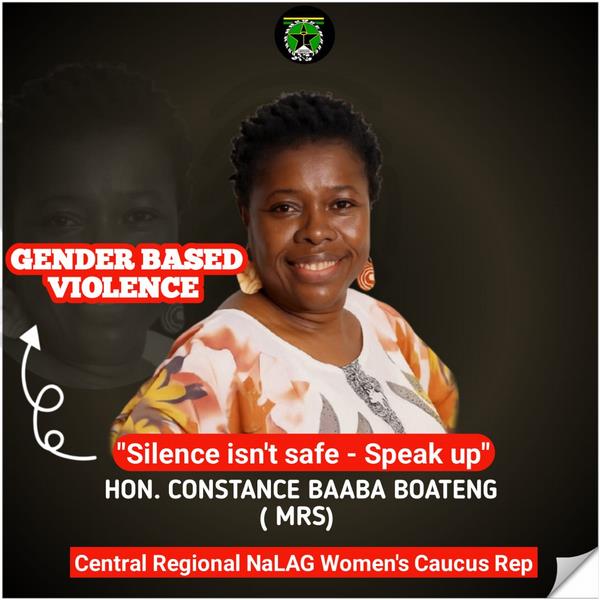

Gender-Based Violence (GBV) continues to cast a long and painful shadow over homes and communities across Ghana. It remains one of the most persistent human rights violations of our time—deeply rooted, often unspoken, and tragically tolerated.
For generations, countless women and girls have been pressured into silence, forced to hide their pain behind closed doors and behind a society that often urges them to “endure,” “stay quiet,” or “protect the family name.”
Yet silence has never offered protection. It has only strengthened the cycle of violence.
Today, more than ever, we must call on individuals, families, communities, and institutions to Break the Silence. Speak Up.
The Reality Many Women Live With
For many women and girls, abuse is not an occasional tragedy, it is their daily life. They endure emotional manipulation, physical assaults, sexual exploitation, and economic control. These acts are not isolated incidents; they are symptoms of a deeper cultural tolerance for gender-based harm.
Too often, victims are met with doubt, stigma, or blame. Fear of losing a job, fear of ridicule, fear of retaliation, and fear of being dismissed push many women into silence. This silence is not a lack of courage—it is a desperate attempt to survive.
In workplaces, schools, homes, and public institutions, gender-based violence appears in many forms:
• “Compliments” that cross personal boundaries
• Unwanted touching masked as friendliness
• Threats linked to promotions, grades, or opportunities
• Intimidation from authority figures
• Words deliberately used to belittle or weaken self-worth
These behaviours create unsafe environments where women are expected to tolerate what they should never accept.
The Power and Courage to Speak Up
Speaking up is more than reporting abuse—it is reclaiming dignity, autonomy, and hope. When survivors share their stories, they become a source of strength not only for themselves but also for others who may be suffering quietly.
Every voice raised against gender-based violence sends a powerful message:
You are not alone.
Abuse is not normal.
Your life and safety matter.
And beyond the present moment, speaking up shapes a better future. It teaches young girls and boys that respect, equality, and safety are non-negotiable values for any society aspiring toward justice.
Our Shared Responsibility
Ending gender-based violence is not the responsibility of survivors alone. It requires a united and persistent effort from all sectors of society—families, traditional authorities, religious institutions, community groups, workplaces, and government agencies.
We must commit to:
• Creating safe, accessible avenues for reporting abuse
• Guaranteeing confidentiality and protection for survivors
• Training leaders, teachers, and workers to identify and respond to abuse
• Establishing and enforcing strong workplace and institutional policies
• Holding perpetrators accountable, regardless of status or influence
When institutions stay silent, they reinforce the problem. Ghana cannot afford such silence.
Where to Seek Help
Anyone experiencing abuse—or anyone who knows someone in danger—can reach out to national support systems:
Domestic Violence and Victim Support Unit (DOVVSU)
055 083 3322 / 0302 662 822
Ghana National Commission on Children (GNCC)
0302 662 473 / 0302 662 474
Commission on Human Rights and Administrative Justice (CHRAJ)
0302 663 710 / 0302 663 711
These services exist to protect, support, and empower.
A Call to Action
We all have a role to play in the fight against gender-based violence. When we speak up, when we believe survivors, and when we challenge harmful norms, we move closer to building a Ghana where every woman and every girl can live without fear.
Let us choose courage over silence.
Let us choose justice over shame.
Let us choose protection over neglect.
Break the Silence. Speak Up.
Together, we can end gender-based violence and build a safer, more compassionate society for all.
By Hon. Constance Baaba Boateng (Mrs.)
Assemblywoman, Essaman Electoral Area – Ajumako-Enyan-Essiam District, Central Regional Women Caucus Representative (NALAG)
READ ALSO: