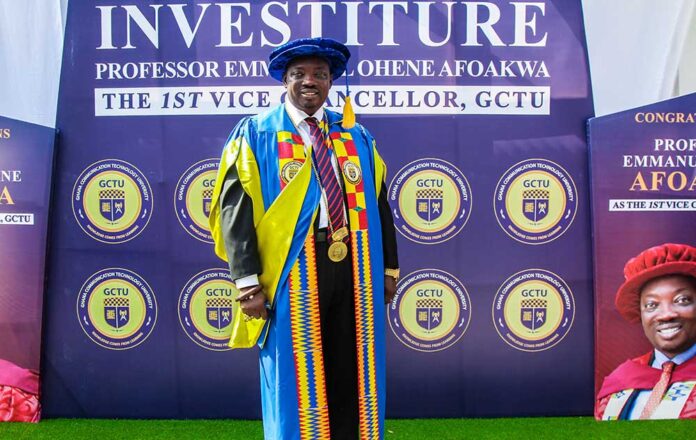

The Vice-Chancellor of Ghana Communication Technology University (GCTU), Prof. Emmanuel Ohene Afoakwa, has filed a lawsuit at the High Court in Accra, challenging what he describes as the unlawful termination of his appointment.
The suit, filed on March 4, 2026, names GCTU as the first defendant. Also listed as defendants are the Chairman of the University’s Governing Council, Prof. Ebenezer Malcolm, the Acting Pro-Vice-Chancellor, and the Ghana Tertiary Education Commission (GTEC).
In his statement of claim, Prof. Afoakwa explained that he was appointed Vice-Chancellor effective March 1, 2021, under a contract scheduled to end on February 28, 2025. He stated that, by a letter dated August 20, 2024, the university extended his tenure for another four-year term, from March 1, 2025, to February 28, 2029, which he formally accepted.
However, he later received letters dated February 3 and February 26, 2026, informing him that his contract had been terminated and that the Acting Pro-Vice-Chancellor would assume his duties effective February 28, 2026.
Prof. Afoakwa argued that at no point was he notified of any alleged breach of contract or invited to respond to concerns before the decision was made.
He contends that the actions of the university and its governing council constitute a breach of his contractual rights and a violation of the rules of natural justice, including his constitutional right to a fair hearing under the 1992 Constitution and relevant provisions of the GCTU Act.
He is therefore asking the court to declare the termination null and void, maintaining that his contract remains valid until 2029.
In addition, he is seeking an order to restrain the defendants from interfering with his duties as Vice-Chancellor until the matter is finally determined, a declaration that the termination was unlawful and without legal effect, and a further declaration affirming that he remains the substantive Vice-Chancellor of the university.
The plantiff is also claiming damages for the distress, humiliation and reputational harm he says he has suffered, along with costs of the action, including his legal fees.
The High Court is expected to fix a date for the defendants to enter appearance and respond to the claims.
Below is the writ of summons: