
President John Dramani Mahama returned from Jamaica with more than the symbolism of African Caribbean reunion. He returned with a trade proposition and, importantly, assigned responsibility for pursuing it.
After visiting the Port of Kingston during his August 2026 state visit, Mahama compared what he saw with Tema’s evolution into a major maritime hub serving Ghana and the Gulf of Guinea.
Large vessels discharge at Tema and feeder vessels redistribute cargo across the region. Kingston performs a comparable hub function in the Caribbean.
Then Mahama asked the question that should now become an assignment: “We have two hubs. What is left is to connect the two hubs together?”
He did not leave it there. The President publicly designated the Foreign Ministers and heads of the maritime authorities of Ghana and Jamaica as contact points to advance the proposition.
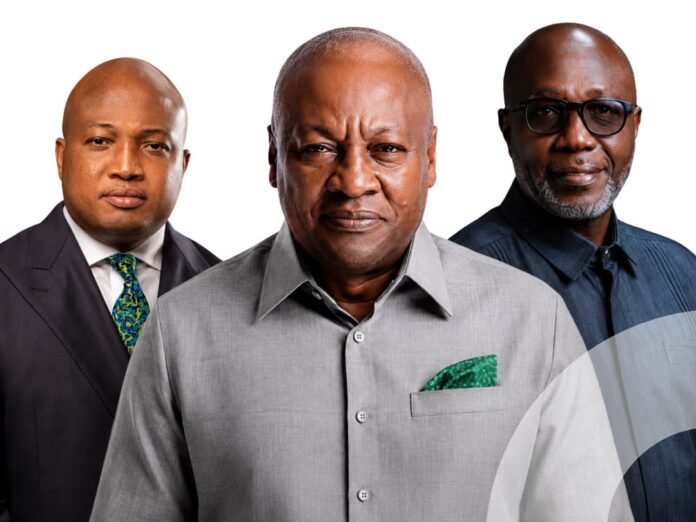
For Ghana, that puts Hon. Samuel Okudzeto Ablakwa, Minister for Foreign Affairs, and Dr. Kamal Deen Ali, Director General of the Ghana Maritime Authority, at an important intersection of diplomacy, shipping and trade.
There is already something to build upon. In 2023, Jamaica exported approximately 78.59 million kilograms of aluminium oxide to Ghana worth US$26.35 million.
On August 10, 2026, Jamaica also disclosed discussions with Ghana aimed at reviving their bauxite relationship, identifying an initial business opportunity estimated at approximately US$60 million.
The Ghana Jamaica maritime proposition is therefore not searching for its first cargo. Commercial cargo already moves between the two economies.
The task is to transform a narrow commodity relationship into a diversified, structured and scalable trade corridor.
Dr. Ali must help establish the maritime economics. What currently moves, through which ports, at what cost and with what transit times? What additional cargo can Tema aggregate?
What volumes would shipping lines require to strengthen connectivity between West Africa and the Caribbean?
Hon. Ablakwa must work the other side of the equation: government to government coordination, commercial diplomacy, customs cooperation, standards, regulatory arrangements and the removal of unnecessary barriers to trade.
The President has effectively joined diplomacy to maritime policy and asked both to produce commerce.
That fits directly into another flagship proposition of his administration: the 24 Hour Economy.A 24 Hour Economy cannot ultimately be reduced to shops staying open at midnight or factories adding another shift.
Its deeper economic logic must include increasing productive capacity, extending logistics and connecting Ghanaian production to markets capable of absorbing what the country produces.
There is little economic value in producing around the clock if the additional goods cannot reach buyers.
That makes ports and international market access central to the policy.
Customs, freight forwarders, warehouses, transporters and inspection services must be capable of supporting extended commercial activity, while Ghana simultaneously develops markets for the additional production such a system is intended to generate.
Kingston therefore presents an interesting opportunity. Ghana recorded approximately US$5 billion in non traditional exports in 2025. Cocoa derivatives, processed foods, pharmaceuticals, tuna, textiles, shea products, aluminium manufactures and other goods provide a base from which new markets can be developed.
But the ambition should extend beyond bilateral trade.
The stronger proposition is Tema as a West African gateway connected to Kingston as a Caribbean gateway.
That potentially gives Ghanaian manufacturers another route towards Caribbean and wider markets while offering Jamaican businesses a logistical entry point into Ghana and potentially West Africa.
Ghana’s hosting of the AfCFTA Secretariat strengthens that strategic positioning, although it does not confer automatic tariff preferences on Jamaican goods. Likewise, Ghanaian products entering Jamaica do not automatically qualify for CARICOM preferences.
Geography provides an opportunity, not a waiver from trade rules. That is precisely where serious trade diplomacy becomes necessary.
The immediate task should not be to announce a ceremonial direct shipping service. It should be to establish the business case.
Dr. Ali and Hon. Ablakwa should bring GPHA, Customs, the Ghana Shippers Authority, GEPA, trade officials, manufacturers, exporters, freight forwarders and shipping lines into a structured process with their Jamaican counterparts.
Map existing cargo. Identify products with realistic two way demand. Obtain actual freight quotations. Compare transit times. Establish the minimum cargo volumes required by carriers. Identify regulatory bottlenecks.
Determine whether the commercially sensible model is direct shipping, feeder connectivity, transshipment or slot arrangements within existing networks.
Then put dates against implementation.That is how the presidential directive becomes measurable.
Success should eventually be visible in export statistics, vessel calls, container throughput, freight costs, transit times and Ghanaian products reaching markets they struggled to each before.
That also provides a harder economic test for the 24 Hour Economy. Factories can operate longer. Warehouses can remain active longer. Ports can process cargo longer.
Trucks can move goods for longer periods. But additional productive hours become economically meaningful only when they produce additional economic value.
And for an export oriented economy, that requires buyers.
Mahama’s Jamaica directive therefore offers Ghana an opportunity to connect three things that are too often discussed separately: production, logistics and markets.
The President has supplied the political instruction. Hon. Ablakwa has the diplomatic machinery. Dr. Ali has the maritime mandate. Tema and Kingston have the infrastructure.
Nearly 79 million kilograms of aluminium oxide have already demonstrated that significant commercial cargo can cross the Atlantic between the two economies.
The assignment now is to build outward from that foundation. Connect Tema to Kingston. Connect Ghanaian production to new demand. Connect maritime policy to the 24 Hour Economy.
Because Ghana does not need a 24 Hour Economy that merely works longer. It needs one that produces more, trades more and sells more.