
Introduction
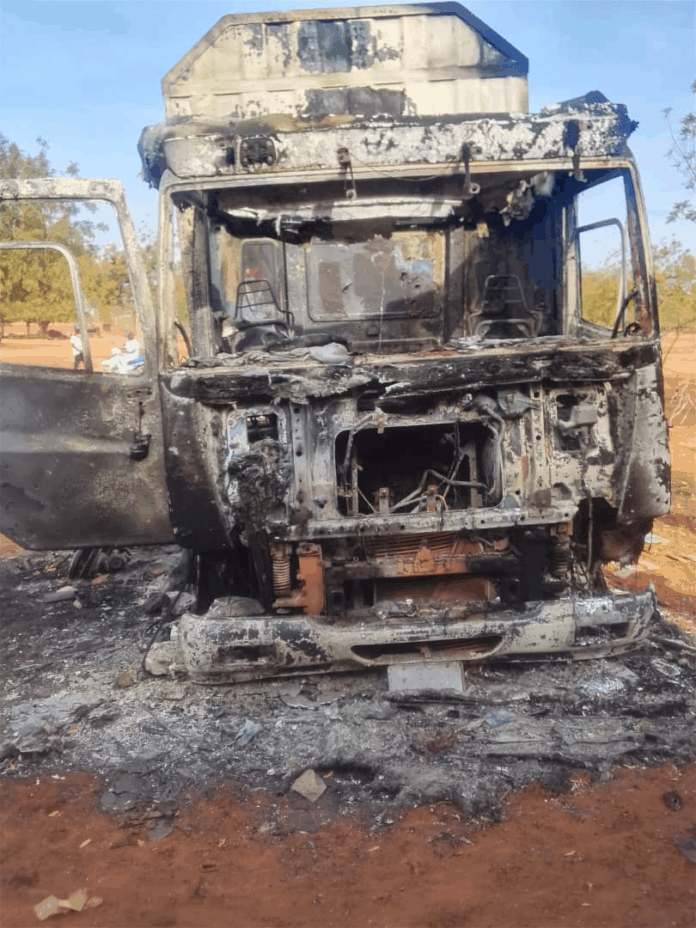
February 14, 2026, was a sad day for Ghanaian trades and the country by extension. A group of Ghanaian tomato traders en route to their trading point were targeted in a deadly terrorist attack in northern Burkina Faso, Titao to be specific.
This attack resulted in the death of about seven Ghanaian traders, severe burns, and scores of injuries.
The attack was claimed by the Jama’at Nusrat al-Islam wal Muslimeen (JNIM) operating in the Sahel. JNIM, an Islamist militant group linked to al-Qaeda, ambushed the truck conveying the Ghanaian traders on their routine cross-border trading voyage when they met their sudden death.
This attack underscores the growing volatility taking place in northern and eastern Burkina Faso in recent days, as of the time of writing this piece.
This unfortunate incident is symptomatic evidence of transnational security threats emerging from the Sahel, where various armed groups affiliated with JNIM and other known extremist groups have intensified their activities against the state and its citizens.
This means that the economic routes that hitherto was a safe avenue for commerce have now become a security threat for traders and transporters from sister states.
The informal cross-border trade, especially in agricultural produce such as onions and tomatoes has been an essential means of livelihood and an indicator for food security in most countries.
However, the interconnection of economic sustainability with security threats has now placed Ghanaian traders at the forefront of a wider transnational security challenge.
Serious concerns have now arisen due to the reports and emergency responses with regard to the security concerns in the context of safety on trade routes, the capacity of states to respond to such threats, inter-state coordination, intelligence sharing, and overall prevention measures, not forgetting the overarching diplomatic cooperation within the West African security and coordination framework.
Challenges that exist
Before the interventions and responses are enumerated, there is the need to highlight the point out the existing challenges that have resulted to these deaths.
There are structural challenges and reform inadequacies identified as far as West African trade agreements are concerned.
Although there are trade agreements in place that encourage the free movement of goods and services, it does not necessarily ensure protection for traders when it comes to insecurity on the ground. The tragedy involving the Ghanaian traders underscores one of the many structural challenges that persist.
The result is the ultimate suspension of tomato imports from Burkina Faso, which has disrupted the supply chain in the absence of a preventive mechanism.
The spillover effects of armed group networks who exploit porous borders and operate in areas where the local government is non-existent in the Sahel is real.
This has resulted in the challenges with regard to commercial and rural trade routes such as that of Burkina Faso and northern Ghana very perilous as has been recorded in Titao with militants executing male traders, burning their trucks, ordering the women off the vehicle, and torturing them.
The protection lapses and intelligence failure within the broader national spectrum was evident in the Titao incident.
Security experts have highlighted that the attack is symptomatic of a wider challenge with regard to predictive intelligence and policy framework that aims to protect citizens plying their trade abroad.
Interventions and Responses: Prevention measures against threats of violent extremism in the region
The demise of the Ghanaian traders has ignited calls for efficient intelligence sharing, improved border protection for cross-border traders, and deepen inter-state cooperation and security.
The Government of Ghana through the Foreign Affairs minister met with his counterpart in Burkina Faso to reactivate the Permanent Joint Commission for Cooperation (PJCC), which had been dormant for about 6 years.
The PJCC after its reactivation will focus on 7 key agreements, they include an agreement on the mutual recognition of national driver’s licenses, agreement on transport and road transit, framework agreement on cross border cooperation, memorandum of understanding on the establishment of periodic consultation frameworks between the border administrative authorities.
The rest include a memorandum of understanding regarding the creation of a joint commission to reaffirm the border between the two states, cooperation agreement on the prevention and management of disasters and humanitarian crises, agreement in the field of fighting illicit cultivation, production, manufacture and trafficking of narcotic drugs, psychotropic substances and related matters.
These key agreements are seen as a response to curb suture occurrences and ensure the two countries commit to protecting their citizens in the context of cross-border trade.
The regional security architecture needs to be enhanced to strengthen intelligence sharing especially among the Economic Community of West African States (ECOWAS) member states.
Calls have been made to focus more on sharing data on threats and intensify joint border patrols, a reiteration some agreements such as the border cooperation and framework for enhancing border administration with regard to the PJCC.
The regional security architecture would need to dwell on the integration of security considerations into trade agreements for enhanced protection of cross border traders.
This attack has also stirred up conversations regarding Ghana’s reliance on imported commodities and the need to push resources and invest in growing the domestic agricultural capabilities.
The conversation has also been around the rethinking of trade security focusing on risk assessment mechanisms institutionally aimed at traders operating in areas where threats exist.
Security escorts arrangements coupled with efficient emergency communication systems, travel advisories and warnings have been proposed as a preemptive and protective approach for informal actors and reduce threats.
ECOWAS, in their usual show of solidarity, has backed calls for an investigation into the deaths of the traders. This reiterates the need for a coordinated effort to curb transnational terrorism and its associated effects.
Civil society is calling for a stronger and efficient regional cooperation that focuses on stronger security frameworks and integrates counter-terrorism strategies with economic resilience aimed at preventing future losses of lives.