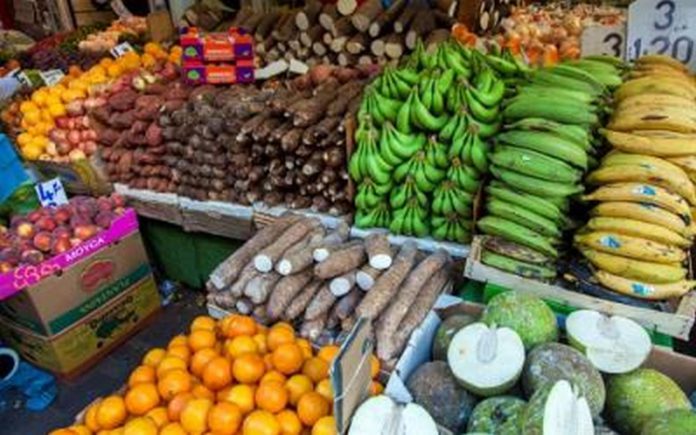

Food prices in Ghana remained largely stable in August 2026, but rising fuel costs and growing climate risks could put pressure on food security in the months ahead, the latest Food Security Monitor report by the Alliance for a Green Revolution in Africa (AGRA) has warned.
The August edition of the report indicates that overall food price conditions changed little from July, although individual commodities recorded varying movements.
The national average price of rice, for instance, remained unchanged at GHS 11,100 per metric tonne.
“Prices were slightly higher than three months earlier (+0.9%) but remained 10.1% below six-month levels and 16.4% lower than a year earlier, reflecting adequate domestic and imported rice supplies.”
Sorghum prices also held steady, with the national average remaining at GHS 5,833 per metric tonne.
“Prices were slightly lower than three months ago (-1.2%) and significantly below six-month levels (-10.3%), indicating improved market supplies compared to earlier in the year,” the report said.
Despite the improvement compared with earlier periods, sorghum prices were still 2.9% higher than they were a year ago, pointing to relatively firmer domestic market conditions.
White maize, however, recorded a notable increase, with its national average price rising by 8.9% month-on-month to GHS 3,141 per metric tonne.
The report said the recent increase had not erased the commodity’s longer-term price gains, noting that prices remained 8.9% below six-month levels and 36.3% lower than a year earlier.
“However, prices remained 8.9% lower than six months ago and 36.3% below year-earlier levels, suggesting that despite recent market tightening, overall supply conditions remain more favourable than a year ago.”
While food prices showed relative stability, the cost of fuel moved in the opposite direction during the month.
Petrol prices increased by 3% in August compared with July, while diesel prices went up by 1%. This pushed petrol and diesel prices to 29% and 19% above their March levels respectively, reflecting continued pressure in the domestic fuel market.
Beyond Ghana, AGRA’s assessment points to broader risks facing food production across Africa.
In West and Central Africa, first-season maize production has generally remained close to average. However, highly variable rainfall, localised moisture deficits and fragile agricultural conditions in parts of Nigeria, Mali, Burkina Faso, Benin, Chad and the Sahel continue to threaten crop performance and food access.
The report says forecasts point to generally average rainfall across much of the region, although some coastal areas and central Nigeria could experience drier-than-normal conditions later in the season.
Fertiliser prices also remained elevated in several East and Southern African countries, although recent declines in Ghana, Zambia and Nigeria indicate some easing of price pressures amid policy interventions.
At the global level, food and agricultural commodity prices increased in August amid tighter supplies, strong demand, weather-related production concerns and trade disruptions.
Global grain markets came under further pressure after 2026/27 production forecasts were reduced because of adverse weather, particularly in Europe, while disruptions to Black Sea exports added to upward price pressures.
The report also raises concerns about the next farming season, pointing to the growing threat posed by climate-related shocks.
It says variable rainfall, localised moisture deficits, conflict, displacement and market disruptions continue to threaten livelihoods and food access across West and Central Africa.
AGRA warns that the combined effects of climate shocks linked to El Niño, conflict, economic pressures and displacement could worsen food insecurity across the continent, increasing the need for early preparedness, climate adaptation and resilience-building measures.
According to the report, a powerful El Niño event is developing in the Pacific and is projected to become one of the strongest on record during the 2026/27 season.
The U.S. National Oceanic and Atmospheric Administration (NOAA) estimates a greater than 90% probability that the event will continue and a 69% chance that it could surpass all El Niño events recorded since 1950.
The development, AGRA cautions, significantly raises climate-related risks for food production across Africa.
Also read:
Read the full report below: