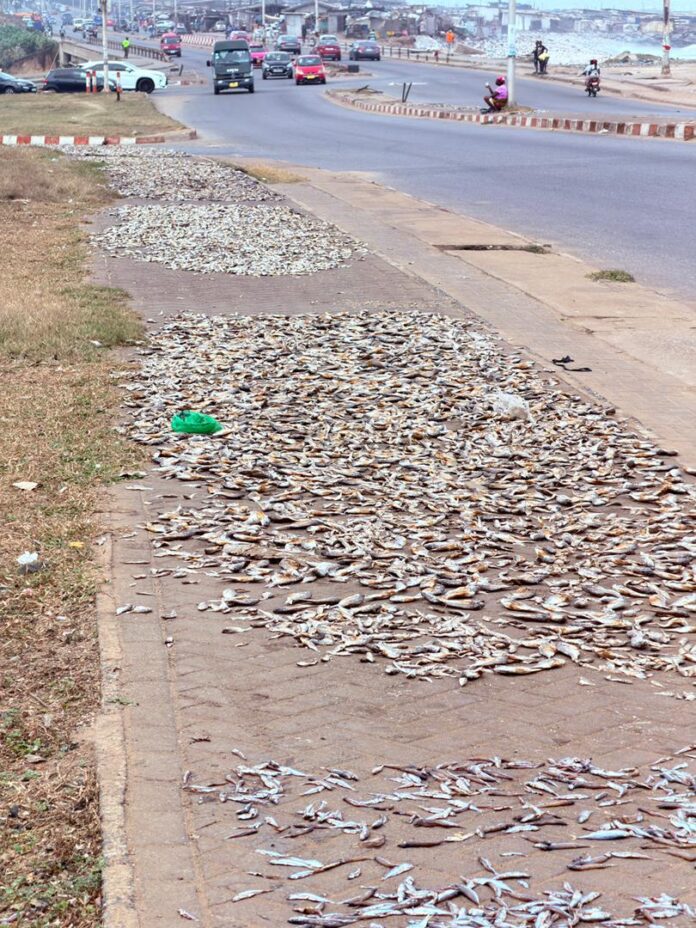

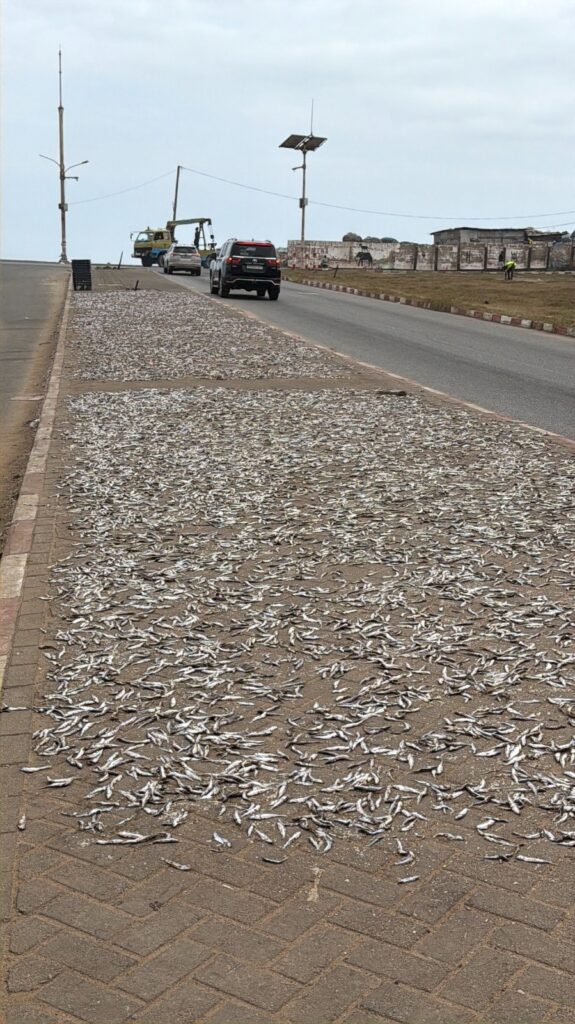
At Lavender Hill, near Korle Gonno in Accra, the sun beats relentlessly on rows of fish spread out on the pavement to dry.
It is a familiar livelihood for the women who sit nearby, keeping watch over their merchandise.
Their baskets are on standby. The fish must dry.
And the women must protect what they have invested in. But there is more to this roadside scene than meets the eye.
Just a short distance away is the ever-choked Korle Lagoon, a water body struggling under the weight of years of pollution and waste.
The stench from the lagoon is difficult to ignore. For anyone standing around the area, the smell is almost overpowering.
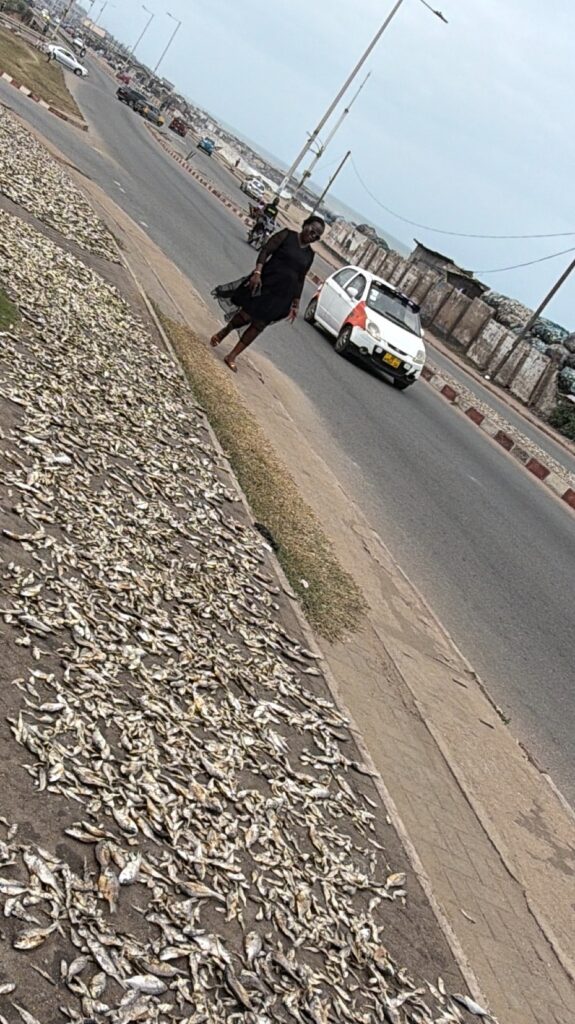
Yet, in this same environment, fish meant for human consumption are being laid directly on the pavement.
The busy highway beside the drying area adds another layer to the problem.
Vehicles constantly ply the road, sending dust into the air. Heavy winds sweep across the area, carrying dirt and debris onto the fish.
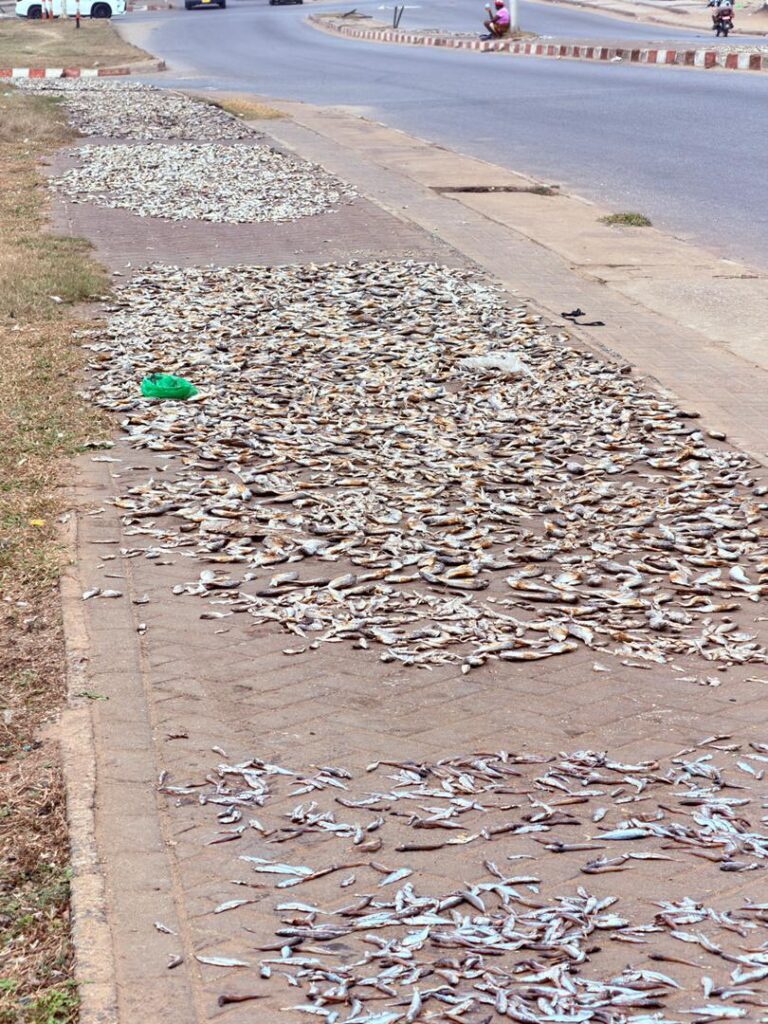
Among the fish are visibly dirty polythene bags that have been blown onto the pavement.
The women pick up some of the debris, but with the wind constantly moving through the area, keeping the fish completely free from contamination appears almost impossible.
And then there are the sewer trucks. Parked across the street, not far from where the fish is being dried, the trucks wait to collect and discharge human waste.
Their presence adds another disturbing dimension to an already polluted environment.
The contrast is striking. On one side, fish is being prepared for consumption.
Nearby, a heavily polluted lagoon releases an unbearable stench.
Across the street, sewer trucks are stationed to handle human waste.
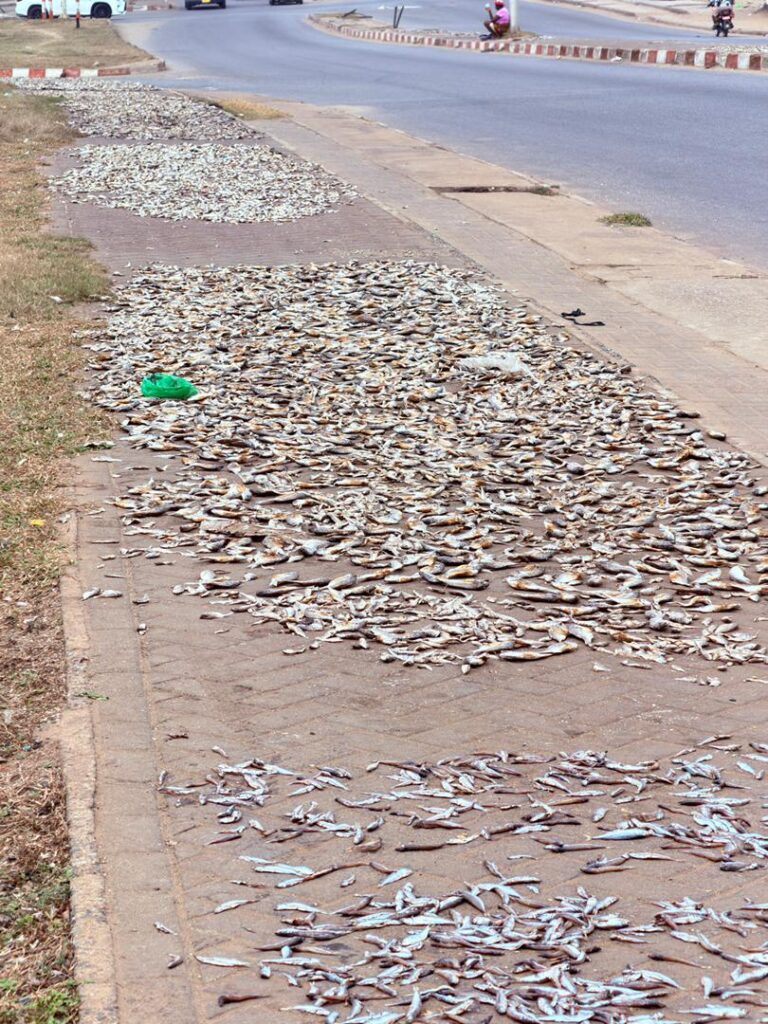
And all around them are dust, traffic, and plastic waste.
Yet this is where some women have chosen, or perhaps been forced, to earn a living.
They sit beside their fish, baskets within reach, watching carefully as the products dry under the scorching sun.
For them, this is not simply a sanitation problem. It is their livelihood.
Every basket represents money invested and income expected.
Removing them from the pavement without providing a suitable alternative could therefore threaten their ability to survive.
But the situation raises an equally important question:
What happens to the health of consumers who eventually buy and eat this fish?
Food exposed to dust, plastic waste, vehicle emissions and a polluted environment presents obvious hygiene concerns.
And the irony is difficult to miss.
The women are trying to preserve food for consumption in an environment where the air, water, and surroundings are heavily contaminated.
Lavender Hill therefore presents a problem that goes beyond the fishmongers.
It is a story about urban planning, sanitation, livelihoods, and food safety colliding in one small space.
The answer cannot simply be to drive the women away.
Authorities need to provide designated spaces where fish can be properly processed and dried, away from traffic, waste, and polluted water bodies.
The fishmongers also need education and support to adopt safer handling and drying practices.
Because the women deserve a clean and safe place to work.
Consumers deserve food that is safe to eat.
And Accra deserves an environment where the processing of food does not happen side-by-side with human waste, polluted water, and roadside filth.
At Lavender Hill, the women continue to sit and watch over their fish.
The Korle Lagoon continues to choke.
The stench continues to hang in the air.
The sewer trucks remain on standby.
And the wind continues to carry dust and plastic across the pavement.
For now, life goes on.
But the question remains: How long can we allow livelihoods, sanitation, and food safety to coexist in such troubling proximity?