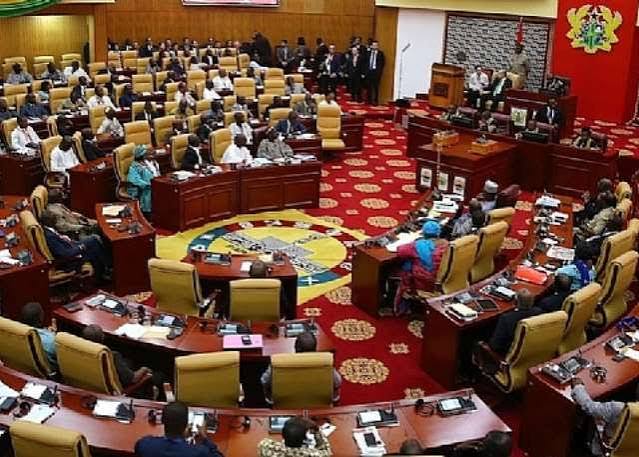

On July 17, 2026, Ghana’s Parliament passed the Public Tribunals Bill, 2026, setting off one of the most heated legal and political debates of the year, with organised labour, the Minority in Parliament and a former Vice-President all calling on President John Dramani Mahama not to sign it into law.
The Bill, if assented to, would revive a justice delivery system many Ghanaians associate with a painful chapter of the country’s history.
Here is what it means, what it changes, and why it has become so contentious.
What the Bill does
The Public Tribunals Bill, 2026 establishes a legal framework for the creation and operation of tribunals in Ghana, and creates a Tribunal Oversight Committee to supervise them. It provides for a two-tier structure of Regional and District Tribunals, built to speed up economic, environmental and other specialised cases that are currently clogging up the regular court system.
The legislation activates provisions that have existed in the Constitution for decades but have never been properly operationalised. Article 142 of the 1992 Constitution incorporates Regional Tribunals into Ghana’s judicial structure, and Article 126 similarly anticipates their use, but both have sat largely dormant.
The Bill was laid before Parliament on June 26, 2026, by the Minister of Lands and Natural Resources, Emmanuel Armah-Kofi Buah, on behalf of the Attorney-General and Minister of Justice, Dr Dominic Ayine. It was referred to the Constitutional and Legal Affairs Committee and the Judiciary Committee for scrutiny before returning to the House, where it passed its third reading on Thursday, July 16, 2026.
It now awaits presidential assent, without which it cannot take effect.
Why government says it is necessary
Attorney General, Dr Dominic Ayine, has said the Bill is a response to a mounting backlog in the ordinary courts, which he says grows by roughly 3,360 cases every year.
He argues that reviving tribunals, this time with stronger constitutional safeguards, will help decongest the courts and speed up justice for specialised matters.
To guard against past abuses, the Bill places the new tribunals under the oversight of a Tribunal Oversight Committee operating within the Judicial Council. It also expressly bars tribunals from ruling on constitutional interpretation, human rights violations, or any matter reserved for the superior courts.
Why so many are against it
The Trades Union Congress is the most vocal opponent to the Bill.
TUC Secretary-General Joshua Ansah has warned that the Bill, in its current form, could become “a potent tool for weaponising justice delivery” and would deepen public suspicion that the justice system can be bent to political will.
The union says its own submission to the Constitution Review Committee, chaired by Professor Kwasi Prempeh, had called for Regional Tribunals to be removed from the Constitution altogether, a recommendation they say was accepted by the committee.
Ansah has questioned why government would move to activate tribunals while that report remains unpublished, and the TUC has demanded the Bill be withdrawn entirely rather than amended.
In Parliament, the Minority Caucus staged a walkout in protest, with Minority Leader Alexander Afenyo-Markin arguing that the Bill creates a “parallel system” unknown to the Constitution and risks becoming a “kangaroo court.”
The Minority unsuccessfully pushed to delete Clause 4 of the Bill, a proposal defeated by a headcount vote of 135 to 16.
The minority has insisted that the existing courts, including specialised courts for financial, commercial and matrimonial matters, should instead be strengthened and better resourced.
The major cause for the resistance is Ghana’s history with tribunals under the Provisional National Defence Council.
Both the TUC and the Minority have pointed to that era directly, alleging that tribunals were once used to target political opponents and seize assets. Those appointed to sit on the tribunals have also been accused of enriching themselves in the process.
That memory has made any talk of reviving tribunals, regardless of new safeguards, politically dangerous for critics.
Adding to the controversy is the pace at which the Bill moved. The mandatory one-day interval between the consideration stage and the third reading was waived, allowing the Bill to pass in the early hours of Friday, a move the Minority and organised labour say denied the legislation the scrutiny it deserved.
Where things stand now
Former Vice-President Dr Mahamudu Bawumia appealed directly to President Mahama, in a live Facebook address on Sunday, July 19, not to sign the Bill.
He is urging the President to pause and invoke the constitutional consultative process under Articles 90 and 106, which would involve the Council of State, the Ghana Bar Association, organised labour, civil society organisations, political parties and the Judiciary before any final decision is made.
Dr Bawumia has stressed that the concerns are not partisan, pointing to the TUC’s opposition as coming from “the voice of millions of Ghanaian workers.”
The Bill’s fate now rests with President Mahama, who must decide whether to grant assent, setting it on course to become law, or heed calls to pause for wider national consultation.