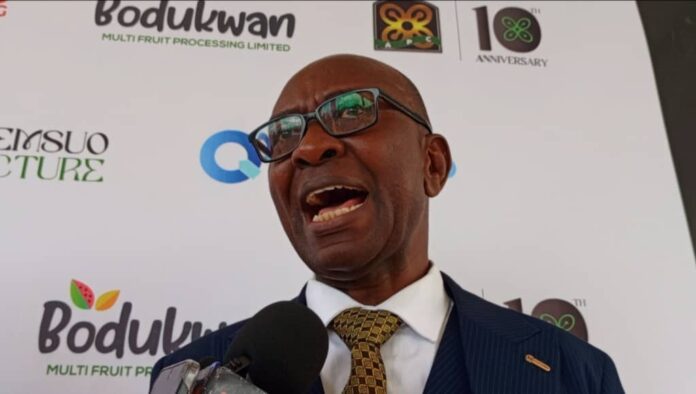

A senior lecturer at the Department of Language and Communication Science at Kwame Nkrumah University of Science and Technology (KNUST) has sounded an alarm over a growing reluctance among Ghanaian undergraduates to enroll in local‑language courses.
In an interview with Adom News on the sideline on Opemso lecture series, Dr. Emmanuel Antwi Fordjour explained that many students view these programmes as a dead‑end.
“There’s a deep‑seated perception that opting for a local dialect means you’re illiterate, or that it won’t get you anywhere after graduation,” he said.
This stigma, he added, is reinforced by a broader societal belief that proficiency in English or any “prestigious” foreign language is the only ticket to prosperity.
Dr. Fordjour said that the result is a noticeable drop in enrolment for modules such as Twi, Ewe and Ga, forcing lecturers to spend extra time persuading learners to give the courses a chance.
“We often have to convince students that studying a local language isn’t about confining yourself to one dialect,” Dr. Fordjour noted. “It’s about understanding our cultural heritage, improving communication, and opening doors to careers in education, media, translation, and even tech.”
He warned that if the trend continues, the university’s efforts to preserve and promote Ghana’s linguistic diversity could be undermined.
“Our languages are part of the nation’s identity. We need to change the narrative and show that mastering a local tongue is as valuable as any other skill,” he concluded.
The lecturer appealed to parents not to block their children from enrolling in local‑language courses and encouraged families to use the mother tongue around the house.
At the same time, he called on educators, community leaders and other stakeholders to set up regular forums that would highlight the practical advantages of speaking Ghana’s indigenous languages, especially for young people.
Source: Francis Mensah