

Changes in cervical mucus throughout the menstrual cycle can offer women useful clues about their fertility, particularly around ovulation.
However, health experts have cautioned that these changes should not be treated as a guarantee of pregnancy or as a reliable way to prevent it on their own.
Cervical mucus is a natural fluid produced by the cervix, the lower part of the uterus that connects to the vagina.
Its amount, texture and appearance change in response to hormonal fluctuations during the menstrual cycle.
Understanding these changes can help women become more familiar with their bodies and recognise when they may be approaching their most fertile days.
What happens before ovulation?
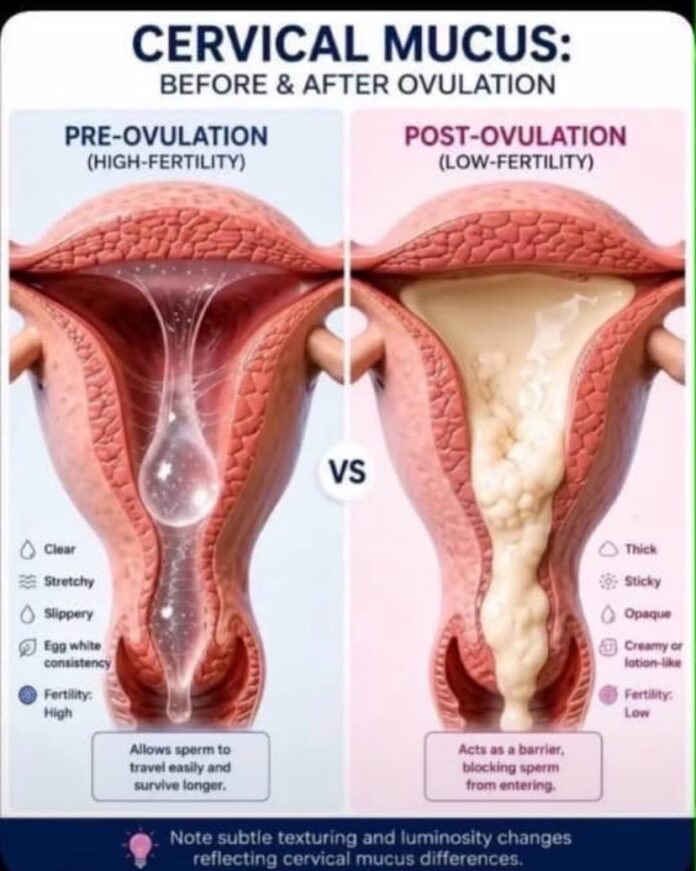
In the days leading up to ovulation, rising levels of the hormone oestrogen cause cervical mucus to become wetter, clearer, and more slippery. It may stretch between the fingers and resemble raw egg white.
This type of mucus creates a favourable environment for sperm to move through the cervix towards an egg.
According to the Cleveland Clinic, noticing this change can help women identify the period when they are most likely to conceive.
Ovulation occurs when an ovary releases an egg. The timing varies from person to person and can change from one menstrual cycle to another.
What changes after ovulation?
After ovulation, the hormone progesterone increases and cervical mucus commonly becomes thicker, stickier, or less noticeable. Some women may experience creamy or whitish discharge, while others may notice very little mucus.
These changes are a normal part of the menstrual cycle. However, the appearance of cervical mucus differs among individuals, meaning not everyone will experience the same pattern.
Although mucus often becomes less favourable for sperm movement after ovulation, pregnancy can still occur if sperm has survived from intercourse during the fertile window.
Can cervical mucus tell you when you are fertile?
Observing cervical mucus can be a useful way to understand the menstrual cycle. Women may record changes in its appearance alongside their period dates to identify patterns over several months.
However, cervical mucus alone cannot confirm the exact day ovulation occurs. Factors such as hormonal contraception, breastfeeding, infections and some medications may also affect the amount and consistency of the fluid.
Women who want to understand their fertility more accurately can seek guidance from a qualified healthcare professional about combining different methods of tracking ovulation.
Importantly, those who do not want to become pregnant should not rely on mucus observations alone as contraception. Fertility signs can be difficult to interpret, and unprotected sex can still result in pregnancy.
When should women seek medical advice?
Cervical mucus is generally a normal and healthy part of the reproductive system. However, a noticeable change accompanied by a strong or unpleasant smell, itching, burning, pain or unusual bleeding may require medical attention.
Such symptoms can sometimes indicate an infection or another condition that needs treatment. Women experiencing these symptoms are encouraged to consult a healthcare professional rather than attempt to diagnose themselves based on discharge alone.
Understanding the body matters
Learning about cervical mucus is one way women can become more informed about their reproductive health.
Recognising normal changes can help them understand their menstrual cycles, make informed decisions and know when to seek medical advice.
While cervical mucus provides useful clues about fertility, it is only one part of the picture. Accurate information and appropriate healthcare guidance remain important for anyone seeking to understand their reproductive health.